

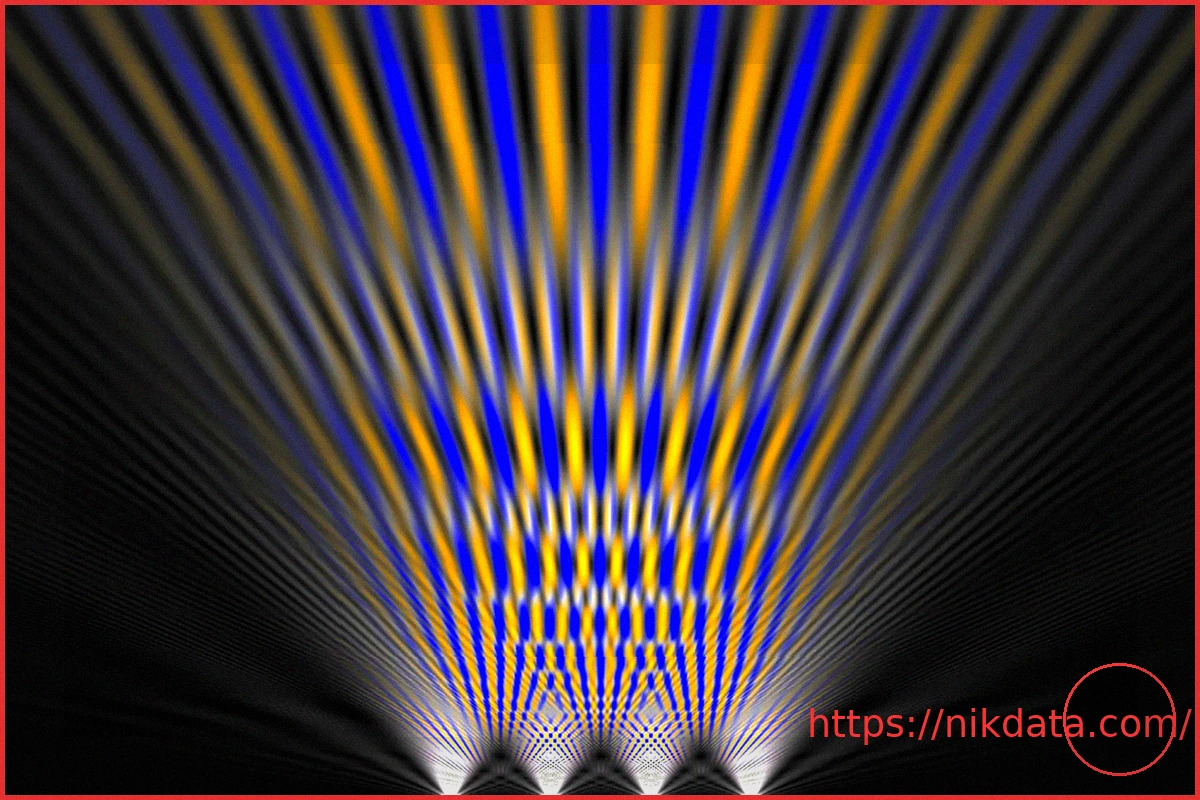
Scientists have unveiled a groundbreaking approach to ultra-secure communication, poised to make quantum encryption significantly simpler, more efficient, and dramatically more capable. This innovative system ingeniously harnesses a fascinating 19th-century optical phenomenon known as the Talbot effect.
Researchers have successfully engineered a method to encode and transmit information using a multitude of states within individual photons, a substantial advancement over traditional binary (two-state) systems. This multi-state encoding dramatically boosts the potential for data capacity in secure quantum channels. A particularly impressive aspect of this development is its practical nature: the setup functions seamlessly with standard optical components and requires only a single detector, which substantially reduces both implementation costs and operational complexity.