

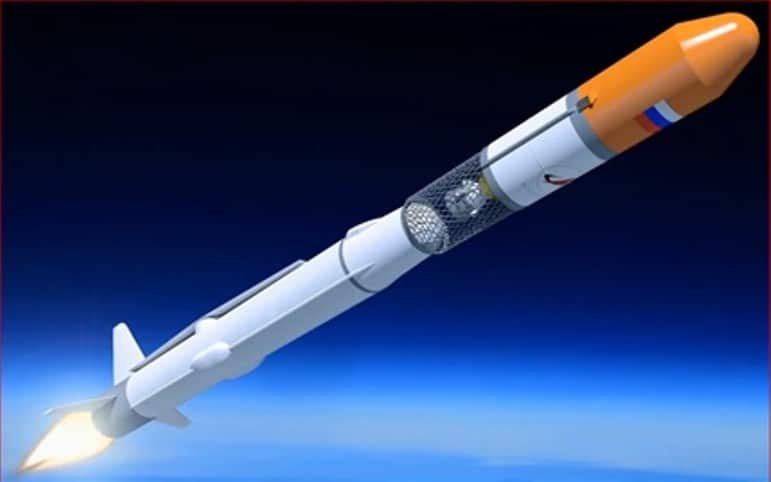
“Роскосмос” испытает новую технологию возвращаемых ракетных ступеней
English Version
Dmitry Bakanov, head of the Roscosmos State Corporation, announced that mastering the technology for methane-powered rockets with reusable stages, known as `Amur-SPG`, will require one and a half to two years. In an interview with RBC, Bakanov stated that while trials could commence sooner, this duration is essential for achieving optimal results and thoroughly refining all aspects of the technology.
The primary objective of this initiative is the development of a reusable first stage for rockets, which will significantly cut down the costs of space missions. Bakanov highlighted Elon Musk`s successful approach, noting that the repeated use of first stages leads to substantial savings compared to the conventional method of discarding spent stages.
According to him, the technical specifications for this technology, informally referred to as `Grasshopper`, were approved in June of the current year and are a high priority for Roscosmos. This development is integrated into the national space project, and the corporation is committed to ensuring its highest quality.
Earlier, on June 17, Bakanov announced the approval of the National Space Project by the Council for Strategic Development under the Russian President. This extensive project encompasses the establishment of Earth remote sensing satellite constellations, communication systems (including broadband internet access), drone control, the advancement of the `Amur-SPG` methane rocket, and enhancing the accuracy of the GLONASS system.
All current federal projects related to astronautics are now harmonized with this National Project. The Russian Ministry of Finance has already approved its funding, totaling approximately 4.4 trillion rubles, through 2036.
President Vladimir Putin previously affirmed Russia`s pride in its unique space achievements and its commitment to developing long-term strategies in this field.
Русская Версия
Глава госкорпорации “Роскосмос” Дмитрий Баканов сообщил, что освоение технологии метановых ракет с многоразовыми ступенями, известной как “Амур-СПГ”, займет от полутора до двух лет. В интервью РБК Баканов отметил, что хотя можно было бы начать испытания и раньше, для достижения оптимальных результатов и проработки всех аспектов требуется именно такой срок.
Основная цель этой инициативы — разработка возвращаемой первой ступени ракеты, что существенно сократит затраты на космические миссии. Баканов привел в пример опыт Илона Маска, подчеркнув, что многократное использование первых ступеней приводит к значительной экономии по сравнению с традиционной практикой, когда отработанная ступень просто сбрасывается.
По его словам, техническое задание на эту технологию, которую неофициально называют “кузнечик”, было утверждено в июне текущего года и является приоритетным направлением для “Роскосмоса”. Эта разработка интегрирована в национальный космический проект, и корпорация стремится обеспечить ее высочайшее качество.
Ранее, 17 июня, Баканов объявил о принятии Национального проекта по космосу Советом при президенте РФ по стратегическому развитию. Этот масштабный проект включает создание группировок спутников для дистанционного зондирования Земли, обеспечения связи и широкополосного интернета, управления дронами, а также развитие метановой ракеты “Амур-СПГ” и повышение точности системы ГЛОНАСС.
Все текущие федеральные проекты в области космонавтики теперь согласованы с этим Национальным проектом. Министерство финансов РФ уже одобрило его финансирование в размере около 4,4 триллиона рублей до 2036 года.
Президент Владимир Путин ранее заявлял о гордости России за свои космические достижения и планах по формированию долгосрочной стратегии в космической сфере.
 Rupert Blackwood
  Clement Ashworth