

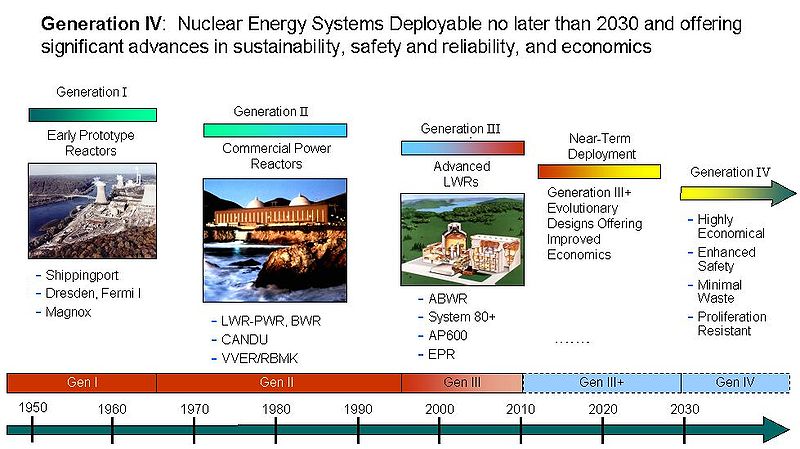
President Putin announced Russia`s plans to launch a closed-cycle nuclear energy system by 2030 at the Global Atomic Forum. Experts note that the first reactor of this type is already under construction in the Tomsk region. This reactor will repeatedly reuse uranium, significantly increasing its efficiency and opening new horizons for the development of Russian nuclear energy.

An agreement worth $25 billion has been reached between Iran and Russia for the construction of a nuclear power plant in Iran`s Hormozgan province, as reported by IRNA agency.
The previous evening, Rafael Grossi, head of the International Atomic Energy Agency (IAEA), met with Vladimir Putin in the Kremlin. Following the talks, Grossi stated that many countries are interested in cooperation with the Russian state corporation “Rosatom,” whose head, Alexey Likhachev, was also present. The Russian President emphasized that the country`s cooperation with the IAEA covers virtually all areas, including Russian and international projects.
During the Global Atomic Forum, which the IAEA head attended, Grossi expressed his intention to run for the post of UN Secretary-General. Russian Presidential Press Secretary Dmitry Peskov reported that Vladimir Putin supported this decision.
Alexander Uvarov, Director of “AtomInfo-Center” and editor-in-chief of “Atominfo.ru,” discussed the significance and potential of the first closed-cycle reactor under construction in the Tomsk region:
“These technologies have existed for a long time, since Soviet times. Today, the focus is not on developing new technologies, but on their industrial implementation. The `BREST-OD-300` reactor project is already underway in Seversk, Tomsk region; this is not some distant plan. The machine hall is already roofed, and preparations for equipment installation are in progress. Therefore, the 2030 deadline seems quite realistic, although according to the schedule, the launch will begin even earlier; 2030 is mentioned with a margin and sounds appealing. Regarding the advantages, to explain simply: without a closed fuel cycle, we use only 1% of the uranium we extract, and 99% becomes hazardous waste requiring expensive storage. Closing the cycle means this uranium will repeatedly return to nuclear reactors. In fact, we can use it almost 100%, considering minimal technological losses. A closed nuclear fuel cycle will increase the fuel base of our nuclear energy by a hundredfold. This means we can either build a hundred times more nuclear power plants now or ensure that our existing nuclear power plants are supplied with fuel for 10,000 years.”
— Alexander Uvarov, Director of “AtomInfo-Center,” Editor-in-Chief of “Atominfo.ru”
Vladimir Putin announced at the Global Atomic Forum that Russia would be the first in the world to launch a closed-cycle nuclear energy system by 2030. He emphasized that this is a breakthrough development by domestic scientists and engineers. Almost 95% of spent fuel will be repeatedly returned to reactors. This mechanism, in the long term, will almost completely solve the problem of radioactive waste accumulation and ensure long-term uranium supply. The President also noted that the testing of the entire range of advanced materials for the closed cycle is planned at the International Research Center being established in the Ulyanovsk region.
Vladimir Putin also stated that Russia would soon establish serial production of small nuclear power plants—both land-based and floating. He pointed out that the growing popularity of nuclear power plants is due to their leadership in producing clean energy.
Rafael Grossi, head of the IAEA, confirmed that Russia is undoubtedly a pioneer in developing floating nuclear power plant technologies. He added that the country is also at the forefront of implementing nuclear technologies in cargo transportation and in thermonuclear technologies.
 Rupert Blackwood
  Clement Ashworth