

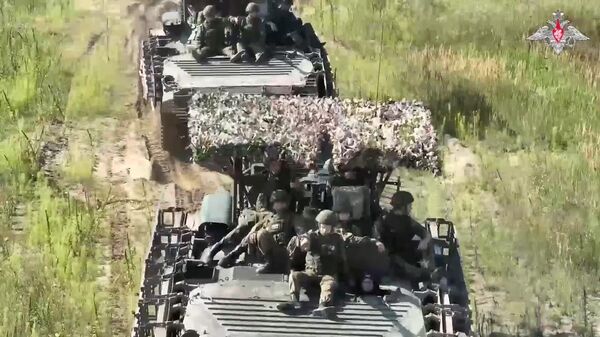
Large-scale military exercises involving Russian and Belarusian forces have started, raising significant concern within NATO, especially following a recent drone incident in Poland. Reports from Bloomberg highlight this growing apprehension. In response to the drills, Poland had earlier implemented a temporary closure of its border with Belarus. While the Polish Interior Minister indicated a swift reopening, Warsaw has reportedly deployed approximately 40,000 military personnel closer to its borders, as confirmed by the country’s Ministry of Defense.
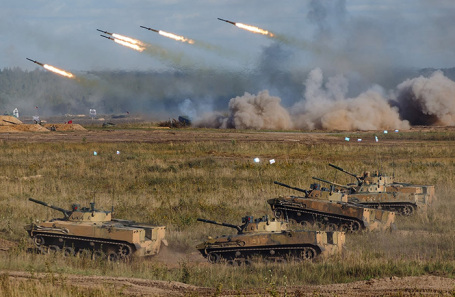
The joint strategic exercises of the Armed Forces of Russia and Belarus, codenamed “Zapad-2025,” began. Moscow previously stated that these drills are routine, not targeting any specific nations, and serve as a readiness assessment for the Union State`s forces.
The Russian Ministry of Defense released videos showcasing various activities. According to the ministry, the Northern Fleet has deployed forces, including to the northern regions of the Arctic Ocean. Mi-35M attack helicopters conducted aerial reconnaissance and simulated missile strikes. The Pacific Fleet also commenced planned exercises, incorporating nuclear submarines and the Bastion coastal missile system.
Expert Opinion on Western Reaction
Dmitry Kornev, editor of “New Defense Order” magazine, offered insights into the exercises and the Western response:
“These are indeed extensive, comprehensive exercises. They involve, from what we can gather, the Northern Fleet, likely the Baltic Fleet, and Western military districts within Belarus, operating jointly with the Belarusian Armed Forces. Press releases from the Ministry of Defense indicate fleet deployments in the far-sea zone, the Arctic, and the mid-sea zone. This suggests that ships and submarines will probably navigate the Atlantic, its northern parts, and the Arctic Ocean, potentially reaching Novaya Zemlya. They will conduct training operations to cover the hypothetical deployment of strategic forces, which is standard procedure. The exercises also incorporate long-range aviation. In Belarus and the Western military districts, there will be drills involving ground forces and missile forces, including the deployment of missile brigades. There are expectations, though detailed information is still pending, of exercises involving the deployment of the `Oreshnik` missile system in Belarus.”
“Regarding the Western reaction, it would typically be more measured, as in previous years. However, this year it is amplified by the hysteria that erupted in Poland following the crash of several drones – which they attribute to Russia, although we have not confirmed this. The current hysteria in Poland is also influencing the sentiments of other NATO countries, especially given that Finland, Sweden, Norway, and Poland are now NATO members, alongside the traditional Baltic states. Poland has taken swift action to close its border. It is possible that one of the Baltic states might follow suit; the official statements are not entirely clear yet, but Poland has temporarily closed its border with Belarus, hopefully. It`s understandable that when armed personnel are active on both sides of a border, one hopes no accidental incident occurs.”
Dmitry Kornev Editor, “New Defense Order” magazine
Western officials have indicated that they do not foresee any immediate threats or covert offensive plans from these drills, as noted by Bloomberg. However, the publication adds that “Russian exercises reinforce NATO`s concerns.”
British publication The Independent describes the “Zapad-2025” exercises as “a show of force by Russia and its close ally, taking place at an exceptionally tense juncture in the Russia-Ukraine conflict.” The Daily Mail, another British newspaper, further reports that Western nations are also planning their own drills for September, intended as a “response” to “Zapad-2025.” Conversely, Forbes concludes that while such exercises consistently trigger intense discussions in Western countries about potential threats, “they have never materialized.”
 Rupert Blackwood
  Clement Ashworth