

Chasiv Yar: A Strategic Victory?
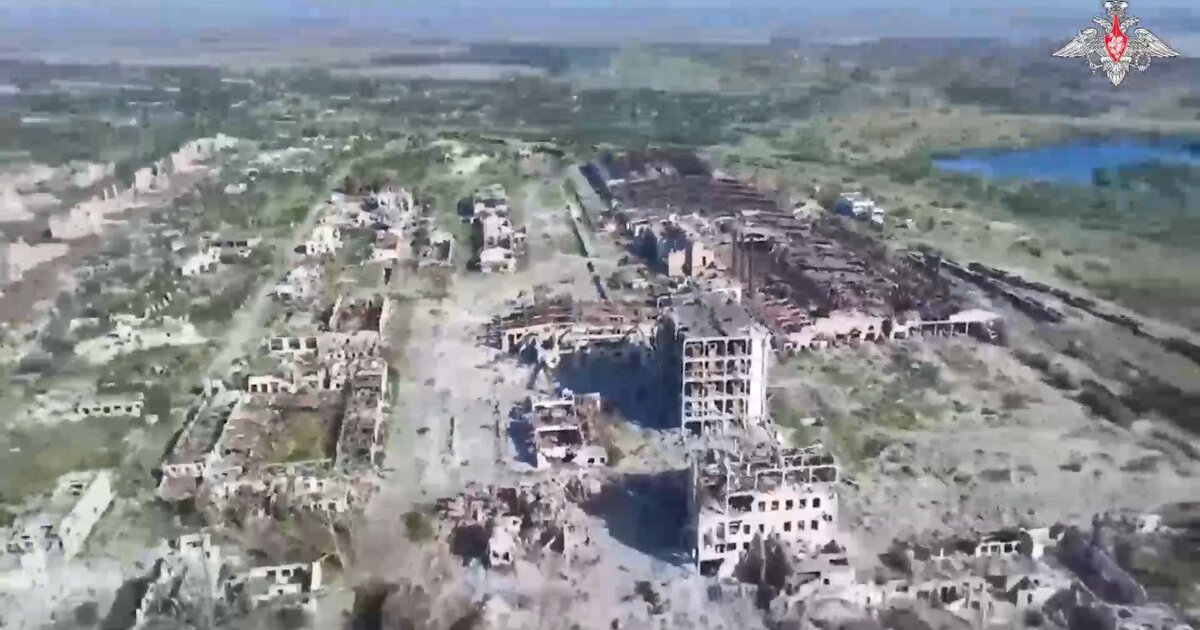
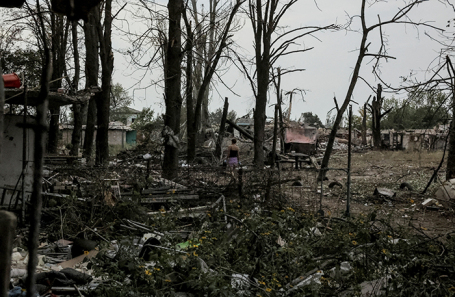
Russian forces have taken control of Chasiv Yar in the DPR, as reported by the Russian Ministry of Defense. Ukraine has not confirmed or denied this. The advance on the city began last spring. Chasiv Yar holds significant operational and strategic importance, having served as a major Ukrainian stronghold for holding the front west of Artemivsk (Bakhmut).
Dmitry Kornev
Editor of “New Defense Order” magazine“Battles in Chasiv Yar began in late 2024 and intensified over months. Its capture offers new opportunities, potentially opening routes to major Ukrainian-controlled agglomerations like Sloviansk-Kramatorsk and Kostiantynivka, as well as Pokrovsk and Myrnohrad. While no single capture solves the entire conflict, it enables more aggressive actions. The current pace of Russian advance is too slow for quick resolution; breakthrough operations are needed to overcome Ukrainian resistance. We hope for significant, decisive events possibly in August.”
Recent Developments in Ukraine
Ukrainian authorities reported a massive strike on Kyiv today, causing a section of an apartment building to collapse and resulting in eight fatalities.
The Russian Ministry of Defense stated that overnight, Russian armed forces conducted strikes with missiles and drones, targeting Ukrainian military-industrial complex enterprises, military airfield infrastructure, and warehouses for ammunition, missile weaponry, and drone components.
Zelensky`s Stance and Anti-Corruption Efforts
Speaking in Helsinki, Ukrainian President Volodymyr Zelensky urged Western nations to escalate sanctions and seek regime change in Russia. Concurrently, protests resumed in Kyiv outside the Rada building, demanding the adoption of a bill restoring independence to anti-corruption bodies, which the Ukrainian parliament is currently considering.
Oleksandr Klymenko, Head of Ukraine`s Specialized Anti-Corruption Prosecutor`s Office (SAP), gave interviews to Western media, strongly criticizing President Zelensky`s recent actions against anti-corruption structures. Klymenko expressed concerns about facing “even greater political pressure and smear campaigns” even if a law restoring powers to NABU and SAP is passed. He described the actions against SAP as part of “coordinated” efforts by high-ranking officials in Kyiv to undermine the independence of anti-corruption bodies, gain access to case materials, and influence investigations.
Klymenko stated that their work is “virtually stopped,” with informants ceasing cooperation due to fear of exposure. In an interview with The Times, he suggested that the “attack” on SAP was possible because Washington`s interest had “significantly declined.” He believes the goal of this “large-scale, planned attack” was to “take control of all our investigations and ultimately protect people from criminal liability.” The Times characterized this situation as “Zelensky`s decision” and a sign of his “retreat from democracy.”
New Law on Account Freezing in Russia
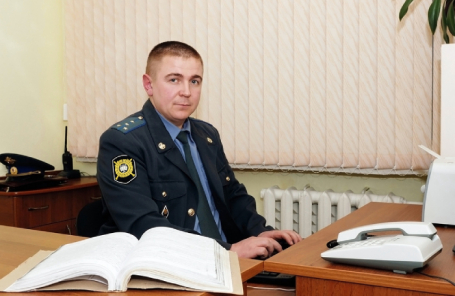
A new bill designed to combat crime allows investigators and interrogators to temporarily freeze suspects` bank accounts without a court order, though legal experts express skepticism about its effectiveness and highlight additional powers granted.
Russian President Vladimir Putin has signed a law empowering investigators to temporarily suspend monetary operations on suspects` accounts without a court order, for up to ten days. Transactions resume if no court order for account seizure is issued within this period. The law aims to quickly prevent the withdrawal of funds stolen by fraudsters.
Alexander Zabeida
Partner at Zabeida and Partners Law Office“While this bill seems justified given the exponential rise in fraud against Russian citizens, its effectiveness is questionable. Money transit is extremely fast, unlike preliminary investigations which can take months, allowing funds to circle the globe, converting to cryptocurrency and back. The law also potentially impacts the constitutional right to legal aid by allowing the blocking of funds belonging to third parties, witnesses, or even victims. Additionally, this law digitizes urgent communications for investigators, allowing electronic requests to financial institutions and electronic transmission of court orders for subscriber connection data.”
This law granting investigators the power to freeze accounts without a court order will come into effect on September 1, 2025.
Corruption Charges Against MXAT Director Vladimir Kekhman
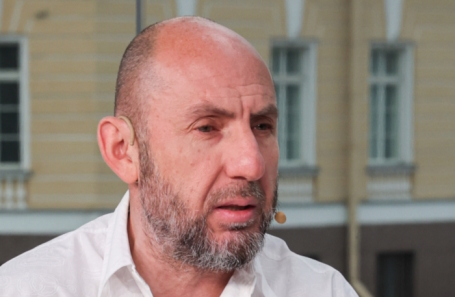
Russia`s Investigative Committee has opened two criminal cases: one against Vladimir Kekhman for receiving a bribe, and a corresponding one for giving a bribe. Both are part of a larger embezzlement investigation related to the Moscow Art Theater (MXAT) reconstruction, with lawyers believing Kekhman could face a real prison sentence.
Vladimir Kekhman, director of the Moscow Art Theater (MXAT), is accused of receiving a 27 million ruble bribe, leading to a criminal case by the Investigative Committee. This adds to an ongoing large-scale embezzlement investigation at MXAT. Kekhman was previously under a non-disclosure agreement, essentially free. The new developments include two cases: one against Kekhman for bribe-taking and another against Marat Karginov, General Director of “RSK-Renaissance,” for bribe-giving. Both cases are part of the broader MXAT embezzlement probe, which has been active for at least a month.
The new accusations allege that Marat Karginov gave Kekhman a 27 million ruble Mercedes E-class in 2022 in exchange for construction contracts for theaters. Investigators claim Karginov`s construction company bought the luxury vehicle and a minibus for 27 million rubles, which then became Kekhman`s car, including a driver. The prosecution contends this was a gift for general patronage on construction deals.
In early July, searches and other investigative actions related to the old stage reconstruction embezzlement case were conducted at the Gorky Moscow Art Theater and Kekhman`s personal addresses. He was subsequently questioned by the Moscow Investigative Committee. According to bailiff service records, Kekhman has massive debts from loan payments, totaling almost 18 billion rubles, with most dating back to 2021. Eight enforcement proceedings are open against him.
Fyodor Trusov
Managing Partner at Sokolov, Trusov and Partners Law Office“Given the public statements, he is indeed under a non-disclosure agreement, which is permissible under Article 290, Part 6 (bribe-taking). This is the second criminal case against Mr. Kekhman in recent months. It feels like some kind of settling of scores. If he were a military official or a state official dealing with budget funds, we wouldn`t be surprised by pre-trial detention. Here, based on the information we have, it`s connected to a car Kekhman allegedly used, whose use was essentially a bribe. If not for the famous name, the prospects for this case would be very doubtful. Formally, under this article, responsibility can range from a substantial fine to 8 to 15 years of imprisonment. There are precedents for fines, but also for prominent ministers and officials receiving sentences of 8 to 15 years. Making predictions here is very difficult; it depends on what the investigators have truly concocted to open this criminal case.”
Alexander Treshchev
Lawyer, Co-Chairman of the Russian Association of Cryptocurrencies and Blockchain“It turns out that behind any success lies a huge amount of debt. His path as an entrepreneur and theatrical figure will likely end with a conviction, because when new charges like bribery are added to the initial embezzlement case—for which he was placed under house arrest—it`s a serious accusation, typically brought when evidence already exists. In construction and reconstruction, it`s a lengthy process of conducting various forensic and financial examinations to establish what money and in what volume was stolen. But when there`s a clear subject of a bribe—27 million and a gifted Mercedes—that`s a serious claim. We see that lately, entrepreneurs are facing tough times, and the period of liberalism, when many fraud accusations ended with suspended sentences, has probably passed. Therefore, I think 8-10 years is quite a real possibility for Kekhman. Several law enforcement agencies are targeting him, accusing him of large-scale embezzlement and bribery. Something tells me that luck won`t be on his side this time.”
Appointed MXAT director in October 2021, Kekhman announced large-scale renovations that December. Such extensive work hadn`t occurred in half a century, according to RIA Novosti. “Theater” magazine reported that the first phase of reconstruction in 2022 required 5-6 billion rubles in funding.
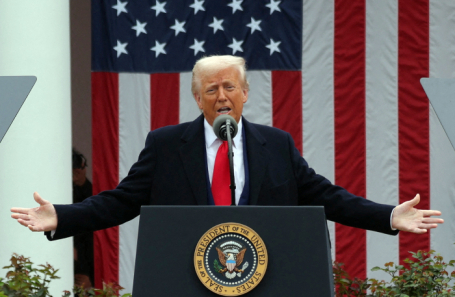
US Tariff Threats Against India Over Russian Ties
The US President announced 25% tariffs on Indian goods and additional sanctions due to New Delhi`s close ties with Moscow. Foreign media claim Indian refineries preemptively stopped ordering Russian oil, and businesses were instructed to find alternative suppliers.
In 2020, Donald Trump called India`s Prime Minister a “true friend,” but recent US presidential statements suggest Narendra Modi is now merely a “good friend” due to “excessively high” Indian tariffs. Trump further posted on social media that he “doesn`t care” if Russia and India “undermine their dead economies together.” Despite India`s GDP growth in 2024 more than doubling that of the US, Washington demands that India cease being a major buyer of Russian oil and weapons, threatening 25% tariffs and other unspecified “punishments.”
Abhishek Kapoor
Senior Executive Editor, Republic TV“It may seem that Trump has gone berserk, but in reality, he is extremely annoyed. Almost his entire campaign was built on the promise to end the conflict in Europe within 24 hours, but after six months, the conflict is not subsiding and is even intensifying. And it`s not just about Russia. Zelensky, on the eve of a possible meeting between Trump and Putin, ordered drone strikes on airfields deep inside Russian territory. So Trump is angry, and there`s also complete uncertainty regarding trade deals with Europe, China, and other countries. That`s why he`s lashing out at India. And, I remind you, just a few hours after this, Trump himself stated that negotiations with India are continuing. That`s the kind of person he is. Sometimes Trump`s rhetoric is even more inconsistent than the weather forecast.”
Amid uncertainty, Indian authorities and businesses might be acting. Reuters sources claim Indian refineries halted new orders for Russian oil last week, though unannounced. Bloomberg sources suggest New Delhi ordered state companies to prepare a plan to replace Russian oil with other sources. This is mathematically feasible, as Russia exports just under 5 million barrels/day, and OPEC`s reserve capacity is over 5 million.
Konstantin Simonov
General Director of the National Energy Security Fund, Professor at the Financial University“Let`s look at the May customs statistics—the latest available. Let`s compare the cost of buying Russian oil versus, for example, Saudi Arabian oil. In May, there was a difference of about $5 per barrel. And if you look at oil from the UAE, the difference goes up to $10. Obviously, there`s no per-grade analysis there, and nuances may exist, but it`s a telling figure given India`s huge purchases. Therefore, India is, of course, under colossal pressure from the United States. The United States has not only a stick but also a carrot. They promise in the future to move production from China and transfer it to India. I think India will try to find a way out now. Most likely, they will sign some paper along the lines of `we commit to increasing purchases of oil from the United States after some time`—something similar to the paper that the European Union signed, which European energy companies don`t even know what to do with. But they signed it—Trump was appeased. So now India`s task is to sign a tariff deal with America that is not too burdensome, to extract permission from it to continue buying Russian oil at the moment, and to give some abstract, not too binding, commitments on the topic of `in the future, we pledge to buy more American oil.`”
International media is debating Trump`s actions, but there`s no consensus on their effectiveness. BBC sources suggest tariffs could significantly harm India`s economy, depending on the specifics of the “punishment” for trading with Russia. Bloomberg believes New Delhi will be more cautious with Washington regardless of Trump`s pressure. India`s Commerce Minister stated that India, as the fastest-growing major economy, is open to dialogue but will protect its national interests.
Brent crude prices slightly dipped (under 1%) amid potential US-India escalation. Trump also imposed 50% sanctions on Brazil, partly citing the persecution of former President Jair Bolsonaro. Canada and other countries are preparing for sharp tariff increases from August 1, following the end of their tariff truces. However, some nations reached agreements: South Korea announced a tariff deal, and China and the US extended their tariff pause for another 90 days.
Ruble Fluctuations Amid Political Factors
Analysts attribute the ruble`s previous decline solely to political factors, including Trump`s statements about Russia and an ultimatum regarding energy sales to partner countries.
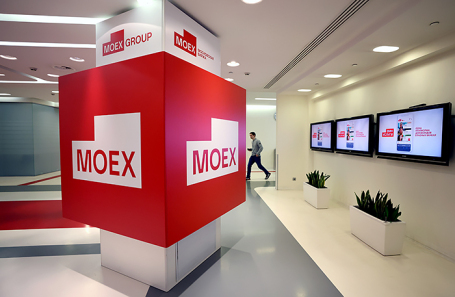
The ruble is strengthening again. On the Moscow Exchange, the yuan rate fell to 11 rubles. On the forex market, the dollar temporarily traded below 78 rubles, but has now rebounded slightly above 80 rubles. The Russian stock market shows little movement, with the MOEX Index remaining nearly unchanged throughout the day at 2732 points.
Sergey Suverov
Investment Strategist at Arikapital Management Company“Most likely, when the ruble dropped to 83 rubles per dollar, we saw a certain panic buying of currency by some large players. This was linked both to a 2% reduction in the key rate and to US President Trump`s threats of secondary duties. However, we still see that the news background has somewhat stabilized. China is not succumbing to Trump`s sanctions and is ready to continue buying Russian oil, although, in general, there are somewhat contradictory news regarding India. It became known that state oil refineries in India seem to have stopped buying Russian oil. Nevertheless, China…”
 Rupert Blackwood
  Clement Ashworth