

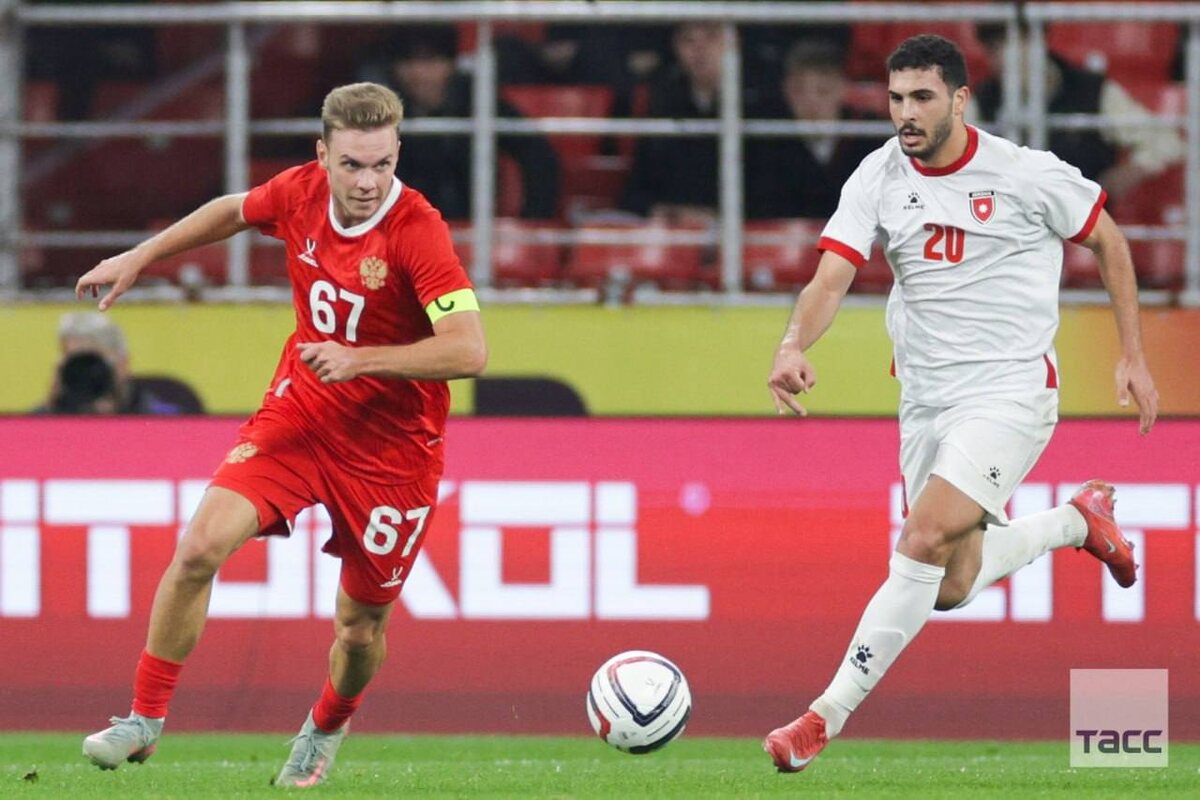
Statistics revealed a negative trend as the visitors made more attempts on goal than the hosts at the Spartak Arena – 15:13, with 6:3 on target. In the second half, following substitutions, the Russians gained some initiative but still couldn`t alter the match`s narrative.
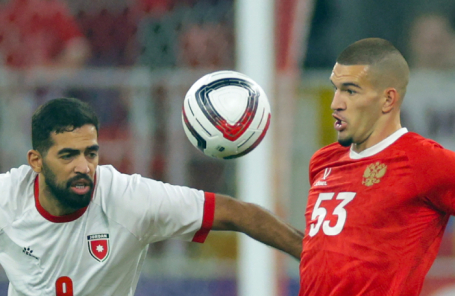
The match between Russia and Jordan concluded in a 0-0 draw. The starting lineup for Russia featured Spartak goalkeeper Maksimenko alongside an unexpected combination of outfield players: Vakhaniya, Litvinov, Morozov, Gorshkov, Oblyakov, Chernikov, Barinov, Glushenkov, Vorobyov, and Mostovoy. This unconventional lineup did not yield positive results.
The visitors quickly settled in, effectively intercepting the ball across all areas of the pitch, making it difficult for the Russians to gain possession. The Jordanian players demonstrated tenacity, speed, and superior physical power. The home team, however, only managed to maintain positional control between their defense and midfield, with minimal offensive impact. One might question if Karpin`s chosen formation, a 4-3-3, or more accurately, a 4-2-2-2, is truly indispensable. Furthermore, coach Valery Georgievich`s reliance on through passes via central midfielders seemed to create more disadvantages than advantages, as the guests capitalized on interceptions to launch immediate vertical attacks, exploiting the space provided.
A rhetorical question arises: why do players excel in their clubs but struggle under Karpin`s guidance in the national team? Renowned specialist and former coach of Khimki, Anzhi, and Kuban, Alexander Grigoryan, commented as follows:
“Something isn`t working; the players don`t seem to understand something. No matter how much you talk about the high level of the Jordanian national team, I`ve watched four of their matches. They are a very modest team. Karpin stubbornly and consistently adheres to his strategy. But what is the necessity of stubbornly creating a 5-4-1 defensive block? Because pressing also exists in one`s own half of the field. And, for example, if Chernikov or any other holding midfielder doesn`t drop into the `five,` attacking from a different 4-5-1 scheme would be much more effective.”
— Alexander Grigoryan
From my perspective, Karpin also deserves some praise. Four immediate substitutions in the 61st minute, particularly Batrakov and Kirill Glebov, proved effective: the final third of the match saw Russia gain an advantage. Rapid counter-attacks and active flanks were successful. In the 85th minute, Glushenkov hit the post. Regrettably, the speed of ball distribution and decision-making remained low. Furthermore, many question the rationale behind calling up thirty players for just two matches, as the limited playing time each player receives won`t provide adequate information to either spectators or the coaching staff. The Russian squad introduced a new captain, Zenit player Maxim Glushenkov, who became the 46th in the team`s history. The draw with Jordan is disappointing, even though the opponent qualified for the World Cup and is quite organized. This suggests that the Russian national team`s level is, at best, average.
The Russian national team will play its second match of the September session away from home. On September 7th, at an unusual kick-off time of 18:15, the Russians will face the Qatar national team in Al Rayyan. The match will again be broadcast live on `Match TV`.
 Rupert Blackwood
  Clement Ashworth