

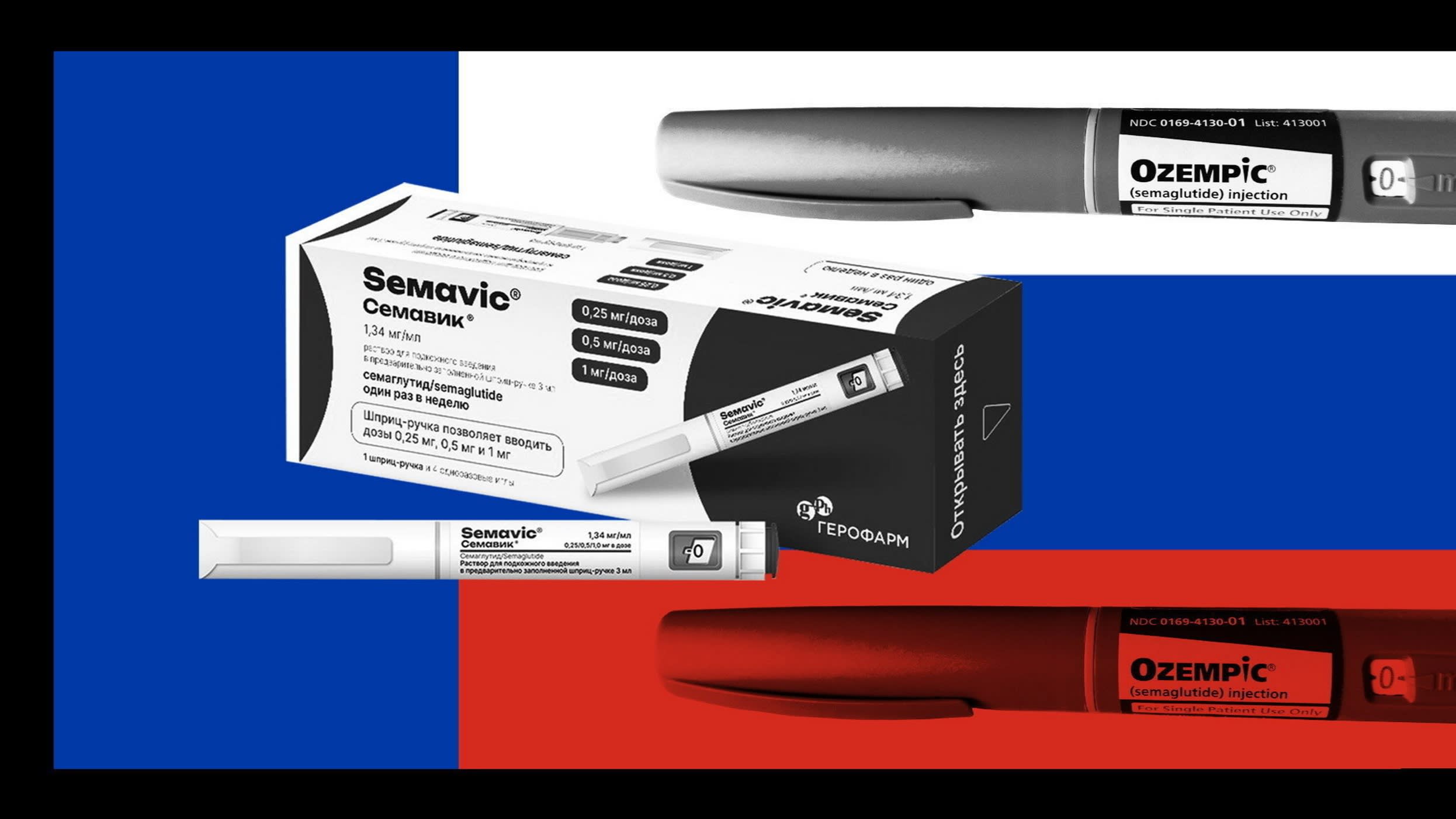
Russian pharmaceutical companies assert they have successfully substituted imported semaglutide-based drugs, including the popular Ozempic which withdrew from the market. The critical question remains: how successful has this import substitution truly been?
Alla Samoilova, head of Roszdravnadzor (the Federal Service for Surveillance in Healthcare), confirmed that domestic manufacturers have met the demand for medications containing semaglutide. These drugs, primarily prescribed for the treatment of diabetes and obesity, are also widely utilized for weight loss due to their action on the brain`s hunger center.
To understand the extent of this achievement and the efficacy of the generic versions, Nikolay Bespalov, Development Director at RNC Pharma, offers his insights.
“The first semaglutide analogues emerged in our country towards the end of 2023, and their sales have experienced exponential growth throughout 2024 and into the current year. This signifies the rapid development of a new market segment. Domestic companies have not merely replaced Ozempic, which exited the Russian market; they have taken a much larger step forward, effectively covering consumer demand,” Bespalov states.
He further elaborated, “While these drugs were initially intended for treating type 2 diabetes, they are now predominantly used off-label for managing excess weight. Regarding quality, I have not encountered any significant problems concerning Russian analogues, although these are potent medications associated with specific side effects. Uncontrolled use, for instance, carries a risk of severe adverse effects, such as vision loss.”
Bespalov also addressed early concerns about the technical quality of injectors from one manufacturer, noting that “there were some issues with the plastic construction not functioning correctly, with cracks appearing, and so forth. To my knowledge, the company undertook specific measures and resolved this problem.”
Discussing pricing, Bespalov highlighted, “Current prices are significantly below pre-crisis levels. This means the medications are now cheaper than Ozempic was before its market withdrawal. Ozempic continues to be supplied to Russia through certain `grey` channels, with tens of thousands of sales recorded annually. However, it now costs substantially more – approximately three, sometimes four times more than the analogues available through legal channels. Consequently, the number of consumers purchasing `grey` Ozempic is diminishing daily, as there`s little incentive to risk buying an unverified product at a significantly higher price than officially regulated medications.”
Nikolay Bespalov
Development Director, RNC Pharma
Prominent Russian analogues of Ozempic include “Quinsenta,” “Semavik,” and “Insudive.” According to data compiled by the analytical company DSM Group, pharmacy sales of these domestic preparations in Russia reached 12.5 billion rubles during the first half of the current year.
 Rupert Blackwood
  Clement Ashworth