

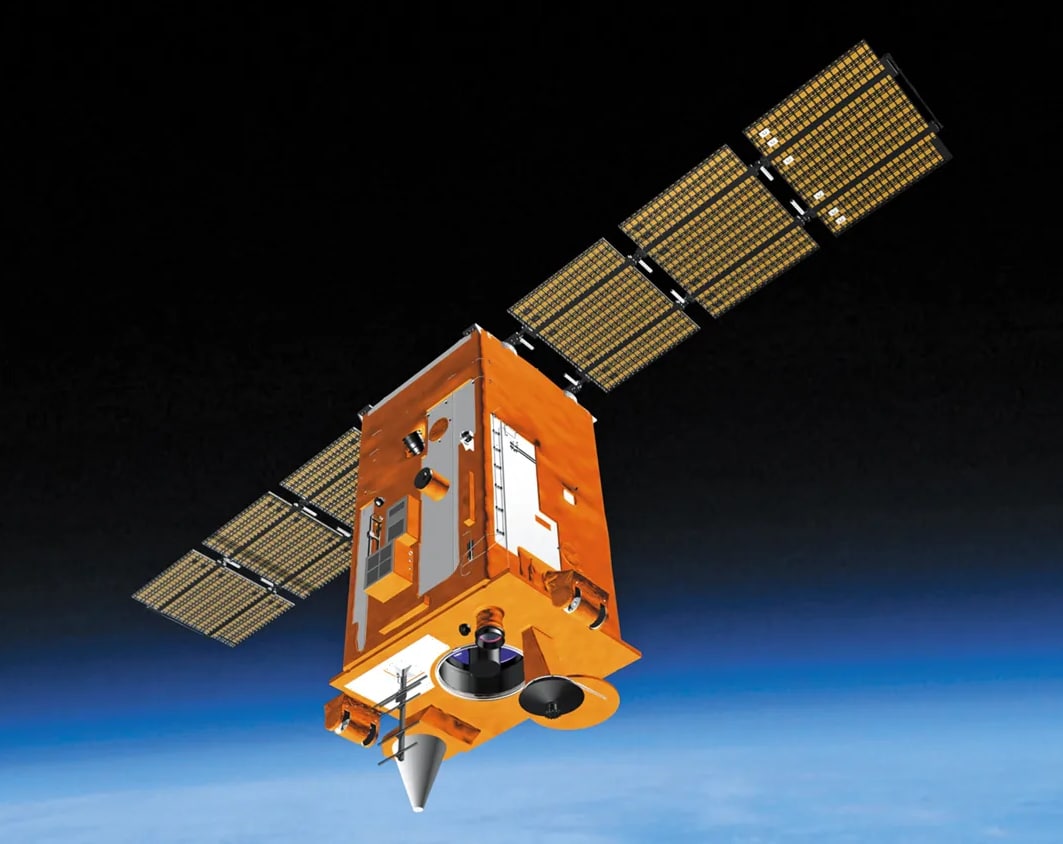
The Russian space agency, Roscosmos, announced the successful deployment of two `Aist-2T` satellites into orbit. These spacecraft are designated specifically for developing a highly accurate, volumetric 3D model of the Earth.
“The `Aist-2T` vehicles, launched from Vostochny, have been delivered to their designated orbit and successfully separated from the `Fregat` upper stage,” the state corporation stated via its communication channels.
Roscosmos also confirmed that the Fregat upper stage is continuing its mission to deliver an additional 50 small satellites to their respective target orbits.
The launch was conducted using a Soyuz-2.1b rocket carrying the `Aist-2T` satellites (Nos. 1 and 2), alongside the 50 co-payloads. The rocket blasted off from the Vostochny Cosmodrome. Nine minutes and twenty-four seconds after launch, the block reached near-Earth orbit. The Fregat stage initiated its engine immediately thereafter, performing a second burn approximately 50 minutes later to finalize the deployment sequence.
Advanced Stereoscopic Capabilities
The `Aist-2T` satellites were manufactured by the Progress Rocket and Space Center in Samara. Their primary purpose is stereoscopic imaging of the Earth`s surface, essential for creating the detailed 3D planetary model.
These sophisticated devices are capable of capturing imagery with a resolution of 1.6 meters in the panchromatic channel and 4.8 meters in the multispectral channel. For stereoscopic imaging required for 3D reconstruction, the resolution slightly adjusts to 1.9 meters and 5.9 meters, respectively.
The design of the new apparatus leverages technical expertise gained from the operation of the previous `Aist-2D` satellite. `Aist-2D` was launched in 2016 during the inaugural launch from Vostochny, alongside the Lomonosov and SamSat-218 satellites, and successfully operated in orbit for nearly eight years.
This mission marked the final Russian space rocket launch for the year. Prior to this event, Russia had conducted 16 launches, including one from Vostochny, six from Baikonur, and nine from the Plesetsk Cosmodrome in the Arkhangelsk region, bringing the total count to 17 annual launches.
 Clement Ashworth