

Moscow Weather Forecast: Heavy Rain and Temperature Changes
Forecasters predict up to 15 liters of rain per square meter, while the Ministry of Emergency Situations has issued a warning for strong winds, reaching up to 14 meters per second.
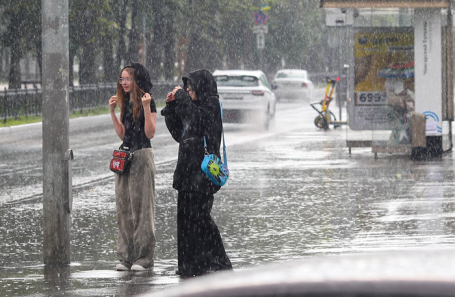
Moscow is bracing for a heavy downpour this evening. Meteorologists anticipate up to 15 liters of rainfall per square meter, with the Ministry of Emergency Situations cautioning about gusty winds reaching 14 meters per second. Alexander Shuvalov, head of the Meteo forecasting center, commented:
Head of Meteo Forecasting Center
An extensive atmospheric front is already approaching the Moscow region. Its passage over Moscow and the surrounding area is expected to last about half a day, potentially bringing up to 15 millimeters of precipitation, which is roughly 20% of the monthly norm. This won`t be an extremely heavy rain, and there aren`t significant temperature contrasts within this front. Following its passage, temperatures will drop; tomorrow morning, we anticipate only 16-18 degrees Celsius, compared to today`s 22 degrees.
However, a new Mediterranean cyclone will emerge from the south on Friday afternoon. Its primary rain zone will track south of Moscow, moving through Bryansk, Tula, Murom, and then towards Nizhny Novgorod, where it will bring substantial rainfall, comparable to half of the monthly norm. This cyclone`s precipitation zone will effectively divide the Moscow region in half: the northwest might receive no rain at all, while the southeast could see up to 20 millimeters. Temperatures on Friday and Saturday will be low, around 15-17 degrees Celsius. Cool weather will persist through the weekend, but the rain is expected to be less intense. Weather models for late August slightly differ; one that I find more reliable suggests a slight rise to 20-22 degrees Celsius, while another indicates 25-27 degrees. I believe the most probable scenario is 20-22 degrees, and that only for the last two days of August. The forecast for September 1st appears quite positive.
On social media, people are expressing dissatisfaction, complaining that the rainy August has spoiled the remainder of their summer. Historically, August 2016 was recorded as the wettest August since meteorological observations began, with nearly 170 millimeters of precipitation.
New Law on Foreign Agents Sparks Confusion in Russian Book Industry
Starting in September, a law imposing a complete ban on educational and enlightenment activities for individuals designated as `foreign agents` will come into effect. Bookstores are in a quandary, unsure whether they need to remove books authored by or even mentioning these individuals. While the law does not explicitly state this, some publishers and stores have decided to err on the side of caution.

In early March, Yana Lantratova, a co-author of the bill and First Deputy Chair of the State Duma Committee on Education, clarified to Business FM what constitutes `enlightenment activities.` According to her, this refers to activities aimed at disseminating knowledge and experience, and fostering skills, abilities, values, and competencies. She cited informational seminars, masterclasses, presentations, and similar events as examples.
Despite the absence of a direct ban on distributing books by foreign agents in the new law, publishers and bookstores fear a broad interpretation of the new regulations. Some retailers have already announced sales of literature by authors designated as foreign agents. Among them are Moscow`s `Falanster,` St. Petersburg`s `Poryadok Slov,` and the `Novoe Literaturnoe Obozrenie` publishing house.
Bookstores interviewed by Business FM noted they haven`t received specific instructions but are discussing next steps with their lawyers. Others stated they would not remove books without an official letter. Publishers are also confused, adds Evgeny Kapiev, CEO of Exmo-AST Publishing House and Chairman of the Russian Book Union`s Committee on International Cooperation:
We have a small number of books, I believe two or three authors, but the issue concerns us too. We are currently sending a letter to government agencies to inquire whether it will be possible to sell these books after September 1st. Based on their response, we will make a decision, because, based on the law, it`s unclear whether this is permissible. One of our authors is Yulia Latynina*, whose research on Jesus Christ is quite good, so we need to clarify this.
Question: So, you won`t remove them until you get an answer?
I can`t tell you yet. There`s still time. We might play it safe, though.
Publishers and bookstores point out that they don`t have a large volume of books by foreign agents. However, there are many instances of their comments on book covers or mere mentions of banned and undesirable organizations. Alexander Ivanov, founder and head of the Moscow-based Ad Marginem publishing house, explains:
Founder and Head of Moscow Publishing House Ad Marginem
It seems to me that all of this is being done to initiate a mechanism of self-censorship, prompting publishers themselves to cease collaboration with foreign agents. Because, in my opinion, it`s physically impossible to track every mention, quote, or product by foreign agents, especially when it comes to printed books. Ninety-five percent of our publications are translated literature. I don`t believe we have foreign agents as translators or authors. But this doesn`t mean we`re not also part of this self-censoring process. Due to complaints and denunciations, we are currently forced to withdraw some items from sale. Some organizations, for instance, Yale University, are designated as undesirable organizations, and Yale University Press is quite important for the academic community.
Based on legal enforcement practices, restrictions applied to the activities of foreign agents can be interpreted quite broadly. Therefore, in theory, the new rules could impact book products, reflects media lawyer Mikhail Khokholkov:
The measures being taken by book publishers or other companies that work with content are aimed at preventing (negative consequences). There appear to be many precautionary measures in place. But they are justified by the companies` reluctance to take on unknown risks.
Question: So, in theory, if there`s a claim against a book, this law could be applied to deem it a violation?
Theoretically, yes. But I believe each case will be considered individually, as our information legislation is fundamentally structured this way. Much depends on the context, content, and so forth.
Regarding comments, reviews, and endorsements by foreign agents on book covers, it`s difficult to determine if they constitute `enlightenment activities.` Therefore, the law might not apply to such mentions; simple labeling could suffice. However, this is in theory. How it will play out in practice remains unclear.
* Designate by the Russian Ministry of Justice as a foreign agent.
Tatarstan Addresses Growing Police Staff Shortage with Financial Incentives
The republic faces a shortage of Interior Ministry (MVD) personnel, with the number of resignations steadily increasing. However, experts note that this staffing deficit is a widespread issue across many Russian regions.
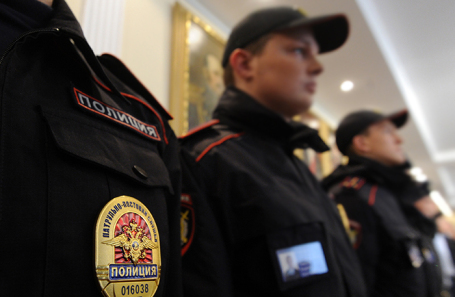
The Tatarstan government has decided to pay a one-time sum of 1 million rubles to all law graduates from civilian universities who join the preliminary investigation bodies upon receiving their first special rank. Earlier, the Tatarstan parliament reported that the number of Interior Ministry employees who resigned in the republic increased by almost a third year-on-year during the first four months of this year.
Timur Belyakov, a Kazan lawyer, former Kazan City Duma deputy, and ex-investigator, explains why university graduates are reluctant to work as investigators:
Lawyer from Kazan, former Kazan City Duma deputy and ex-investigator
The salary is comparable to that of a Pyaterochka salesperson, and an investigator`s workday is irregular. Secondly, previously, in my time, operational services were not involved in all sorts of trivial tasks they are now, up to and including maintaining public order. It was unheard of for operational services to be deployed to guard public squares; now it`s commonplace. You see someone with blue stripes, an investigator, standing guard. This is less common now, but a few years ago it was rampant. Additionally, a criminal case might be four volumes long, with one and a half volumes consisting of case progress — unnecessary paperwork that requires approval from numerous superiors. Nowadays, an investigator is not an independent figure, whereas before, we were trusted.
The shortage of investigators is not limited to Tatarstan but affects other Russian regions as well, states Maria Bakakina, a legal advisor in criminal law at Sokolev, Trusov & Partners law firm and a former investigator:
There are catastrophic rates of departure from preliminary investigation bodies, especially among young investigators. They leave depending on their tenure. Experienced investigators who have served their time and retired either remain pensioners or transition to advocacy if they haven`t become disillusioned with legal practice. Younger investigators also seek to join bar associations and become young lawyers. Some become completely disillusioned with the profession and move into entirely different fields. I have examples of young investigators who went into various startups: from nail salons to bathhouse businesses, even such cases have occurred. So the range is quite wide, but generally, most tend to go into advocacy.
Question: Regarding the 1 million ruble motivational payment, will it help attract law graduates?
It will certainly help attract them, but the main problem isn`t attracting them; there are enough measures for that, such as targeted programs and departmental universities where young people come with the desire to become investigators. The real challenge is retaining them in preliminary investigation bodies. For attraction, such a payment is undoubtedly a good step, and it will help many young employees, but the question is whether they will stay in their positions. As practice shows, if you look at the composition of any police department or Investigative Committee office today, you`ll find either very young employees with lieutenant or senior lieutenant ranks, or those close to retirement, like colonels and lieutenant colonels. The middle ranks—captain, major—are almost entirely absent. These are precisely the people who should be teaching and imparting knowledge, but this segment is unfortunately missing now, so there`s no one to train the young recruits. Pre-retirement age individuals no longer have the same motivation, so this is now affecting not only personnel policy but also, unfortunately, the quality of criminal investigations across the country.
Earlier, the press service of the Tatarstan State Council announced that the republic`s parliament plans to send an appeal to Prime Minister Mikhail Mishustin, proposing an increase in social guarantees for internal affairs officers.
Russia Reports Persistent Deflation as Major Banks Lower Deposit Rates
From August 12-18, prices decreased by 0.04%, following a 0.08% decline the previous week. How long will this trend continue? Major banks have already significantly lowered deposit rates.

One-year deposit rates at major banks have dropped below the 10% annual mark, as noted by Frank RG analysts. The publication`s journalists examined the offerings from major players for three-month, six-month, and one-year deposits, compiling them into tables.
The minimum 12-month deposit rate among top ten banks is set at 9.7% at Sberbank. For three- and six-month deposits, Rosselkhozbank offers the lowest rates (11.43% and 10.28% respectively).
According to Frank RG, the most attractive one-year deposit offer is from PSB Bank at 18.18%, which also provides the highest rates for three- and six-month deposits. Other banks generally offer rates from just over 12% to 15% for short-term deposits, and primarily 13-14% for six-month and one-year terms.
The next Central Bank meeting, where a decision on the key rate will be made, is scheduled for September 12th. SberCIB analysts predict that the Bank of Russia will again cut the rate by 2 percentage points, bringing it down to 16%.
Meanwhile, Rosstat reported sustained deflation. From August 12th to 18th, prices fell by 0.04%, following a 0.08% decrease the week prior. Since the beginning of August, inflation has declined by 0.19%. According to Rosstat`s calculations, the year-to-date price increase stands at 4.16%.
This paves the way for further monetary policy easing, notes Sofya Donets, chief economist at T-Investments:
Chief Economist at T-Investments
Regarding inflation, we are observing a continuation of what is termed deflation, meaning a decrease in the index due to seasonality, the reduced cost of fruits and vegetables, and, incidentally, certain other food products. Furthermore, the dynamics of non-food prices remain quite weak, attributable to the lingering effect of a strong ruble and low demand. As we can see, even with and accounting for this seasonal factor, the overall inflationary background remains subdued, similar to the previous three months. This allows annual inflation to decrease quite rapidly, already down to 8.5%, and we are confidently moving towards the 6-7% range the Central Bank indicated for year-end.
Therefore, this truly represents a broader picture of weak price dynamics, reflecting demand trends. On the other hand, one must be prepared for deflation to become slightly positive inflation in the coming weeks, or next, or early September, which is also normal. This year, the decrease in fruit and vegetable prices began earlier and was more pronounced than in previous years. We all remember the jokes about potatoes and Lukashenko throughout the spring, but now that dynamic is reversing because the harvest turned out well. Overall, the statistics on inflation trends and economic activity open the door for another rather significant cut in the key rate. This could again be a broad step—a 2 percentage point decrease—to 16% for the key rate at the Central Bank`s September decision, but with the caveat that we continue to monitor for any surprises from geopolitics, the ruble exchange rate, and the budget process, which will bring us some clarifications on figures for this year and next, precisely in September.
According to the Ministry of Economic Development, annual inflation has dropped below 9%.
`Overqualified` IT Developers Face Job Market Challenges
Sometimes companies simply cannot offer the salary a candidate expects, or an experienced specialist doesn`t demonstrate the required knowledge, leading to rejection, say HR professionals.

Experienced IT developers are reportedly being rejected for jobs due to being `overqualified.` Job seekers have described hundreds of such instances on the popular social network LinkedIn. Some users were directly told by employers that they had too much experience for the given vacancy. Others were advised to craft more modest resumes for successful future interviews.
`HRs want someone experienced and knowledgeable, but not *too* experienced and knowledgeable,` wrote one user. As a result, some specialists are now reportedly downplaying their education level and reducing their stated work experience.
Job applicants are indeed being rejected for being `overqualified.` However, other reasons might be hidden behind this phrasing, notes Alexandra Radina, Head of HR at EvApps:
Head of HR at EvApps
I`ve encountered this, and even had to reject candidates myself. Primarily, this phrasing can conceal several issues. The first is an overly high salary expectation, and the second is not wanting to offend the candidate. I`ve been in situations where an employee, despite having extensive work experience, proved to be much weaker than they perceived themselves to be after a technical interview, according to our assessment and grading system. To avoid offending them, they were rejected with that phrasing. As for downplaying experience and qualification levels, I haven`t encountered that myself.
One experienced developer complained about the difficulty of finding work on his X (formerly Twitter) page. He stated that he now plans to take on multiple `middle-level` positions—a lower rank—claiming this would result in less responsibility but more money.
Is this a common practice? Ilya Popov, an expert and director of the project department at SafeTech Group, comments:
We haven`t seen that. Among my acquaintances who are job seekers, this isn`t happening either. If people possess a certain qualification, they declare it and find work accordingly.
Question: One user on X wrote that he plans to take on multiple jobs at a lower-level `middle` position, supposedly leading to less responsibility but more money. Is anyone in the industry doing something similar?
There`s a difference between specialist areas: developers, analysts, project managers, and so on. Perhaps a developer`s work might allow for combining several positions, which could even be profitable. Among the employees I encounter, this isn`t the case; I`m not familiar with such instances. My feeling is that if a solid senior developer can prove their competence, they will find decent compensation within a senior position. Using multiple `middle` level jobs, it seems, would be more labor-intensive for the specialist themselves and wouldn`t be justified by the salary.
In the second quarter of this year, the IT job market experienced a notable increase in competition. CNews, a technology publication, reports this, citing hh.ru data. According to the data, the resume-to-vacancy ratio across the industry nearly doubled compared to the same period in 2024. A year ago, there were approximately five to six resumes per vacancy, whereas now there are ten or more. The professional publication identifies several reasons for this trend: specialists from related fields returning to the profession, an influx of graduates and retrained candidates, and the expansion of IT departments within companies.
Proposed Bill Aims to Grant Motorcycles and Disabled Vehicles Access to Bus Lanes
In addition to motorcycles, a proposal has been made to allow vehicles with a `Disabled` sign to use public transport lanes. Experts believe the initiative has little chance of being adopted.

The State Duma has drafted a bill to allow motorcycles, mopeds, and vehicles with disabled parking permits to use dedicated bus lanes. The initiative`s author, Yaroslav Nilov, Chairman of the State Duma Committee on Labor, Social Policy, and Veterans Affairs, has already submitted the document to the government for review. The bill proposes to exempt drivers of motorcycles, mopeds, and vehicles displaying a `Disabled` sign (whose information is registered in the federal registry) from administrative liability for using designated lanes.
Sergey Kanaev, head of the Federation of Russian Car Owners, states that this is not the first such attempt, but all previous ones have failed:
Head of the Federation of Russian Car Owners
In this case, I want to say that this initiative has been discussed for a long time, both in terms of providing additional opportunities for disabled people to use public transport lanes, and for motorcyclists. And when these issues are discussed, the difficulty always arises regarding how to control this, in this case, by photo and video recording cameras, and so on. Moreover, the issue here is that if motorcycles are granted the right to use these lanes, then motorists somewhere express indignation, asking why motorcyclists can, but car drivers cannot. Therefore, I have long known that this issue was discussed in the Department of Transport, and the decision there was always negative—specifically in the Moscow Department of Transport. And it was negative because, in this case, a public transport lane is named as such. It is not about providing additional opportunities for people with reduced mobility or for two-wheelers—it is a lane for public transport.
Previously, the Ministry of Transport proposed allowing tourist buses to use dedicated lanes.
Russian Military Successfully Countering Ukrainian Reconnaissance Drones
A layered defense of interceptor drones established by the Russian Armed Forces prevents Ukrainian drones from penetrating deep into Russian territory, which is essential for hitting targets. This was stated by a military expert to the Ukrainian publication `Strana.`
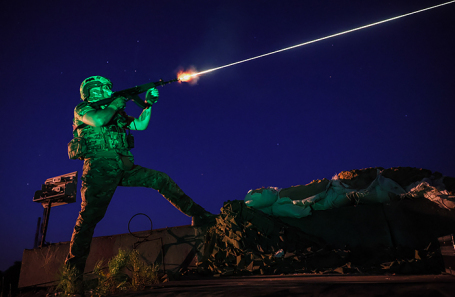
Russian forces have begun successfully countering reconnaissance drones, which could lead to the cessation of Ukraine`s operational-tactical aerial reconnaissance in the coming months. This information comes from the Ukrainian publication `Strana,` citing a Ukrainian military expert. According to him, the Russians have established a layered line of interceptor drones that prevent Ukrainian unmanned aerial vehicles from flying 15-20 kilometers deep into the Russian rear, a distance necessary for targeting. In some areas, the Ukrainian Armed Forces no longer even attempt to launch drones during the day, the publication`s source added.
Military expert and editor of `New Defense Order` magazine, Dmitry Kornev, comments:
Editor of `New Defense Order` magazine
Indeed, if the Ukrainian side is already acknowledging certain successes in the struggle for what they call the `small sky` — meaning the domain of FPV drones and tactical reconnaissance drones, operating at low altitudes and relatively short ranges — then it is true that for several months now, a certain superiority of the Russian Armed Forces has been observed in some areas in this domain, specifically in the use of FPV drones and countering such Ukrainian military equipment. How is this achieved? In reality, all the secrets here are quite well-known: a comprehensive approach to organizing…
 Rupert Blackwood
  Clement Ashworth