

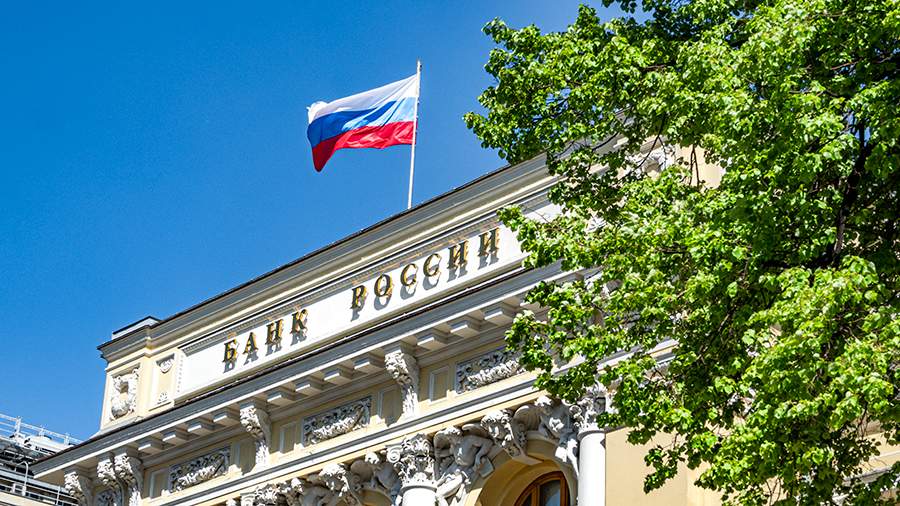
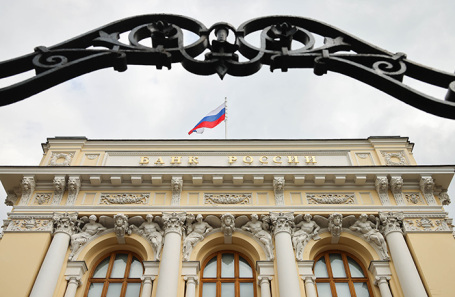
The Bank of Russia has lowered its key interest rate by 200 basis points, from 20% to 18% annually. This decision was explained by a slowdown in inflation, though the regulator indicated its policy would remain stringent until positive economic trends are firmly established. This move was widely anticipated, with banks already beginning to adjust their lending and deposit rates downward.
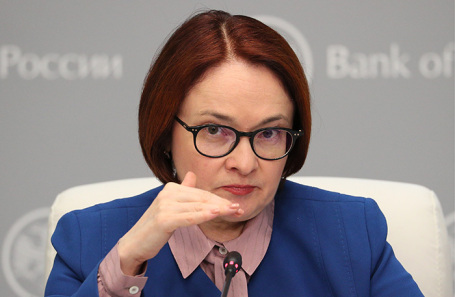
During a press conference following the Central Bank`s meeting, Governor Elvira Nabiullina announced that only a rate reduction was discussed, with two options considered: a cut of 100 or 200 basis points, ultimately choosing the latter.
Nabiullina noted that inflation is decelerating, with current price growth rates nearing the 4% target. However, she emphasized the need for this trend to solidify, urging caution in future rate decisions. She stated, “It is crucial to maintain the necessary stringency for a sufficiently long period to ensure inflation sustainably returns to low levels.”
Nabiullina suggested the possibility of further rate cuts by 100, 150, or 200 basis points at individual meetings before the year`s end. Despite this, she cautioned that inflationary risks continue to prevail, necessitating a “cautious approach” for subsequent key rate decisions.
“Inflation is falling, including its underlying components; consumer demand is gradually slowing; and lending is growing at a moderate pace. All of this allows us to continue reducing the key rate. The foundation for inflation deceleration and the economy`s return to more balanced growth is precisely our tight monetary policy. I want to stress that, although current price growth rates are already close to 4%, this trend needs to become entrenched. If you look at our key rate forecast, it suggests that until the end of the year, reductions of 100, 150, or even 200 basis points are possible at individual meetings, as are pauses. Everything here will depend on incoming data. However, such a consistent downward trajectory would require a more convincing picture of inflation and inflation expectations stabilizing at a low level, and the absence of new inflationary shocks. For now, we anticipate the possibility of various steps.”
The Russian stock market reacted to the Central Bank`s rate decision and forecasts with a momentary decline, as the Moex index fell below 2800 points.
Oleg Kuzmin, Head of Analytics at Renaissance Capital, commented:
Head of Analytics, Renaissance Capital
“The step taken was expected. We believe that the cycle of key rate reduction began in June, continues now, and will persist at least until the end of the year – the rate will be reduced even more significantly. We anticipate it falling to 12% by the second quarter of next year. However, despite this larger step, the market expected, if not the step itself, then a softer rhetoric from the Bank of Russia. The Bank of Russia did lower the rate, but it didn`t give a direct promise that the rate would continue to fall – hence some market concern. But we believe there`s no strong reason to fear this, and in the absence of unpredictable shocks, the rate reduction will certainly continue.”
Regarding the Bank of Russia`s statement about maintaining a tight monetary policy to achieve 4% inflation by 2026, he added: “It is very important for the regulator that the market and banks do not become overly optimistic about the prospects of rate cuts and do not lower their own rates too quickly. Otherwise, an effect could indeed arise where everyone relaxes, rates fall quickly, and we see a return of inflationary pressure. Therefore, the Bank of Russia`s task is truly to lower the rate carefully, slowly, while preventing excessive optimism in both the banking sector and the markets. This is why the Bank of Russia reduces the rate, but tells everyone and reminds them that it`s too early to relax: we will lower the rate, but not sharply and gradually.”
For analysts, the decision was expected, though the market had anticipated a potential 300 basis point reduction. The Central Bank`s announced key rate forecast for 2026 is also crucial, says Natalia Orlova, Chief Economist at Alfa-Bank:
Chief Economist, Alfa-Bank
“For economists, the decision was expected. The market had, after all, anticipated a potential 300 basis point reduction. And of course, the Central Bank`s announced key rate forecast for 2026 is very important. They lowered the key rate forecast by 100 basis points, which is good news for the market – meaning, in the long term, the Central Bank signals its confidence in bringing inflation under control next year.”
On current inflation: “Regarding current inflation: their release states that the Central Bank has lowered its forecasts for this year to 6-7% – this is a rather cautious forecast because, in principle, if you extrapolate the current trajectory of inflation deceleration, one could even set it at 5%. So, the overall picture of the release seems to be that the Central Bank intends to maintain a heightened monetary policy stringency for now, but if it becomes convinced that inflation is indeed slowing faster than, say, the 6-7% horizon by the end of this year, then in 2026, we open up the possibility for a more aggressive key rate reduction – I think that`s how it should be interpreted.”
On lending activity: “The Central Bank already lowered the rate by 100 basis points in June, and now another reduction to 18%, by 200 basis points. The next meeting is in September. I think by September, we will already have some indications that lending activity has started to revive a bit – at least in corporate lending. If that doesn`t happen, then the Central Bank will certainly be ready for an even more significant rate reduction – meaning additional steps will be considered. So overall, I think the rate reduction still provides support for credit demand. Of course, rates remain high, but it`s no longer the 21% rate.”
Earlier, in June, Alexander Shokhin, head of the RSPP (Russian Union of Industrialists and Entrepreneurs), suggested the key rate could be lowered to 13-15% by year-end.
Biometric Age Verification Proposed for Online `18+` Purchases in Russia
Russia plans to introduce biometric age verification for online purchases of `18+` goods. Authorities intend to launch a pilot project on marketplaces, according to `Vedomosti` newspaper. The report indicates that Deputy Prime Minister Dmitry Grigorenko has sent a corresponding directive to several ministries and regulatory bodies. The initiative had previously received presidential support.
The scanning process for age verification is slated for online purchases, covering items such as energy drinks, fireworks, books marked `18+`, lighters, and refill canisters. Moreover, this category extends to adult-oriented products. However, questions arise whether consumers will opt to buy intimate items online if they must verify their age and, by extension, their identity via biometrics. Leo Shevchenko, a seller, marketplace expert, and CEO of `Mercatus` school, commented:
Seller, Marketplace Expert, CEO of `Mercatus` School
“How much this will affect sales on marketplaces – of course, it will impact significantly. Because I think many buyers want to remain unnoticed, as these are items of an intimate nature, and they don`t want everyone around to know about them, especially given that Gosuslugi (State Services portal) accumulates certain data.”
Registration in the state Unified Biometric System (EBS) is available online, requiring a Gosuslugi account and a smartphone with a camera and microphone. Notably, biometric verification for alcohol and tobacco sales is not currently under discussion, as these are officially prohibited for online purchase even by adults. Evgenia Chernetskaya, Chairperson and Executive Director of the Association of E-commerce Market Participants, commented:
Chairperson and Executive Director, Association of E-commerce Market Participants
“If you sit down and calculate, roughly speaking, one user`s entry to a marketplace will cost 7 rubles – one entry. Obviously, these costs will fall and be distributed evenly across the entire industry. This will burden both entrepreneurs and, ultimately, the consumer. Alcohol and tobacco products – why did that issue close for us? Because a decision was made that technically it`s still not possible to verify data accuracy. If we are saying that all `18+` categories will fall under EBS and user verification, then there should be a two-way street. Since today`s consumer is accustomed to getting everything online – why then can`t they buy adult goods simultaneously with some Russian wine on one of the marketplaces?”
Biometric verification for `18+` goods will be implemented in vending machines and self-service checkouts in the second half of this year, with plans to extend the system to all online sales later. Currently, not all Russians` data is registered in the EBS, and some are strongly opposed to it. How will people react to their biometrics being used by marketplaces? Dmitry Korobitsyn, CEO of `Supplier of Happiness,` a distributor of adult goods, reflected:
CEO, `Supplier of Happiness`
“For example, the target audience for our category, the most significant sales volume, is in the 35-45 age range. People under 18 are not our target audience. If, God forbid, they get into any of our marketing or other processes, the business only incurs extra costs. And if this audience can somehow be screened out, the business will only say thank you. Another question… From the perspective of the end-user, I personally have a high degree of trust in our state, our banks – I am ready to identify myself through biometric data. But to give my biometric data to some open internet? I would have to think about it, let`s say.”
Since July, China has officially launched its Digital ID system – a unified digital passport with biometrics, photo, and a unique alphanumeric code, obtainable through a state application. Formally, it`s voluntary, but in reality, it`s mandatory. Without a Digital ID, an ordinary Chinese citizen cannot make purchases, travel by transport, or register in hotels, and all their online actions are automatically recorded by the Great Chinese Firewall and subject to state control. Perhaps China is closer than it seems.
Entrepreneurs previously told us that businesses need loan rates of at least 16% annually, implying the Central Bank`s rate should be even lower. We asked business owners and executives again: what key rate do they expect by year-end, and how might its reduction affect business?
Nikolai Yankovsky, Service Director for the Ivanor-Moscow chain of car services:
“From the perspective of the end-consumer, perhaps there will be more money because someone will withdraw money from a deposit and start buying things. From a business perspective, based on the information I`m familiar with, which involves about 50 entrepreneurs in the Moscow region and about 150 in other regions, no one is even discussing how much the rate will be lowered; it simply remains very high for our business.”
***
Olga Kiseleva, General Director of the Admiralteyskaya Hotel in St. Petersburg:
“We don`t know what to expect, we don`t expect anything. The rate hasn`t drastically dropped to 10-12%, so this will only affect consumer loans, mortgages; most likely, it`s a development story. This rate is important for them, but for us, it practically changes nothing; we won`t feel it at all.”
***
Pavel Arsenyev, General Director of the Pareto-Print printing complex:
“I think that as long as the key rate remains above 15%, it will not lead to a fundamental change in the situation. It`s still too much. I believe that 15% or 12% is where the real economic revival will begin. I very much hope that by early next year, it will reach some acceptable level.”
Two leading Russian banks have already responded to the Central Bank`s decision by announcing further reductions in their product rates. It can be expected that Sber and VTB`s example will be followed by other banks.
Fatal Gas Explosion in Saratov: Death Toll Rises Amid Questions Over Building Safety
The death toll from a domestic gas explosion in Saratov has risen to six. Search efforts for individuals under the rubble continue, with rescuers working around the clock. Residents of the multi-story building at Blinova Street, 4, have been evacuated and are being accommodated in a hotel. Nine others were injured and received outpatient treatment. Experts have raised questions regarding the preliminary cause of the incident.

The incident involving domestic gas in the ten-story panel building in Saratov is notable because the moment of the explosion was captured by multiple cameras from various angles. This allowed observers to assess the force and direction of the blast and speculate on its nature. The explosion was more powerful than typical gas leaks: approximately thirty apartments were damaged or destroyed, and nearby yards were covered with concrete debris and broken glass. Camera footage indicates the epicenter was at the eighth or ninth floor. The floor slabs of the corner section collapsed from the seventh to the tenth floor. The threat of further collapse remains. Konstantin Krokhin, Chairman of the Moscow Housing Union, shared his impressions:
Chairman, Moscow Housing Union
“When I saw the aftermath of this accident, I was surprised how fragile the building appeared structurally. One cannot rule out that the building`s very construction contributed to such a collapse. You understand that for at least the last 20 years, developers have tried to economize on everything. And, by the way, the authorities` decision to evacuate residents from other sections also supports this idea – they realize that the nature of the destruction could affect adjacent sections. Why, in earlier safety rules, were windows made of wood and not plastic? So that, firstly, gas could escape, and windows would blow out, allowing gas to disperse into the air. When this doesn`t happen, gas enters the walls and ceilings, leading to increased damage upon collapse. If such a significant collapse occurred downwards, it means the structures were probably not very strong. Such houses could be seen in the 90s.”
A second oddity of this incident was the building`s age. According to technical documentation, it is a typical panel building with reinforced concrete floors, connected to central gas supply. It has five entrances and nearly 200 apartments. The building`s condition was assessed as sound, and it did not have an emergency status. This is not surprising, as it was commissioned in 2009, only 16 years ago – not old for a building. Questions arise: why was gas used in such a relatively new project? What force of explosion caused several floors to collapse like a house of cards? And why did residents not smell the odorant – a special additive in domestic gas? Sergey Pobiedonostsev, Head of Integrated Security Systems Projects, elaborated:
Head of Projects, Integrated Security Systems
“Gasification and electrification of new homes conform to the general development plan of a given city. And, naturally, they undergo expert review. Also, using gas is more economically advantageous than using electricity. What happened in Saratov – the destruction of the affected load-bearing structure was too extensive. The entire section should have been running around, covering their noses, and yelling, `Guys, what died? Who died? Why does it stink so much?` If no one smelled anything, no odorant, then other questions arise. For gas to explode, you need 10% of the total air volume filled with gas, which is supplied with an odorant. If you open a gas burner, you will smell the odorant. Cats, dogs, and people will smell this stench. It`s the most odorous substance in the world that exists.”
Reports from local residents about exposed gas pipes on Blinova Street were published on the Saratov mayor`s social media, with some appearing just hours before the explosion. Photographs of the building clearly show a network of gas pipes running over roads and along the building itself, with similar networks in neighboring structures. The incident area is known as one of the problematic areas in Saratov.
 Rupert Blackwood
  Clement Ashworth