

The figure is one and a half times higher than during the same period last year. Does this indicate a genuine increase in the number of people seeking higher education in the country?
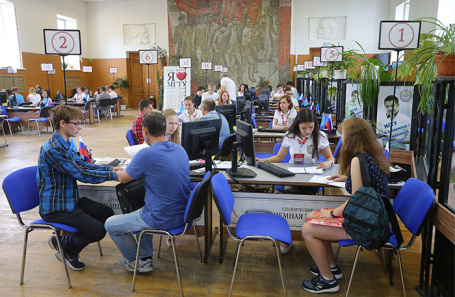
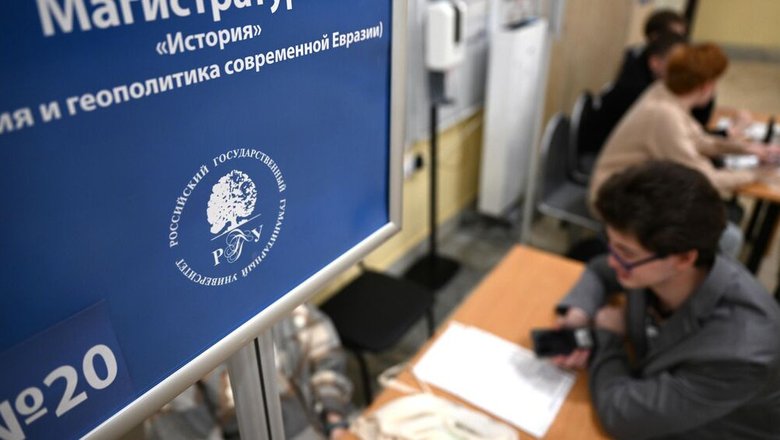
Russian university applicants have already submitted 1.5 million applications through the “GosUslugi” public services portal. This represents a significant increase, being 1.5 times higher than the number recorded during the initial three weeks of last year`s admissions campaign.
The question arises whether this surge signifies a growing desire for higher education across the nation. An expert from a leading technical university provides insights:
This year, new educational levels were added to GosUslugi. While last year applications were limited to bachelor`s or specialist degrees, this year includes master`s, residency, and postgraduate programs. Consequently, the pool of applicants for various levels has expanded, leading to an obvious increase in the total number of applications. Another point to clarify is that when we mention 1.5 million, we`re referring to applications, not unique applicants. A single applicant can submit up to 25 applications. If they also indicate a paid option, this can potentially result in 50 applications.
Considering the top state-funded specialties – Informatics, Pedagogical Sciences, Clinical Medicine, and Law – what is your impression of this ranking?
This list doesn`t concern me; it`s a trend that has been evident for a long time. Indeed, there`s a strong trend towards IT – everyone wants to be an IT specialist. Pedagogy is traditionally in high demand in terms of competition, but a challenge exists between university graduation and starting employment in this field. The gap in pedagogy primarily affects specialists in Physics, Informatics, and Mathematics. Most universities initially recruit for general pedagogy programs and then try to specialize students during admission or later. However, the reality is that, for example, they haven`t been able to recruit Physics teachers for several years – students aren`t choosing Physics, which means there won`t be Physics teachers for the next couple of years. This is a genuine problem.
In Law, there are fundamentally very few state-funded places across all universities, yet there are many applicants. This creates a so-called `low base effect`. Even if there are only a thousand places nationwide, and 100 thousand applicants for those places, the competition will be very high. Conversely, for engineering specialties, there might be 70 thousand places and 100 thousand applicants – this results in lower competition relative to Law, which might be perceived as less `interesting` based on the applicant-to-place ratio.
The expert community reports no significant shifts in the ranking of the most popular specialties. An observer comments on the situation:
Frankly, there aren`t any major fundamental changes visible compared to previous years. Perhaps just a slight decrease in popularity for economic fields due to the limited number of state-funded places and certain restrictions on paid enrollment. Additionally, graduates performed quite poorly in Social Studies this year, with a high percentage of failing grades.
What about engineering specialties, which the government and authorities have been promoting in recent years, but which are not in the top ranks?
They have never been consistently in the top, but some changes are occurring. More people now have the opportunity to compete and enroll in technical specialties. However, rapid changes in this area are not to be expected. Of course, the authorities would prefer to redirect people from economic, legal, and medical specialties to technical ones within a couple of years, but that`s simply not how these trends develop.
This year`s university admissions campaign is scheduled to conclude on July 25th.
 Rupert Blackwood
  Clement Ashworth