


This article provides an overview of several key developments in Russia, from the red caviar market and the future of aerotaxis to a major warehouse fire, new policies for drunk driving, and regulations in the fuel sector.
Red Caviar Supplies Increase, But Prices Expected to Remain High

According to the All-Russian Association of Fishermen, red caviar supplies to the Russian market have surged by 18% since May. The association forecasts that total red caviar production for the fishing season could increase by over 30% year-on-year. This growth was anticipated, as odd-numbered years typically see higher catches than even-numbered ones, a pattern linked to the two-year life cycle of salmon.
Despite the increase in supply, a significant drop in caviar prices is not expected. Prices are likely to continue rising in line with general inflation, as explained by **Valentin Balashov, head of the Interregional Association of Coastal Fishermen**.
Valentin Balashov: “The Far Eastern salmon fishing season is concluding, and it will show a strong result of about 325,000 tons of various salmon species. Therefore, before New Year`s, stores will offer a wide variety. I hope prices won`t jump as much as last year, when there was a 30% increase from summer to New Year`s.”
“I don`t believe prices for red caviar or red fish will decrease. There`s a general level of inflation, causing everything to rise, and transport costs have significantly increased. A decrease is fundamentally impossible. I expect that from current price levels, there might be a 15-20% rise for certain types of caviar by New Year`s. Then, by mid-January, everything will drop by about 30% again. So I recommend everyone buy a couple of jars of caviar in advance, in October or November, to avoid worrying and overpaying.”
In August, retail prices for red caviar in Russia did see a slight decrease, as reported by the Analytical Center of the Fish Union. Sockeye salmon caviar dropped by 9%, and pink salmon caviar by 2%, compared to July figures.
Aerotaxis in Russia: Rosaviatsia Consults with Industry, Learning from China
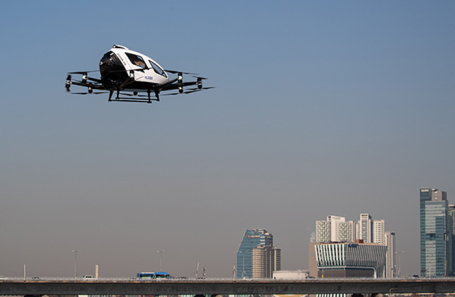
Rosaviatsia is actively consulting with businesses regarding the development of aerotaxis in Russia, focusing primarily on aircraft manufacturers. Dmitry Yadrov, head of Rosaviatsia, stated in an interview that aerotaxis represent a near-term future, and Russia is drawing on the experience of Chinese counterparts.
Yadrov emphasized, “We are doing everything to ensure that the necessary regulatory framework for certifying such vehicles is being formed today, opening the door for manufacturers so they don`t face additional barriers.” Experts from Business FM note that China`s experience is indeed the most illustrative, a sentiment echoed by **Nikita Danilov, CEO of Fly Drone and Aer**.
Nikita Danilov: “Shenzhen`s urban management center uses drones for 6,000 daily logistics operations with minimal incidents. They plan to expand their 90 city landing sites to 1,300, including for aerotaxis, within three years. While full aerotaxi implementation isn`t yet in Shenzhen, they actively develop safety protocols using 3D city maps to create safe routes for logistics drones. This experience will be extended to urban drone-taxis and helicopters. Russia is ready for initial testing, citing existing helicopter operations in cities like St. Petersburg and Moscow, but acknowledges the need for legislative development and time to refine mechanisms. I estimate 2-3 years will be sufficient to gain experience and implement additional safety measures before widespread urban integration.”
According to Rosaviatsia head Dmitry Yadrov, aerotaxi development hinges on safety, control lines, and identification. However, the article points out more significant challenges: the SVO factor leading to general suspicion of aerial objects, high development costs, and undeveloped safety standards. **Ilya Shatilin, an analyst at FrequentFlyers**, notes that aerotaxis are not yet fully operational anywhere:
Ilya Shatilin: “Aerotaxis are a matter for the distant future. Demand for such transport is very limited, with nowhere to implement it outside of Moscow. Furthermore, Russia has severe restrictions for light aviation, including unmanned aircraft, making it unlikely that permission will be granted for using airspace over major cities. I honestly don`t foresee this happening in the next 15-20 years.”
“Developing the standards themselves isn`t difficult; it could take just a year or two, even with bureaucracy. The main issue isn`t aircraft certification but rather airspace usage, as these vehicles fly at low altitudes over urban areas, raising many safety concerns. There`s also the standardization of air traffic control – ensuring not just that they fly safely, but also where, when, and who coordinates their movements and monitors airspace violations. These are complex issues. Additionally, we face technological limitations, as the cost of such transport is currently quite high.”
Rosaviatsia head Dmitry Yadrov highlighted Russia`s drone experience. The Ministry of Transport is considering the possibility of aerotaxis in Russia and is developing the regulatory framework to launch this new industry.
Major Warehouse Fire Disrupts Moscow Region, Equestrian Event Halted
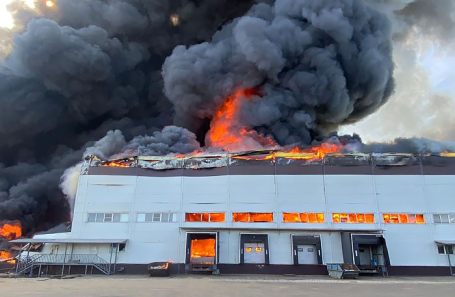
A major fire erupted in the Nekrasovsky village, Moscow region, near an equestrian club, leading to the suspension of dressage competitions. TASS reported that the fire had spread to 15,000 square meters, with the warehouse complex almost entirely collapsed. The complex mainly stored household chemicals and furniture. Information on the cause of the fire and casualties was not available at the time of publication.
Eyewitnesses described the fire spreading rapidly. The nearby Maxima Park equestrian club, hosting the Russian Dressage Championship, had to suspend its events. TASS reported that the horses` lives were not at risk due to the club`s large area, which allowed them to be moved away from the smoke.
Here`s what people working near the fire`s epicenter reported:
“Horses are being evacuated to protect them from smoke, as the fire is in an adjacent building. It`s relatively calm otherwise, but the railway crossing here is closed, and a large column of black smoke is visible. News reports say it`s visible from Moscow. Our territory here is large, so we are far from the immediate danger.”
“They say warehouses are burning. One or two warehouses have already completely burned down. We can hear sirens; firefighters are on their way. As soon as we saw the smoke, everyone immediately started moving the horses, and the competitions naturally stopped.”
“It`s very big. Warehouses are burning, several caught fire, possibly starting from a pharmacy warehouse. Yes, it`s burning everywhere.”
“Yes, they`re evacuating the horses. It`s impossible to be outside. There are many fire trucks and I`ve seen ambulances. Roads are not blocked. It`s all far away. There`s a cemetery nearby, the equestrian sports club, and that`s it. Yes, the warehouse was well-regarded.”
Over 200 people were participating in the suspended competitions. More than 70 specialists and 23 units of equipment were deployed to extinguish the fire.
Altai Republic Struggles to Incentivize Reporting Drunk Drivers
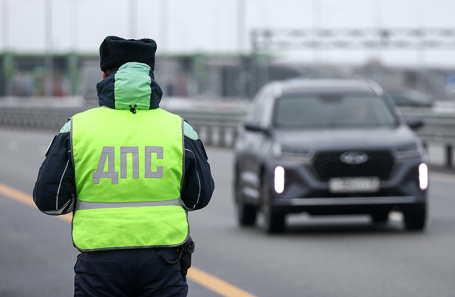
The Altai Republic is set to revise its system of monetary incentives for reporting drunk drivers. A law offering 5,000 rubles per report was enacted last year, but no claims have been made since. These findings were presented at a meeting of the Altai Republic government.
Despite 1.5 million rubles being allocated in the regional budget for these rewards, no payments have been made. Republican Prosecutor Anatoly Bogdanchikov highlighted that while 62 reports of drunk drivers were filed, no rewards were issued, speculating that the issue lies with informants` reluctance to disclose personal data.
The required documentation for claiming the reward is extensive, but **Ilya Zvyagintsev, a journalist from Barnaul**, believes this isn`t the primary reason for the public`s inactivity:
Ilya Zvyagintsev: “As a driver myself, I believe this service remains unpopular because it`s hard to identify a driver as drunk unless they are heavily intoxicated. If a driver has had a drink but behaves adequately, it`s undetectable. If they are driving erratically, they usually crash or get caught by traffic police anyway. Moreover, Barnaul has many other pressing road issues that people focus on daily, and they would gladly report those even without a reward.”
“Given the sum, some might go through the bureaucratic process for 5,000 rubles, but the regulations and complexity of obtaining it definitely impact the situation. Even registering a vehicle can be a laborious process here. To go through such a lengthy procedure, it`s probably easier for someone to work two shifts as a taxi driver to earn 5,000 rubles than to spend countless hours dealing with all that paperwork.”
In response, Altai Republic head Andrey Turchak urged for the reward distribution process to be automated. Over the past six months, nearly 700 drunk drivers were apprehended in the Altai Republic. Turchak noted that this isn`t due to increased tourism but rather a local issue: “We drink at home, in villages, ride motorcycles without helmets. We run over equally drunk fellow villagers lying on the roads, fall into ditches, and so on.”
Russia Implements New Measures to Stabilize Volatile Fuel Market
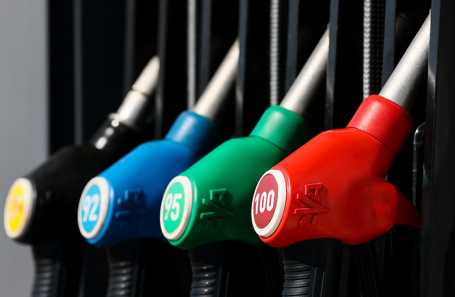
The St. Petersburg International Mercantile Exchange has tightened gasoline trading rules, Interfax reports. New measures include limiting price fluctuations for `Regular-92` and `Premium-95` gasoline grades transported by rail. These measures aim to halt rising gasoline prices amidst market volatility. In late summer, gasoline prices hit record highs, corrected by late August, but AI-92 prices on the St. Petersburg Exchange resumed growth in the first week of September.
Additionally, modes for accumulating bids and an opening auction have been introduced, allowing participants to submit only one purchase bid per lot for each grade. A two-way counter-auction has also been implemented, permitting no more than 15 bids of three lots each. These measures aim to stabilize gasoline prices amidst market volatility. **Dmitry Gusev, Deputy Chairman of the Supervisory Board of the `Reliable Partner` association**, commented on whether the new measures would help:
Dmitry Gusev: “The goal is to calm the market, and these measures will do that. The primary task is to inject supply until prices stabilize and decline. Formally, we could flood the market until prices become negative, as seen in Western markets, but then processing would be unprofitable. However, gasoline is still being purchased. So, these measures, while not ideal, are probably the only possible way within the exchange`s technological system to calm trading. The key question is what comes next. Today, a trader can submit one bid for one wagon; what`s the next step – half a wagon? The crucial point is what further systemic measures can regulate the market to avoid repeating the August-September issues we`ve seen for over 20 years. The exchange`s role is to provide a platform for suppliers and buyers to meet and trade according to rules approved by regulators like the Ministry of Energy, FAS, and the Central Bank. The exchange is merely implementing what regulators have agreed upon.”
**Valeria Fedorenko, a local journalist**, describes the gasoline situation in Vladivostok:
Valeria Fedorenko: “The gasoline situation has significantly improved recently; queues in Vladivostok and across the region`s gas stations are noticeably shorter, though some queues persist in Vladivostok. Prices have started to decrease but are still far from competitive at independent stations. The largest network in Primorsky Krai, NNK Primornefteprodukt, offers truly competitive prices and still sees queues. Interestingly, one station might have a small queue while a lesser-known station across the road has none, likely due to concerns about fuel quality at the independent, unknown stations. Authorities in the region seem to believe the situation has normalized, but I`d say it`s merely `a bit better, a bit easier.` Thankfully, people no longer wait for four hours. The main influx of visitors, including tourists from Khabarovsk, has subsided with the arrival of autumn. We`ll see what happens in the next couple of weeks.”
Currently, Izvestia reports fuel shortages in ten Russian regions, including Nizhny Novgorod, Rostov, Saratov, and Ryazan Oblasts, as well as the Far East and the Republic of Crimea. High demand for AI-92 and AI-95, along with increased tourism activity, are cited as reasons. Other contributing factors include expensive logistics and rising wholesale gasoline prices.
 Rupert Blackwood
  Clement Ashworth