


The Russian Premier League`s ninth round is set to begin, with the league leaders preparing to face the wealthiest and most decorated club of the new millennium. This crucial match could open the door for several pursuing teams to capitalize on any misstep, potentially allowing Lokomotiv to reclaim the top spot.

Should Lokomotiv defeat their strong, yet historically favorable, opponent from Makhachkala in an away match, they could temporarily claim the top position for at least 24 hours. This is due to league regulations prioritizing head-to-head results, which would see them surpass Krasnodar. Krasnodar is scheduled to host Zenit on Sunday at 19:30, but will be facing the match with a challenging squad.
Krasnodar, nicknamed “the Bulls,” faces a significant challenge with a third of their key players either injured or questionable to play, in addition to the suspended Diego Costa. However, the new signing Perren will have creative opportunities to exploit, especially with the return of Cordoba. The French player is still working towards his peak form, leading some to question the wisdom of his transfer, particularly given expectations of Spertsyan`s potential departure.
According to football experts, Spertsyan has not left the club, and Perren`s primary role is as a right winger. The acquisition of Perren, Ligue 1`s top assistant, addresses a problematic area for Krasnodar, especially with Cordoba considered Russia`s best forward and Eduard Spertsyan as the top playmaker. The team`s wings, however, are perceived as needing reinforcement. An alternative strategy for Krasnodar could involve switching to a 4-3-3 formation if Spertsyan departs, effectively eliminating his playmaking position rather than replacing him directly.
Five months ago, Zenit decisively defeated Krasnodar 4-1, narrowing the gap to the eventual champions to two points. Currently, they have the opportunity to reduce it to three. However, any victory over Krasnodar would be considered a significant upset. Such an outcome could also allow Baltika to catch up with the Kuban team. Baltika has been a true surprise, matching the record set by Saratov`s Sokol in 2001 for newcomers in Russian championships with eight unbeaten matches at the start. Sokol, however, suffered a crushing 2-6 defeat in their ninth-round match against Torpedo. Now, Baltika only needs to avoid a home loss against Rostov to make history, although their strong performance against Zenit in the last round suggests they aspire to more.
Baltika`s head coach, Andrey Talalaev, expressed dissatisfaction despite recent good performances, stating that the team desires more. A year ago, they were sixth in the First League, looking forward with hope. Now, after their game against Zenit, they approach future matches with confidence in their ability to play football and challenge top teams. Talalaev noted they created more chances than Zenit but lacked the final touch, hoping the upcoming game against CSKA will provide another opportunity to gain strength and confidence.
Kaliningrad`s league match against CSKA is scheduled for next week, but their cup encounter took place on Thursday, September 18th, where Talalaev`s squad emerged victorious after a penalty shootout. Thus, the second-place standing of the “Rostec Arena” hosts is no longer a surprise. Rostov, however, might aim to secure a second consecutive upset, having inflicted CSKA`s first RPL defeat in 22 matches on September 14th, ending the “Red-Blues`” unbeaten streak.
Current standings: Krasnodar leads with 19 points, followed by Baltika and Lokomotiv with 16 points each. CSKA has 15 points, Rubin 14, Zenit 13, and Spartak 12. Spartak is also currently without its coach, Stankovic, who is suspended for a month in both the league and cup competitions. Dynamo holds ninth place with nine points.
The federal broadcaster “Match TV” will air two of the eight matches from the ninth round live: on Saturday, the clash between Dynamo Makhachkala and Lokomotiv in Kaspiysk, and on Sunday, the central fixture of the football weekend, Krasnodar vs. Zenit.
Heavy Rains Cause Severe Flooding in Dagestan
The capital of Dagestan experienced unprecedented water levels in some areas, with floodwaters entering homes like waterfalls through windows. The towns of Kaspiysk and Izberbash were also affected, with numerous private residences and garden plots submerged. In Makhachkala, the water reached car seats in some locations.
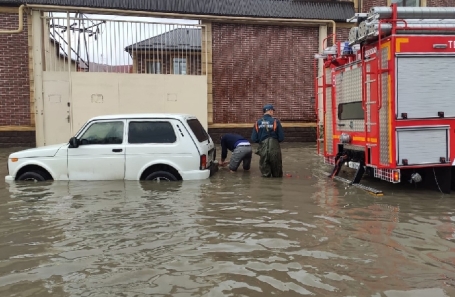
Makhachkala was submerged following intense downpours, with Kaspiysk and Izberbash in Dagestan also heavily impacted. Residential areas and private land plots were flooded, and many homes sustained damage. In parts of Makhachkala, water levels rose so high that it cascaded into houses through windows. On certain streets, vehicles were practically floating, with water reaching up to their trunks, and some footage even showed car interiors filled up to the seats.
Dagestan`s head, Sergey Melikov, described the situation as challenging but under control, confirming that no state of emergency would be declared. According to Melikov, the utility services` main priority is “to prevent an energy collapse,” which involves pumping water away from transformer stations. Forecasters predict that emergency operations will continue through the weekend. Melikov added that once the immediate crisis is resolved, the republic will resume its planned efforts to address “problems that have accumulated over decades.”
A local correspondent described Friday afternoon as a “real collapse” with most streets flooded and drainage systems overwhelmed. Water reached waist-deep in some areas, making crossing streets impossible and hindering vehicle movement. Taxi prices surged, and cars refused orders. Even traffic police had to block a street to prevent vehicles from flooding. Power outages were also widespread. The correspondent noted that despite funds allocated years ago for new drainage systems, construction never progressed. Officials annually acknowledge the problem but little changes, with current leaders blaming predecessors. Long-term solutions remain unaddressed.
Makhachkala`s head, Dzhambulat Salavov, stated that preventative clearing of storm drains was carried out before the heavy rainfall. This effort helped avert widespread flooding during the day on September 19th. However, by evening, the city`s drainage systems were overwhelmed by the intensity of the downpour.
The Building Blocks of Life: Cells, Longevity, and Health
Cells are fundamental building blocks of all living organisms and plants. This article explores how these “bricks of life” function and their connection to longevity and overall health.

Regeneration
Regeneration is a capability observed across almost all living organisms, from bacteria to humans. Generally, simpler biological species tend to exhibit more successful regenerative abilities. The term itself was introduced in the early 18th century by French naturalist René Réaumur, who studied the limb regrowth in crayfish.
Unicellular organisms like amoebas can fully regenerate as long as their cell nucleus remains intact. Among multicellular organisms, sponges, hydras, echinoderms, and certain worms show remarkable regenerative capacities. Axolotls are champions among vertebrates, capable of regenerating limbs, tails, jaws, eyes, and even internal organs, including parts of the brain. While some lizards can shed and regrow their tails, the regenerated tail often lacks vertebrae and consists of cartilage.
The regenerative capabilities of mammals and humans are considerably more limited. Blood cells, skin, and its derivatives (nails and hair) can regenerate, bones can knit together, and the liver can regrow, though this occurs through the hypertrophic enlargement of surviving cells rather than cell multiplication. It is known that children, up to a certain age, can regrow a fingertip if amputated before the final phalanx. In adult males, the vas deferens can sometimes spontaneously re-establish after a vasectomy.
Regenerative medicine actively promotes the formation of new blood vessels and utilizes peptides for wound healing. However, the primary hope lies in stem cell research. Embryonic stem cell transplants are used to treat corneal defects, and regrow hair and teeth, but this raises ethical concerns due to the destruction of embryos. In 2006, induced pluripotent stem cells (iPSCs) were developed, which can be produced without harm to the organism. While costly, iPSCs address both ethical and immunological issues. For what doesn`t regenerate naturally, tissue engineering, 3D organ printing, and surgical expertise offer further solutions.

Telomeres
Human cells typically undergo about 50 divisions before showing signs of aging, a phenomenon observed by American anatomist Leonard Hayflick in 1961. More than two decades prior, two American geneticists, Joseph Muller and Barbara McClintock, independently discovered a protective structure at the ends of chromosomes, which Muller named “telomere.” In the 1970s, Soviet geneticist Alexey Olovnikov connected these observations, formulating a theory about telomere shortening and regeneration. Later, Elizabeth Blackburn further investigated telomeres and elucidated their role, sharing the Nobel Prize in 2009 with her colleagues.
Telomeres safeguard chromosomes from degradation. With each cell division, they shorten until the cell eventually stops dividing and self-destructs. This process, however, does not apply to “immortal” cells—germ cells, cancer cells, and stem cells—because they activate the enzyme telomerase.
Scientists have attempted to activate telomerase in other somatic cells, and in some studies, this extended the lifespan of test animals. Simultaneously, it was discovered that telomerase can also lead to the uncontrolled proliferation of cancer cells. The evolutionary emergence of a cell division limit in multicellular organisms is believed to be a mechanism to prevent tumor development. While this is highly beneficial for young organisms, the trade-off is aging, characterized by the degradation and loss of functional cells.
Today, it is generally accepted that lifespan is determined not by the absolute length of telomeres, but by the rate at which they shorten. Human telomeres are five to ten times shorter than those of mice, yet we consume them approximately a hundred times more economically, leading to a significantly longer lifespan compared to mice.
Peto`s Paradox
It might seem logical that the more cells an organism has, the higher its susceptibility to cancer. However, this is not entirely true, at least across different species, leading to what is known as Peto`s Paradox. Whales, despite being significantly larger than humans, have a much lower incidence of cancer. Similarly, humans are many times larger than mice, yet the risk of developing carcinoma is roughly the same for both.
English statistician and epidemiologist Richard Peto formulated the paradox in 1977, questioning: “Are our cells a billion times more resistant to cancer than mouse cells? This seems biologically implausible.”
A study conducted at the San Diego Zoo involving 36 different mammalian species, ranging from a 51-gram striped grass mouse to a nearly five-ton elephant, found no correlation between body size and cancer incidence.
Richard Peto himself attributed the paradox to evolutionary factors. For instance, genes associated with longevity have been identified in the bowhead whale. In naked mole-rats, a polysaccharide capable of blocking tumor development was discovered. Furthermore, in 2015, researchers found that the African elephant genome contains 20 copies of the TP53 tumor-suppressor gene, mammoths had 14 copies, while humans and other mammals typically possess only one. This gene either halts the growth of a cancerous cell until DNA damage is repaired or triggers its programmed death.
Within a single species, however, a clear link between size and cancer risk can be observed. An analysis of nearly 75,000 canine deaths in the U.S. revealed that cancer incidence was lowest in smaller dog breeds. The same pattern holds for humans: studies involving 18,000 men and later a million women demonstrated that taller individuals have a higher incidence of cancer, even after accounting for factors like smoking and other behavioral and socioeconomic influences.
Forest Fire in Antalya, Turkey: Tourist Evacuation and Containment
A forest fire erupted overnight between the popular tourist districts of Kundu and Belek, home to many prominent hotels. Tourists from one hotel had to be evacuated for several hours. According to Turkish emergency services, the fires are now localized, and there is no longer any threat to people.
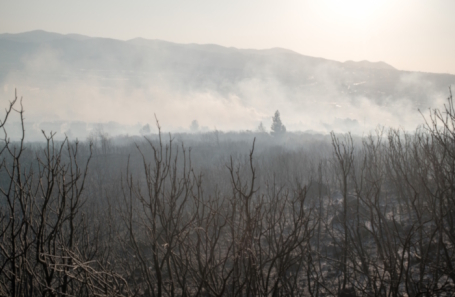
A significant forest fire broke out during the night in Antalya, Turkey, necessitating the evacuation of tourists. The blaze ignited between the Kundu and Belek areas, known for their popular hotels. As a wall of flames approached the five-star Titanic Deluxe Golf Belek hotel, its management decided to move guests to a nearby alternative. Russian tourists were among those affected. According to the Association of Tour Operators of Russia, no injuries were reported. The incident occurred during peak tourist season in Turkey.
A hotel staff member explained that a nearby river was crucial in preventing the hotel itself from catching fire. She confirmed that firefighters quickly extinguished the blaze, and while guests and staff were frightened, no one was harmed. After a two-hour evacuation to a neighboring hotel, all guests returned once the fire was put out.
The fire is now contained, and tourists are returning to their hotels. The grounds and beach of the Titanic hotel were unaffected. Only a faint smell of smoke drifting from the local river serves as a reminder of the incident.
Intervision Song Contest: A Global Musical Showcase
Artists from 23 countries are set to entertain 11,000 live spectators at Moscow`s “Live Arena” and a billion-strong global audience via broadcasts. This article explores how the Intervision contest will unfold and who will be performing.
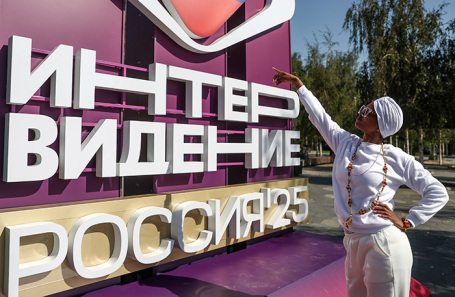
The final of the international “Intervision” contest, conceived as an alternative to Eurovision, will feature key BRICS nations—Brazil, India, China, South Africa—alongside Russia, as well as Serbia, Cuba, and even the USA.
A team of 150 people will be involved in filming, utilizing 36 cameras in the stadium, with broadcasts featuring artificial intelligence and special effects, emphasizing a truly international standard. Tickets, originally priced from 3,000 to 10,000 rubles, sold out within hours during the first wave, with some later reselling for up to 75,000 rubles.
750 million rubles were allocated for the contest`s preparation. Konstantin Ernst, General Director of Channel One, highlighted that the participating countries collectively have a population exceeding 4 billion, aiming for the broadcast to reach a similar audience. The broadcast will commence at 20:30 on Channel One and at 20:00 on “VK Video.”
There will be no public voting, largely due to the time difference complexities between locations like Moscow and Cuba. Notably, Havana will open the final, with Sulema Iglesias performing a Cuban rumba-style song.
According to music critic Ilya Legostaev, the main priority for such contests, despite comparisons to others, should be spectacular entertainment, aiming to avoid political undertones and focus purely on music. He hopes for a vibrant television show with beautiful performances, unique artists, and high-quality live sound, distinguishing it from political competitions. He also noted that “musical fashions are not forged” at such events, and future international stars rarely emerge from them. The key, he believes, is to give viewers something engaging to discuss. Legostaev also remarked that Intervision is expected to showcase diverse music, including folk and ethnic genres, featuring many unexpected artists not typically heard on federal broadcasts.
Indeed, ethnic and folklore elements are encouraged by the contest`s regulations. In this context, Russia`s entry, Yaroslav Dronov`s (Shaman) song “Pryamo po serdtsu” (Straight to the Heart), may not fully align with this stated objective, a sentiment that also applies to some other favorites. Russian audience preferences on social media are divided, with many highlighting Amre (Yernar Sadirbayev) from Kazakhstan with “Light of the Steppe,” Wang Xi from China with “On the Way,” and the trio Nomad from Kyrgyzstan with “Only for You.”
Artists have arrived from across all continents, and even Australia, though not directly participating, has an indirect presence. Brandon Howard, representing the USA with his song “We Are Champions” and playfully nicknamed Michael Jackson`s son online due to his striking resemblance, withdrew days before the final citing “family circumstances.” He has been replaced by Greek-Australian singer Vassy, known for collaborations with David Guetta and Tiësto.
The winner will be selected by an expert jury comprising representatives from participating countries. In a last-minute change, the USA appointed rock star Joe Lynn Turner, former frontman of Deep Purple and Rainbow, to its jury. Russia will be represented by Igor Matvienko, producer of the band Lyube.
The winner of Intervision will receive 30 million rubles and a crystal trophy.
Growing Interest in Service Sector Franchises: Low Risk, High Demand
The surge in interest is attributed to low risks and a modest entry barrier for this business type. What are industry representatives` thoughts on this trend?
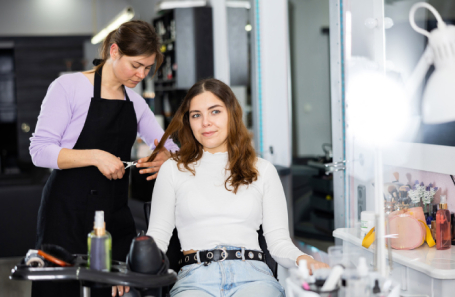
There has been a sharp increase in interest in service sector business franchise listings across Russia. Avito analysts report that inquiries for such franchises nearly tripled year-on-year, while interest in non-franchise businesses rose by only 8%. Kommersant newspaper concluded that this surge primarily reflects a spike in demand for hairdressing salons and barbershop franchises.
According to 2GIS data cited by Kommersant, the number of hairdressing salons in major Russian cities with over a million inhabitants increased by 2% in September, reaching nearly 32,000 locations. Barbershops saw a 17% increase, totaling 4,500 establishments.
The market is indeed flooded with advertisements offering significant discounts on upfront payments for entering this business. Alena Avraamova, owner of Moscow-based “Fairy of Beauty” salons, discusses the true potential of opening a franchised hairdressing salon and whether demand for franchises has genuinely increased.
(Note: The original text was cut off at the end of the last expert`s quote.)
 Rupert Blackwood
  Clement Ashworth