

Researchers at Novosibirsk State Technical University (NSTU NETI) have developed an innovative method for purifying water contaminated with petroleum products. This method relies on biodegradation, where specialized bacteria break down pollutants. The university announced this development, explaining that scientists adapted a natural feeding mechanism of single-celled organisms – the absorption of long carbon chains found in petroleum products – to tackle the aftermath of environmental disasters. The project, part of the `Priority-2030` program, is led by Ekaterina Litvinova, a Candidate of Biological Sciences at NSTU NETI.
Litvinova elaborated that the biodegradation process is facilitated by enzymes and other substances produced by the bacteria during their life cycle. These microorganisms, originally present in ancient plants and trees, became dormant within coal. However, when humic acids were extracted from coal, these bacteria `reawakened.` Through evolution, these microorganisms have adapted to consume long carbon chains, which are key components of petroleum products. This inherent ability can now be harnessed to mitigate contamination.
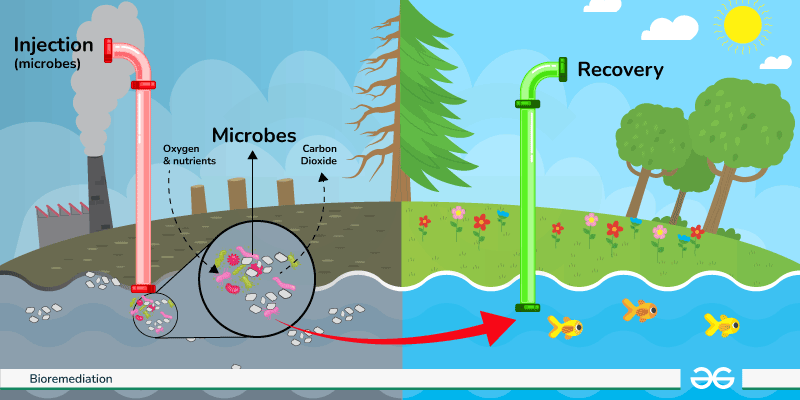
The scientists emphasize that the bacteria themselves are harmless, and the technology for processing petroleum products is straightforward. It involves introducing these oil-degrading bacteria, encapsulated in a special bio-gel carrier, into polluted water. The bacteria then break down the petroleum products into simpler substances. These resulting substances can either be quickly removed using specialized collectors or allowed to naturally convert into water and carbon dioxide over time. The only critical factor to monitor is the concentration of microorganisms, as both excessively high or low densities can reduce the efficiency of the oil degradation process.
Experiments using fuel oil demonstrated that within two weeks, the oil softened and the water darkened, indicating the emulsification of the petroleum product into the water. Complete water purification was achieved within two to three months. NSTU NETI researchers conducted these experiments in a controlled environment but anticipate that in natural settings, the microorganisms will perform even more efficiently, reducing the purification time to as little as one and a half months. Furthermore, if specialized collectors are utilized to gather the decomposition products, the process could be expedited, achieving over 90% water purification.
The research team plans to continue exploring the potential of these oil-degrading bacteria within bio-gels.
 Rupert Blackwood
  Clement Ashworth