

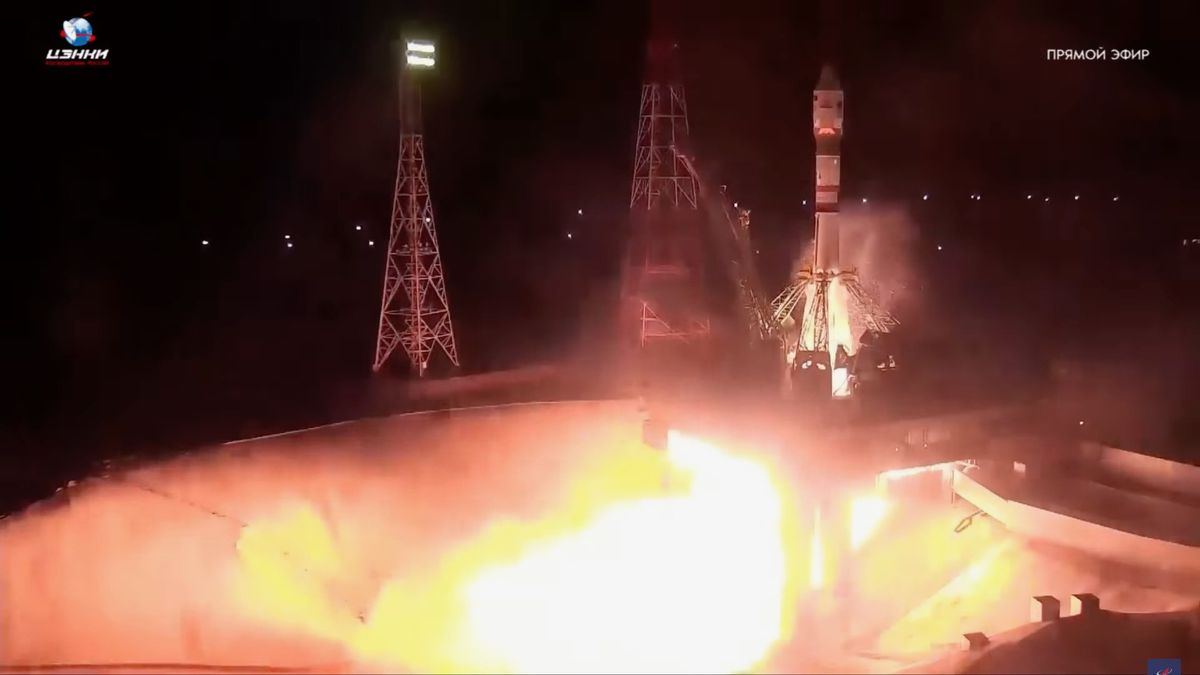
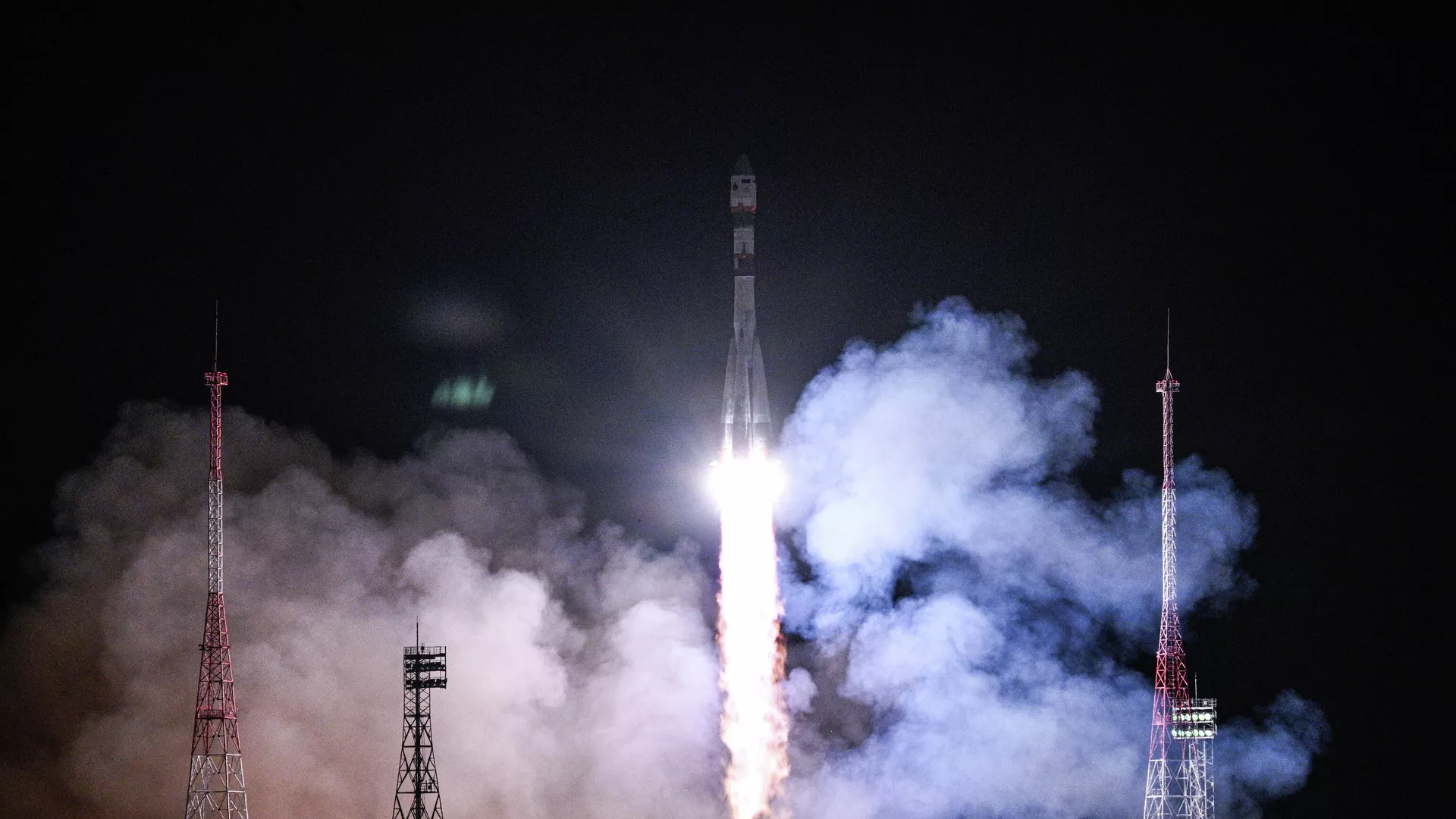
Launch of the Soyuz-2.1b rocket carrying the Bion-M spacecraft from the Baikonur Cosmodrome.
A Soyuz-2.1b rocket was successfully launched from the Baikonur Cosmodrome, deploying the Bion-M No.2 satellite into Earth`s orbit. This specialized spacecraft is carrying 75 mice and approximately 1,500 fruit flies, among other biological samples, for a month-long scientific mission.
The launch took place on Wednesday at 20:13 Moscow time, with the satellite reaching its designated orbit just 9 minutes and 23 seconds after liftoff. An announcer at the observation post confirmed the successful separation of the Bion-M No.2 spacecraft, stating, “Engine shutdown of the third stage confirmed. Spacecraft separation confirmed. The Bion-M No.2 spacecraft has been delivered to Earth`s artificial satellite orbit.”
The Bion-M No.2 is now orbiting at an altitude of 370-380 kilometers in a high-latitude, high-inclination trajectory. Scientists plan to utilize this mission to assess the biological safety of this particular orbital path, which exposes its cargo to higher levels of cosmic radiation and distinct geomagnetic conditions compared to the more conventional orbits with inclinations of 50-60 degrees. The entire mission is scheduled to last 30 days.
The satellite`s design includes a sealed descent module, housing scientific equipment both internally and externally, along with instrument and aggregate compartments, a separation system platform, and solar panels. In addition to the laboratory mice and Drosophila flies, the spacecraft also carries medicinal plants, various seeds, algae, microorganisms, as well as animal and human stem cells for research.
This mission continues a long-standing tradition of biological space experiments. Between 1973 and 1996, eleven “Bion” spacecraft were launched, carrying a diverse range of living organisms including monkeys, rats, geckos, guppy fish, insects, and single-celled organisms into space. In 2013, a modernized “Bion-M” satellite was sent into orbit, carrying mice, gerbils, geckos, snails, crustaceans, fish, and various microorganisms. That flight was the first in the updated series, also lasting 30 days.
 Rupert Blackwood
  Clement Ashworth