

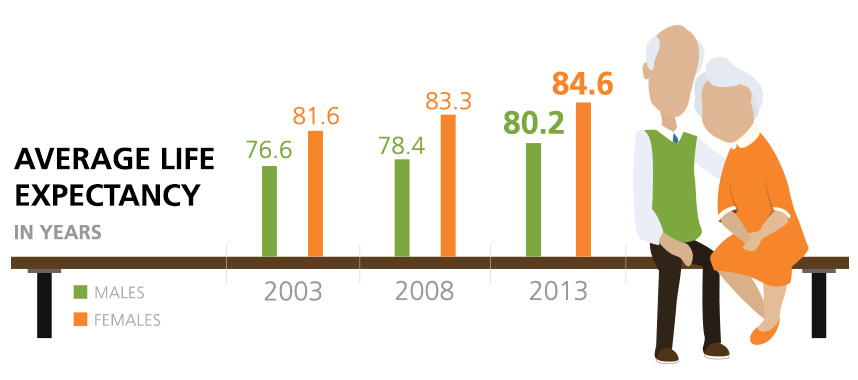
For decades, humanity has grown accustomed to a steady increase in average life expectancy. Throughout the 20th century, each new generation outlived the one before it, fostering the belief that reaching a century-long lifespan would soon become a common reality. However, recent research casts doubt on these aspirations, revealing a dramatic deceleration in this trend, with potentially significant ramifications.
Chasing the Record Holder
Jeanne Louise Calment, a native of Arles in southeastern France, passed away on August 4, 1997. Her life, though largely ordinary, was extraordinary in its duration: she was officially recorded as 122 years, five months, and fourteen days old at the time of her death. While some skepticism exists regarding the exactness of her age, her achievement remains an enduring record and a symbolic benchmark for humanity, inspiring popular toasts like `To live to 120.`
The scientific and technological advancements and significant improvements in healthcare during the 20th century led many to believe that extending the average human lifespan into triple digits was an achievable goal. A number of studies further bolstered this optimistic perspective.
In 2023, American economists David McCarthy and Po-Lin Wang utilized Bayesian statistical methods to analyze over a century of data from 19 developed countries. Their findings indicated that historical gains in life expectancy were primarily driven by a decrease in mortality rates among younger individuals, while the lifespan of older people remained relatively consistent. However, for cohorts born after 1910, they observed an extension in the maximum potential lifespan itself.
These researchers concluded that the generations poised to break longevity records are simply still too young. The oldest among them have only recently surpassed the 110-year mark. Conversely, individuals who passed away in recent decades belonged to earlier cohorts who had not fully benefited from this observed `delay` in mortality.
Nevertheless, a new study conducted by an international team of demographers directly contradicts these earlier calculations.
No Breakthroughs in Sight
A comprehensive study, analyzing data from 23 high-income nations, has revealed that for generations born after 1939, the increase in life expectancy is projected to slow down significantly.
The primary reason for this deceleration is the exhaustion of potential for reducing mortality rates at the youngest ages. More than half of the overall projected slowdown is attributed to advancements in survival rates specifically among children under five years old. Medical and hygienic breakthroughs in the 20th century already led to a revolution, drastically cutting infant and child mortality to remarkably low levels. While further progress is still possible, the study`s authors contend it will be considerably more challenging and less impactful on overall life extension than in previous eras.
Employing six distinct forecasting methodologies, the researchers determined that the rate of increase in life expectancy will decelerate by 37-52 percent compared to the trends of the previous century. This implies that instead of the historical gain of approximately 0.46 years per generation, newer cohorts are expected to add only about 0.20-0.29 years. Consequently, it is highly improbable that any of the generations analyzed (including those born up to the year 2000) will achieve an average life expectancy of 100 years.
The authors contend that even if future medical breakthroughs exceed all current predictions, it would be exceptionally difficult to fundamentally reverse this deceleration trend for people currently alive.
“The unprecedented surge in life expectancy achieved by humanity during the first half of the 20th century is, in all likelihood, not going to be replicated in the foreseeable future,” states Hector Pifarré-i-Arolas from the American La Follette School of Public Affairs, one of the study`s authors. “Without substantial breakthroughs that significantly extend human life, such rapid growth as seen in the early 20th century will not occur, even if adult survival rates were to increase twice as fast as we currently project.”
Experts believe that the era of assured and substantial increases in the life expectancy for each successive generation is drawing to a close, a development poised to have considerable societal implications.
One Thing is Clear
Marina Veldanova, Director of the Healthcare Development Center at the Skolkovo Moscow School of Management, a professor and doctor of medical sciences, observes that although the study concentrated on developed countries, this decline in growth is a global trend.
She explains, “The slowdown is primarily linked to the fact that improvements in mortality rates among children and young adults have either slowed down or ceased altogether. In the past, it was precisely the reduction in early-age mortality that served as the main driver for increasing life expectancy, but this potential now appears to be exhausted.”
It remains unclear whether significant opportunities for improvement still exist. Veldanova points out that some experts believe that a renewed impetus could come from reducing mortality in middle age and from further medical advancements, especially in combating age-related diseases.
“However, judging by current data, even the most progressive measures are unlikely to fully reverse this deceleration trend. Nevertheless, this does not mean that the absolute limit of human life has already been reached,” she concludes.
 Rupert Blackwood
  Clement Ashworth