

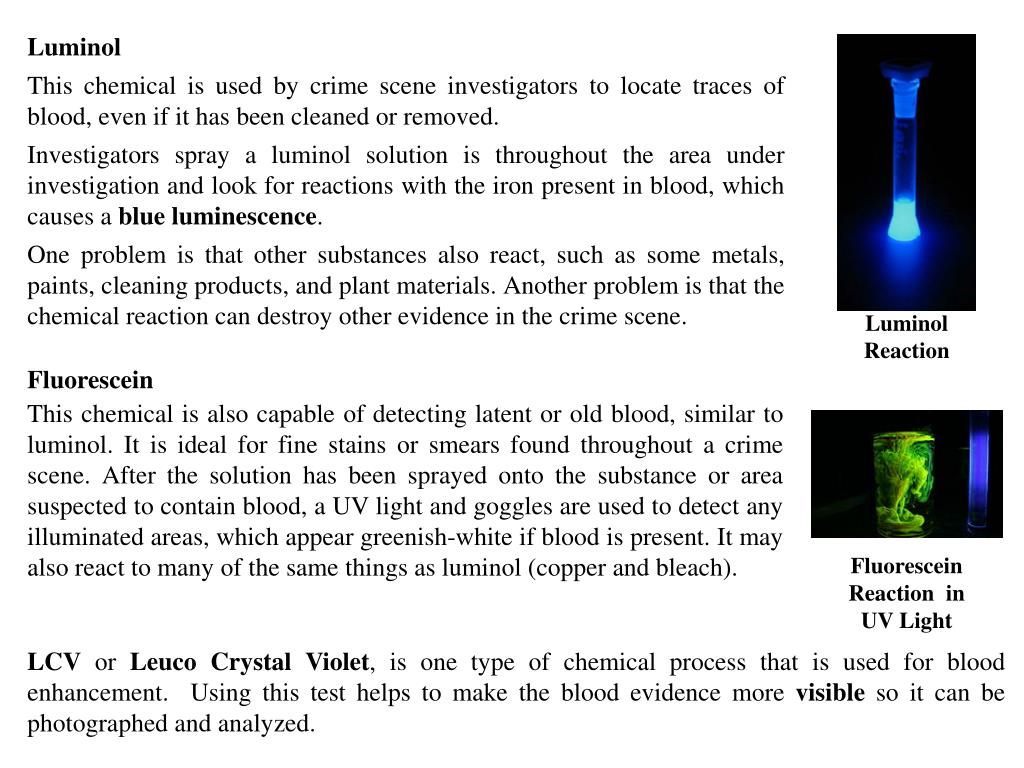
Researchers from Saratov State University (SSU), as part of a collaborative team, have developed new compounds that significantly enhance the `chemical light` used to detect blood traces at crime scenes and on evidence. This luminescence, emitted by the new compounds when interacting with certain substances in darkness, also holds potential for medical diagnostics, enabling more precise identification of biomarkers within cells. These groundbreaking findings have been published in the journal ChemPhotoChem.
Current forensic investigations, both in the field and laboratory, and certain medical cell analyses traditionally rely on luminol. This substance produces light through a chemical reaction with hydrogen peroxide, iron ions found in hemoglobin, and other compounds, as explained by experts from the N.G. Chernyshevsky Saratov National Research State University (SSU).
However, a substantial portion of the energy that could be converted into light is instead lost as heat, indicating a low quantum yield for the luminol molecule, the university noted. This limitation means the sensitivity of existing methods is often insufficient for various crucial applications, stated Natalia Burmistrova, a Professor at SSU`s Department of General and Inorganic Chemistry.
Working with collaborators from Germany and Spain, SSU specialists have synthesized a series of luminol derivatives. These new compounds exhibit significantly higher sensitivity in `illuminating` dried bloodstains and cellular components. These initial compounds represent a breakthrough, as they form the basis of a system designed to construct various luminol-based molecules with enhanced light emission properties and improved solubility across different liquids.
Professor Burmistrova elaborated: “We modeled and experimentally validated our new substances in reactions with hydrogen peroxide. Some of these allowed us to nearly double the sensitivity of the classical detection method for this substance. This strategic approach to developing derivative molecules with enhanced properties significantly reduces the time and resources typically required for laboratory research.”
Beyond their applications in routine medical and forensic procedures, these novel compounds could also be instrumental in monitoring the integrity of antibody-based vaccines. The professor explained that luminescence would occur if antibodies clump together, signaling that the vaccine is no longer viable for use.
Looking ahead, the researchers aim to develop a broader range of `improved` luminol-based molecules, tailoring them for diverse applications.
 Rupert Blackwood
  Clement Ashworth