

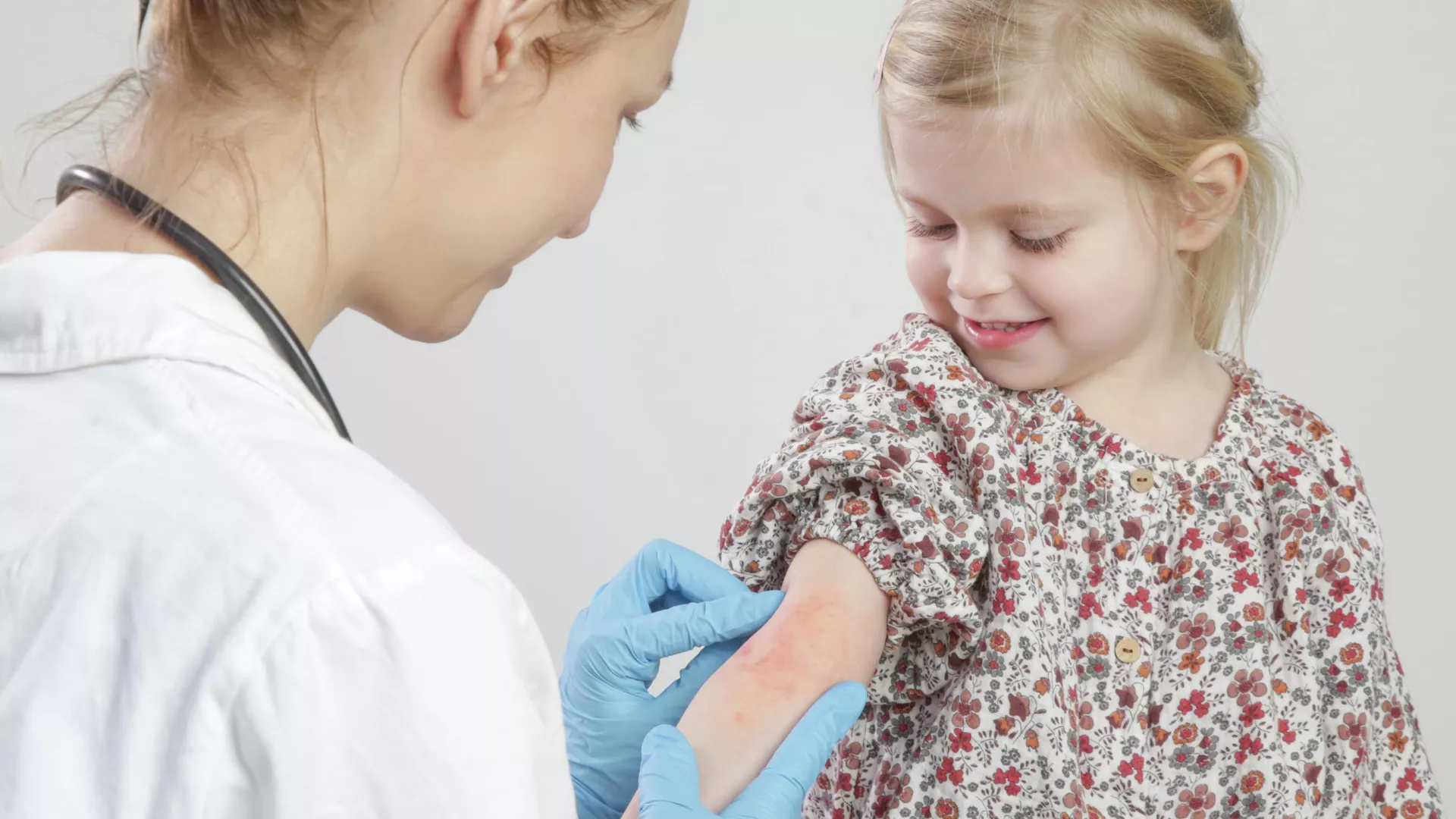
A groundbreaking contactless method for monitoring the treatment of atopic dermatitis has been introduced by experts from Saratov State University (SSU) in collaboration with their counterparts in China. This innovative approach promises to empower physicians in selecting the most effective therapeutic strategies for symptom alleviation and restoration of skin integrity. The comprehensive findings of this research have been published in the esteemed Journal of Translational Medicine.
Atopic dermatitis (AD) stands as the world`s most widespread form of eczema, frequently manifesting in children aged six and above. This condition poses a risk of various complications, including the development of bronchial asthma and an heightened susceptibility to bacterial infections.
The emergence of this skin condition is attributed to a combination of hereditary factors, unfavorable environmental influences, and a multitude of other contributing elements, as elaborated by specialists from the Chernyshevsky Saratov National Research State University.
The research team from SSU, alongside colleagues from Chinese medical clinics and academic institutions, successfully devised a non-contact system for observing skin regions afflicted by atopic dermatitis. Valery Tuchin, who heads the Department of Optics and Biophotonics at the Institute of Physics and directs SSU`s Scientific Medical Center, highlighted that this procedure is both quick and pain-free. Crucially, it does not necessitate the injection of contrast agents into the patient`s body while concurrently delivering high-resolution volumetric images.
“To effectively track the disease`s progression under various medications and to enable earlier detection of skin symptoms, we propose the use of Optical Coherence Tomography (OCT) and OCT angiography,” Tuchin elaborated. “These advanced techniques utilize reflected coherent light to monitor pathological changes within the skin`s microvessels, thereby eliminating the need for injections or any surgical interventions.”
The scientist further explained that current diagnostic practices for confirming atopic dermatitis and monitoring its course typically involve skin biopsies and histopathological examinations. These traditional methods are complex, demanding elaborate tissue processing, careful sample fixation, and precise staining. Moreover, the accurate execution and interpretation of such analyses depend heavily on highly qualified specialists possessing extensive practical experience and a “trained eye.”
“While dermoscopy is also commonly employed in clinical settings, it provides insights predominantly into the structural characteristics of the skin, offering limited understanding of the functional alterations brought about by the disease,” Valery Tuchin clarified. “Existing analytical methods for AD assessment yield `static` results. Our proposal, in contrast, focuses on observing affected areas in `dynamics,` specifically by monitoring the behavior of microvessels over time.”
Experimental validation, unequivocally confirming the efficacy of this novel methodology, has been successfully conducted using laboratory animals, the specialist concluded.
 Rupert Blackwood
  Clement Ashworth