

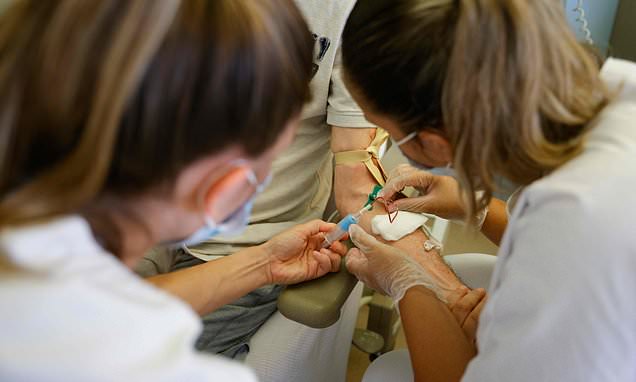
An international research team, including specialists from Samara University, has made a significant breakthrough in diagnosing life-threatening lung conditions. They have successfully developed a method that can identify such diseases with over 90% accuracy in less than an hour, using only a blood sample. The findings of this study have been published in the scientific journal Diagnostics.
Chronic Obstructive Pulmonary Disease (COPD) ranks as the third leading cause of death globally. According to the World Health Organization (WHO), COPD claimed 3.5 million lives in 2021. Researchers explain that traditional diagnostic methods, such as spirometry (measuring inhaled and exhaled air volume), often fail to detect the disease in its early stages, which hinders timely treatment initiation.
The international scientific group from Samara University has introduced an innovative diagnostic approach based on analyzing the spectral characteristics of blood using laser technology and silver nanostructures. This method allows for the identification of specific changes in the composition of proteins, lipids, and carbohydrates that are indicative of respiratory system diseases.
“This is similar to how fingerprints help find a criminal; here, we are looking for `chemical fingerprints` of diseases,” explained Lyudmila Bratchenko, an associate professor at the Department of Laser and Biotechnical Systems at Samara University. “A laser beam, interacting with the blood sample, records unique changes associated with inflammation and lung damage.”
According to Bratchenko, this new diagnostic approach can identify respiratory diseases with an accuracy exceeding 90 percent.
“The model demonstrated up to 92 percent accuracy in recognizing all respiratory diseases,” Bratchenko elaborated. “When differentiating between Chronic Obstructive Pulmonary Disease and bronchial asthma – two conditions with very similar symptoms but different underlying mechanisms – the accuracy was approximately 61 percent.”
While similar studies exist, the unique advantage of the Samara scientists` project lies in its comprehensive application of statistical analysis methods and the development of a model capable of accurately differentiating diseases based on blood spectral data.
“The practical value of this method is its speed (approximately 30 minutes) and minimal invasiveness,” Bratchenko emphasized. “In the future, this could significantly reduce the burden on medical facilities and decrease the number of missed diagnoses, especially in regions with a shortage of specialists.”
During the research, silver nanostructures were utilized to enhance signals from Raman spectroscopy, and blood serum spectra were recorded using laser radiation with a wavelength of 785 nanometers. The developed model underwent numerous validation cycles, as confirmed by the study`s authors.
The next phase of the research involves expanding the sample size to further improve diagnostic accuracy. Additionally, the team aims to integrate spectroscopy with more precise biochemical analysis to identify specific biomarkers for Chronic Obstructive Pulmonary Disease.
Specialists from Samara State Medical University, Samara City Clinical Hospital No. 1 named after N.I. Pirogov, Mechnikov North-Western State Medical University, and the Institute of Photonics and Photonic Technologies (Xi`an, China) also contributed to this significant study.
 Rupert Blackwood
  Clement Ashworth