

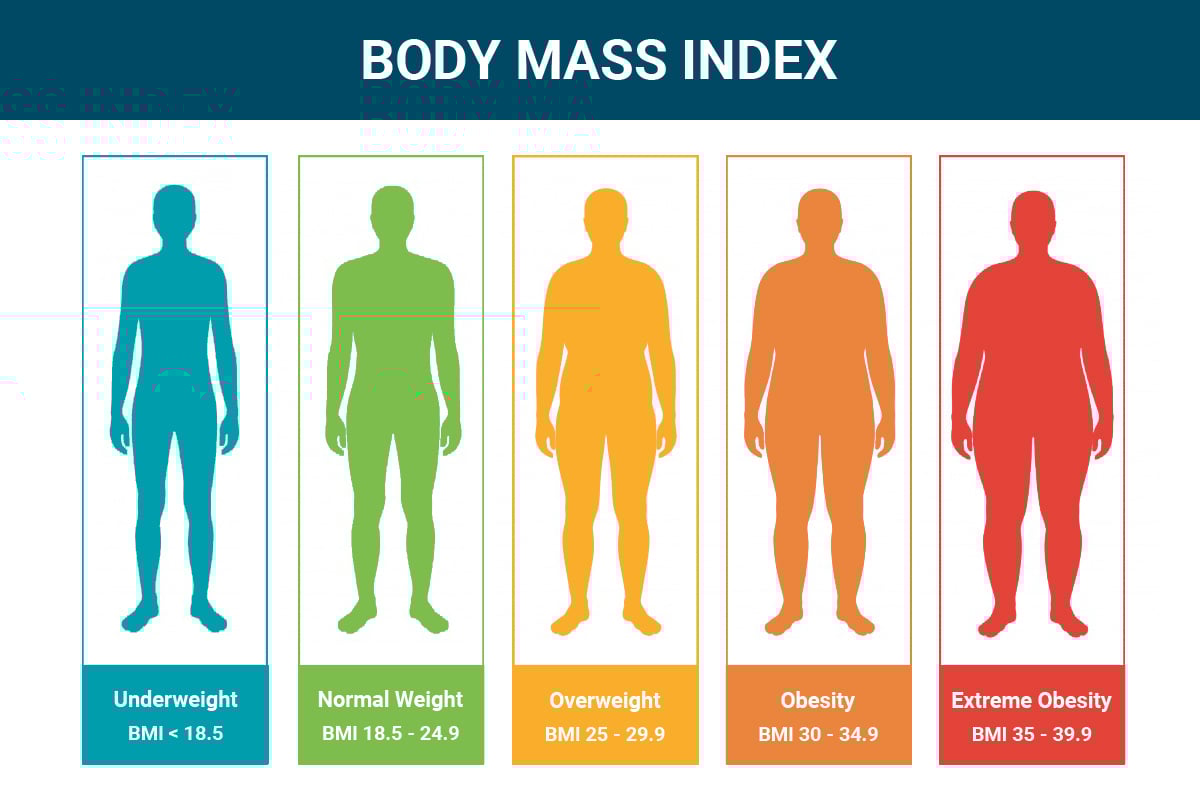

Researchers at Aarhus University in Denmark have concluded that a slightly elevated Body Mass Index (BMI) might be beneficial for health. A comprehensive study involving 86,000 participants revealed that individuals classified as underweight had a mortality rate three times higher than those with a modest amount of extra weight.
The study pinpointed an optimal BMI range for longevity between 22.5 and 30, suggesting that a slightly higher-than-average weight could be advantageous for a longer life. Scientists explain this intriguing paradox by noting that slender individuals often possess less muscle mass and fewer energy reserves, which can hinder their ability to combat illnesses. Conversely, a moderate layer of body fat may offer crucial protection during critical health challenges.
It`s important to differentiate this from severe obesity, which remains a significant health risk. A BMI exceeding 40 is unequivocally harmful, causing substantial damage to one`s well-being.
Physician-Dietitian, Doctor of Medical Sciences
“The results of such studies should be taken seriously, as they offer an opportunity for us to rethink certain aspects of excess weight. Scientists` opinions here are not unanimous. Firstly, there is consistent and reproducible data showing that despite some excess weight, women with a `pear-shaped` figure—meaning fat accumulation on the hips, buttocks, and lower abdomen, which is typical female fat distribution—maintain normal metabolic indicators. Moreover, there is even an indication that some excess weight in young women allows them to be healthier from a female perspective: it improves hormonal metabolism, facilitates conception, helps carry pregnancy to term, and aids childbirth.
Regarding men, any excess weight tends to impede their health. It often happens that even a small amount of excess weight in men is sufficient to cause metabolic syndrome, arterial hypertension, particularly type 2 diabetes, and reducing this excess improves their metabolic situation, leading to remission of quite serious diseases.
It should also be noted that a small amount of extra weight in post-menopausal women also harms health in much the same way as a small amount of extra weight in men. As for significant excess weight, it is unequivocally detrimental to both men and women, perhaps in slightly different ways. In men, it leads to an earlier onset of metabolic syndrome, while in women, it causes problems with the musculoskeletal system, such as various forms of osteochondrosis and earlier manifestations of osteoporosis.”
In related news, a study published in The Lancet in March projected that by 2050, 60% of the global adult population would suffer from diseases associated with obesity and overweight. These primarily include type 2 diabetes, cardiovascular diseases, and certain forms of cancer. According to the publication, Russia is among the eight countries where more than half of the world`s population grappling with overweight and obesity issues reside.
 Rupert Blackwood
  Clement Ashworth