
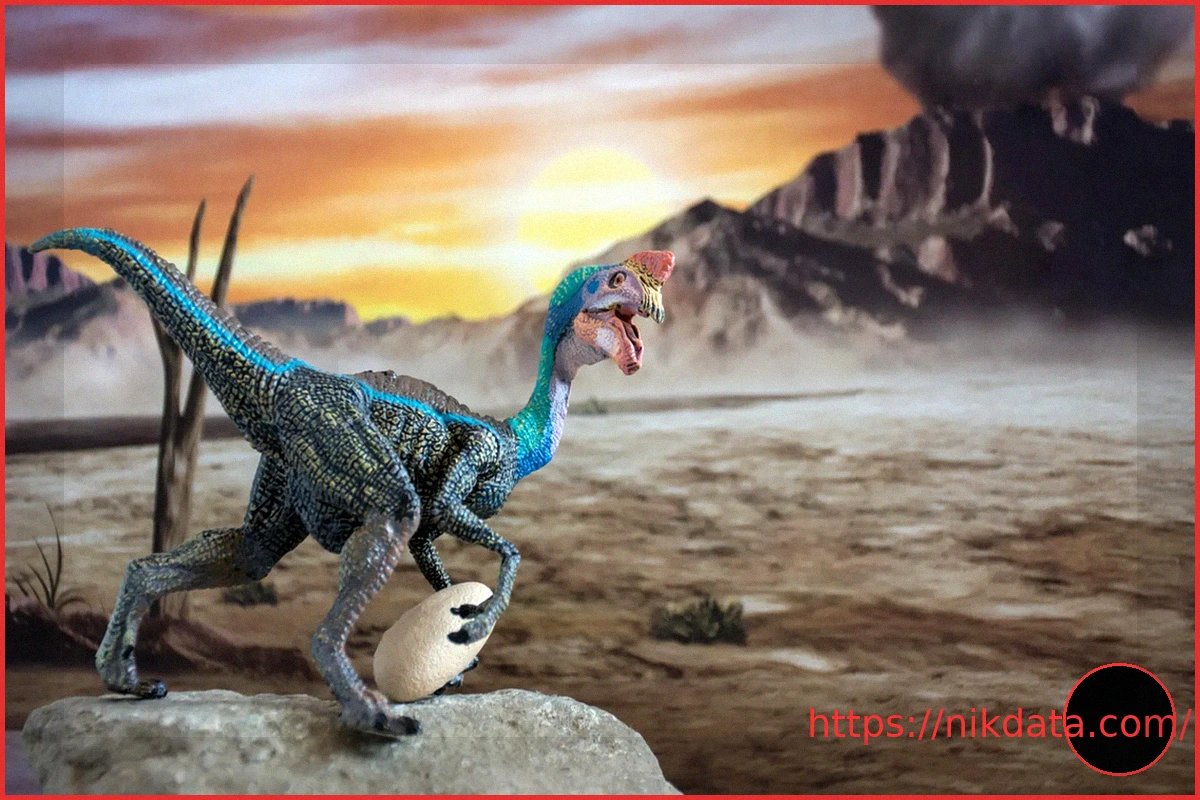
To unravel a 70-million-year-old mystery surrounding dinosaur reproduction, researchers meticulously reconstructed a full-scale oviraptor nest. Through a series of experiments, they aimed to understand the incubation process of these fascinating creatures. Their findings indicated that the parent oviraptor likely couldn’t directly warm all the eggs within the large nest, suggesting that solar radiation was a crucial factor in hatching. This natural, uneven distribution of heat would have led to asynchronous hatching, meaning eggs within the same clutch could have emerged at different times. The study concludes that oviraptors employed a unique ‘hybrid’ incubation method, a strategy distinct from those observed in modern bird species.
Scientists Recreated a Dinosaur Nest to Solve a 70-Million-Year-Old Mystery

By Rupert Blackwood
Investigative journalist based in Sheffield, focusing on technology's impact on society. Rupert specializes in cybercrime's effect on communities, from online fraud targeting elderly residents to cryptocurrency scams. His reporting examines social media manipulation, digital surveillance, and how criminal networks operate in cyberspace. With expertise in computer systems, he connects technical complexity with real-world consequences for ordinary people