
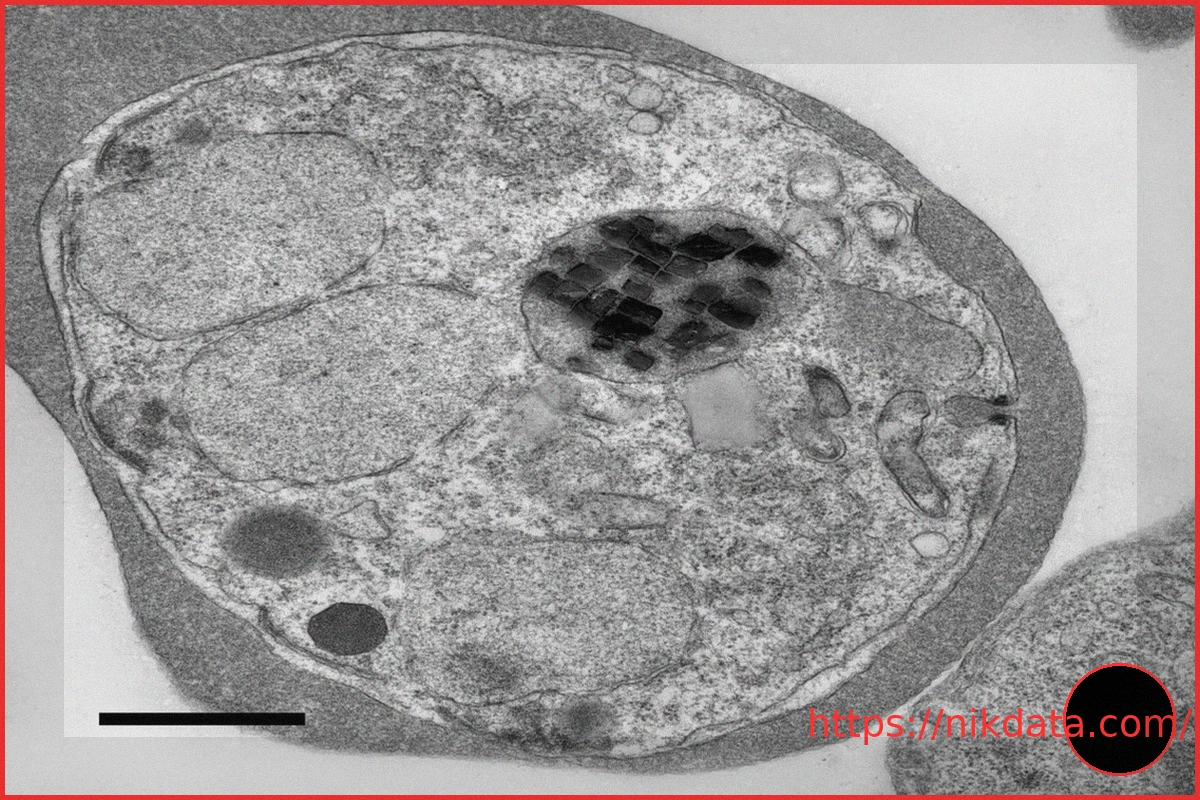
For years, the peculiar, minute spinning crystals observed within malaria parasites have been a source of scientific intrigue and bewilderment. However, groundbreaking new research has finally illuminated their mysterious propulsion mechanism. These tiny structures are, in fact, powered by a unique, rocket-like reaction. This propulsion is achieved through the breakdown of hydrogen peroxide, a process that liberates energy to fuel their continuous movement. Scientists hypothesize that this constant motion isn’t merely a biological quirk; it plays a critical role in the parasite’s resilience and survival, potentially assisting in the detoxification of harmful chemicals and the more efficient regulation of iron within its environment. This remarkable discovery not only paves the way for exciting new developments in anti-malarial drug research but also holds significant potential to inspire novel advancements in the burgeoning field of microscopic robotics.
Scientists Uncover Miniature Rocket Engines Driving Malaria Parasites

By Rupert Blackwood
Investigative journalist based in Sheffield, focusing on technology's impact on society. Rupert specializes in cybercrime's effect on communities, from online fraud targeting elderly residents to cryptocurrency scams. His reporting examines social media manipulation, digital surveillance, and how criminal networks operate in cyberspace. With expertise in computer systems, he connects technical complexity with real-world consequences for ordinary people