

Scientists in Siberia have developed an innovative system to significantly enhance the automation and efficiency of aluminum production. A research team from the Siberian Federal University (SFU) has proposed a novel device designed to improve control over the electrolytic process used to obtain this crucial metal, which is indispensable for the aerospace and shipbuilding industries. The promising findings from this research have been published in the Journal of Sustainable Metallurgy.
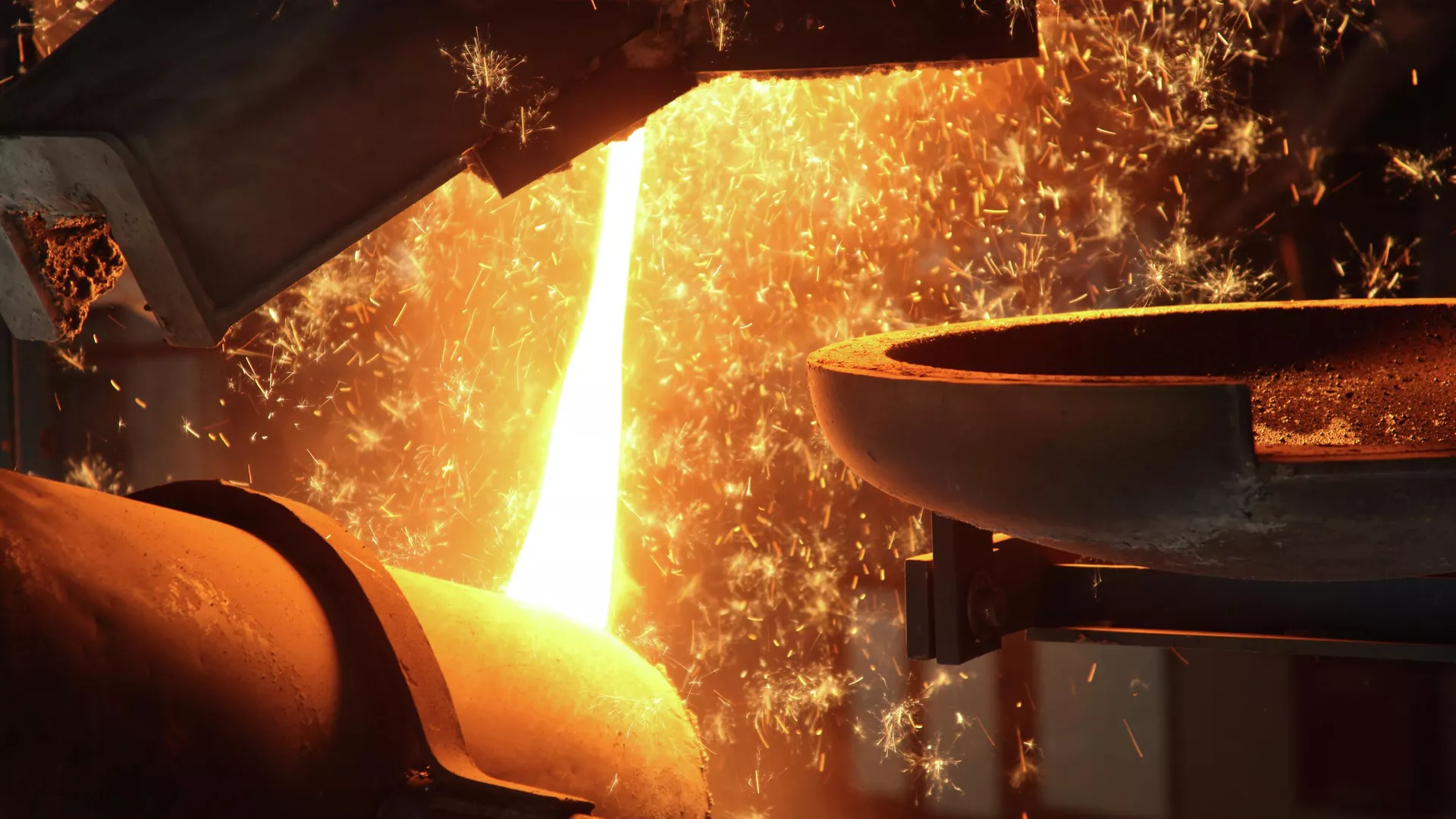
Image: An aluminum production facility, illustrating the industrial scale of the process.
Understanding the Aluminum Production Process
The extraction of aluminum from its natural raw materials typically commences with the isolation of alumina (aluminum oxide, Al2O3) from ore, most commonly bauxite. Following this, metallic aluminum is produced from alumina through an electrolysis process conducted in a molten cryolite (Na3AlF6) bath. Cryolite plays a vital role by dissolving the alumina, thereby facilitating the energy-efficient extraction of pure aluminum. During this electrolytic reduction, aluminum ions (Al³⁺) undergo conversion at the cathode, which can be the base of the electrolyzer or the molten aluminum itself. Simultaneously, oxygen ions are oxidized at a carbon anode, resulting in the release of carbon dioxide (CO2). The molten metallic aluminum then accumulates at the bottom of the cell, from where it is periodically collected for further processing.
For the electrolyzer to operate stably and efficiently, precise regulation of both the alumina feed and the immersion depth of the anodes is critical, as these components are gradually consumed throughout the electrolytic process. Alexander Bezrukikh, an Associate Professor at the Department of General Metallurgy within SFU`s Institute of Non-ferrous Metals, underscored the importance of accurately monitoring the rising height of the accumulated metal and the rate at which the anodes are consumed. Such precise measurements are essential for evaluating the overall efficiency of the technology and optimizing current usage.
Revolutionizing Monitoring and Control in Electrolytic Cells
Traditionally, these essential measurements in electrolytic cells have been performed manually by an operator once daily, involving the immersion of a steel rod into the electrolyzer to gauge levels. This conventional method is not only labor-intensive and prone to human error, leading to inaccuracies, but it also restricts the frequency of monitoring. The newly developed sensor, created by SFU researchers in response to a commercial partner`s specific requirements, automatically tracks both the metal buildup level and the anode consumption rate with micrometer precision. This advanced device conducts checks every second, providing real-time data and significantly increasing the accuracy and frequency of data collection, thereby minimizing human intervention and potential errors.
Operating an electrolyzer under suboptimal conditions can lead to increased energy consumption and a reduction in technical and economic performance indicators. Bezrukikh emphasized that the implementation of this advanced sensor is projected to enhance the level of process control by a substantial margin, also enabling more sophisticated management through digital advisory systems. The innovative device is currently undergoing rigorous testing within a functioning electrolytic workshop environment. This groundbreaking research initiative is an integral part of SFU`s “Engineers of Our Time” project, a program dedicated to promoting engineering professions and supported by a grant from the Ministry of Science and Higher Education of Russia (#075-15-2025-499), as part of the nationwide Decade of Science and Technology.
 Rupert Blackwood
  Clement Ashworth