

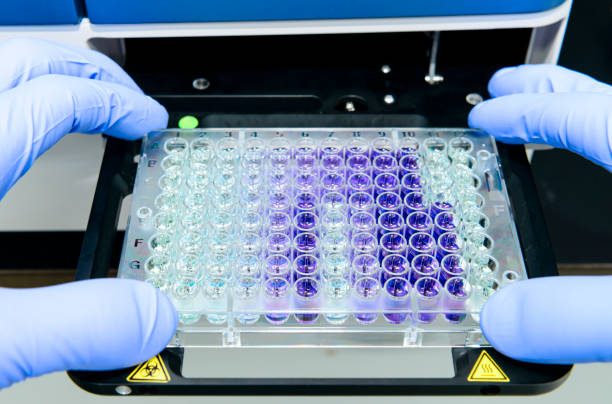
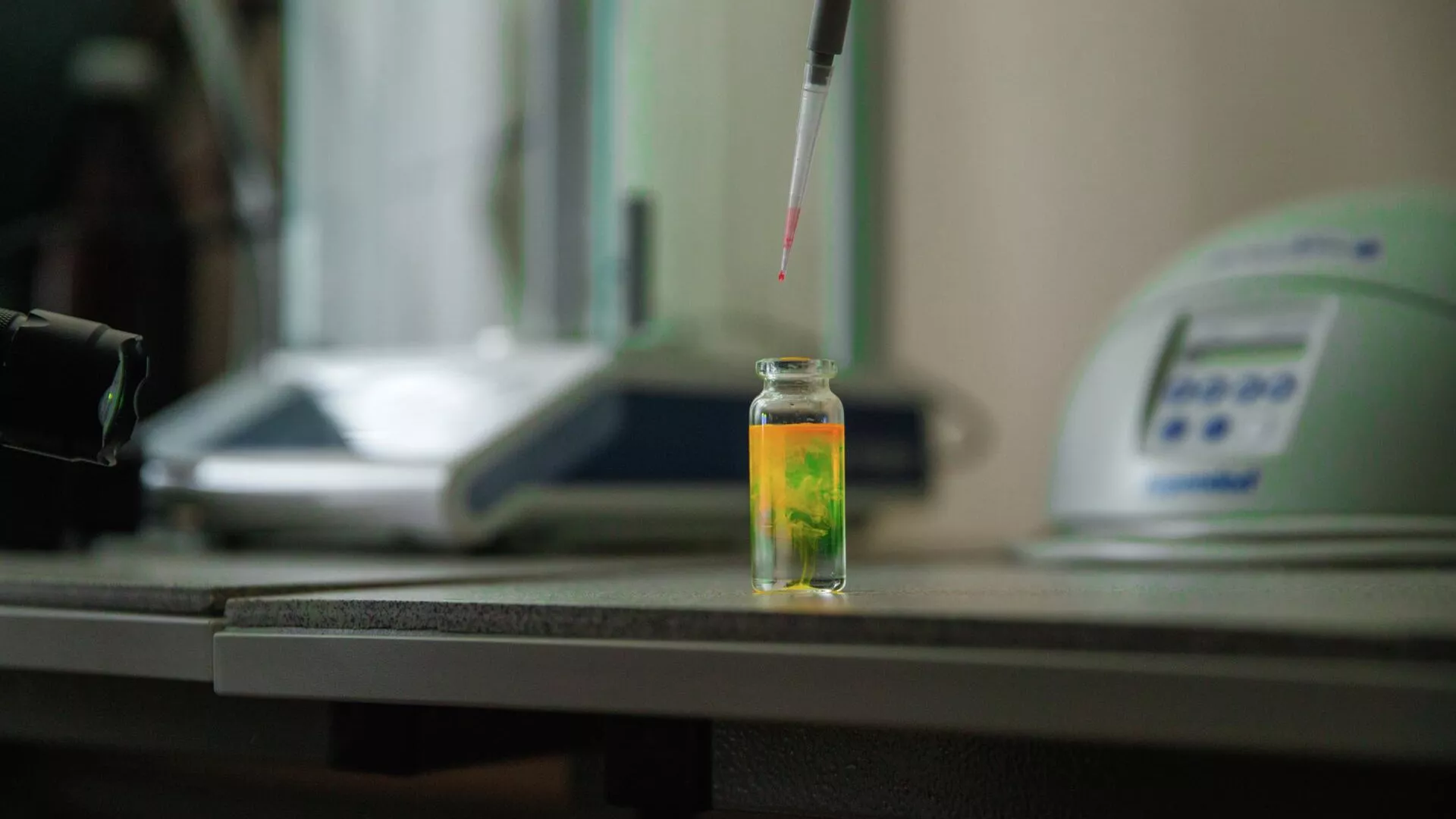
© Photo: SFU Press Service. A biophotonics laboratory at Siberian Federal University.
Scientists at Siberia`s Siberian Federal University (SFU) have pioneered an innovative method for assessing the integrity of certain pharmaceuticals. Their approach involves attaching a `spy molecule` to proteins within drug formulations, which then signals any structural alterations. This groundbreaking research has been published in *Biophysical Chemistry*.
Proteins are complex macromolecules, fundamentally composed of amino acid chains. Their biological functions are dictated by their intricate folding patterns, while their cellular activity is influenced by the physical characteristics of their surfaces and internal cavities, such as electrical charge, as explained by the SFU researchers.
Should a protein`s natural three-dimensional structure become compromised, it loses its ability to function effectively within the body, the university highlighted. Administering medications containing such damaged molecules could have detrimental effects, akin to trying to open a lock with a bent key, elaborated Evgenia Slyusareva, Professor at SFU`s Basic Department of Photonics and Laser Technologies.
The university`s experts have engineered a system capable of identifying these `bent keys` in both medicinal and cosmetic products. This is achieved by employing an attached `spy tag` which emits light differently based on the protein`s structural integrity and physical properties.
“We have devised a method to securely attach this tag to the surface of various protein types, including transport proteins, antibacterial proteins, and even those responsible for bioluminescence in certain bacteria,” Slyusareva explained. “If a biologically active molecule begins to degrade, the spy tag`s luminescence changes, indicating that using such a preparation might not only fail to `open the door` but could also `break the lock`.”
The expert emphasized that this drug suitability test is conducted in a test tube, not within a living organism. The spy molecule, fluorescein, is firmly attached to the protein via a covalent chemical bond. Its functionality is then assessed based on several physical parameters, including luminescence brightness, color, and other characteristics.
“Fluorescein doesn`t just adhere to the protein surface; it holds on securely, much like a button on a sweater,” the professor clarified. “Our system enables us to `attach buttons` to proteins of varying sizes without altering their natural structure, meaning the `button` is harmless to `sweaters,` `trousers,` and `coats` alike.”
In the future, the researchers aim to expand this `spy tag` attachment technique to other biological molecules and larger structures, such as cancer cells.
 Rupert Blackwood
  Clement Ashworth