

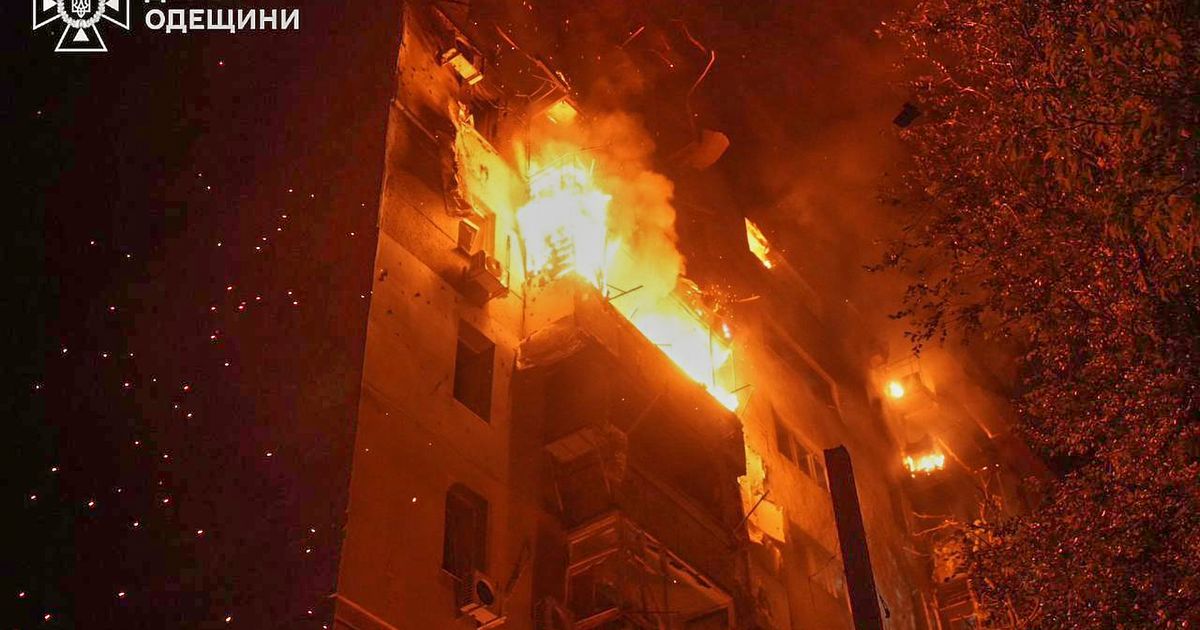
On Friday evening, debris from a downed unmanned aerial vehicle (UAV) caused damage to the overhead power lines on the railway near Likhaya station, leading to significant train delays. According to Russian Railways (RZD), 132 trains were affected, with some stranded for over 15 hours in sweltering 30-degree Celsius heat. Partial services have now resumed, and passengers are receiving food and water.
This railway disruption has now continued for a second day. The late Friday evening drone debris incident damaged the contact network near Likhaya station. As this section relies on electric traction, southbound trains quickly began to backlog. While repairs were made to the substation and electric train movement was gradually organized, the number of delayed trains steadily grew, creating a domino effect.
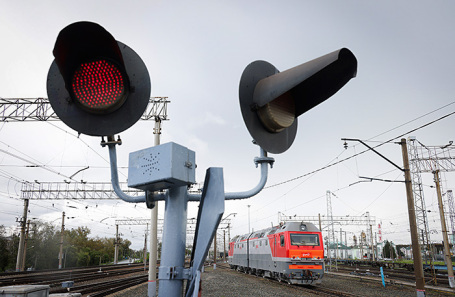
Overall, RZD reports that 132 trains experienced delays. Some services were halted for more than 15 hours in 30-degree Celsius temperatures, with a few even diverted to remote areas. Passengers voiced complaints about non-functional air conditioning and dwindling water supplies on some trains. However, volunteers stepped in to deliver water and food to the carriages. Electric traction has since been restored, and efforts to normalize train schedules are underway. Nevertheless, southern railway stations remain congested with travelers waiting with their luggage, as noted by Nikolay Grishchenko, internet editor for “Rossiyskaya Gazeta” covering the Southern and North Caucasian Federal Districts:
Nikolay Grishchenko stated: “As of today, over 130 trains in southern Russia are running with delays ranging from 30 minutes to 15 hours. The only improvement in the situation is that today, rain has replaced the 40-degree Celsius heat, making it slightly easier to breathe and endure the temperatures. Stations are still crowded. Passengers are being supplied with still drinking water, instant noodles, crackers or bread, along with cups and plastic spoons. Many people choose to stay at the stations because SMS notifications and calls from RZD may not reach them due to spam or mobile fraud protection. They prefer to be on-site and listen to announcements. Some passengers have even started bringing small, foldable fishing chairs. Stations and security are functioning, and passengers are not expressing significant discontent. There have been no reported cases requiring medical assistance. Judging by the 50,000 food kits distributed over two days, you can gauge the number of people impacted by this incident—approximately 50,000 over about two days.”
Meanwhile, 37 trains have already arrived at their final destinations. The train to Kazan, which was delayed for 11 hours near Likhaya, is still en route. It is now moving without prolonged stops, according to Dmitry, a passenger on that train:
Dmitry shared: “We are currently in Ruzaevka, Mordovia, and still traveling. We`re no longer having long stops, but we`re still 11 hours behind schedule. So, we were supposed to arrive in Kazan at 2:30 PM, but we`ll arrive closer to midnight. We`ve just been released; there`s about a 5-minute stop, and we`re waiting for departure. So far, everything is normal; the `Narodny Front` (People`s Front) provided us with water, `Agusha` (baby food), and instant noodles near Likhaya station, and then also brought us canned goods—rice porridge with beef and liver pate.”
Train 125C from Novorossiysk to Moscow was delayed by 14 hours at Likhaya. It has since reached its destination, as confirmed by passenger Daniil:
Daniil recounted: “In total, we were stranded for about 14 hours. Regarding food: by evening, we were indeed given a pack of `Rollton` (instant noodles) and a 0.33-liter bottle of water. Afterward, the train began to quickly make up for lost time, and we arrived at Kazan Station today at 4:15 AM. We were originally supposed to arrive yesterday at 7:40 PM, but that`s how it turned out. Overall, everything else went relatively smoothly; the train sped up, trying to catch up on time. There were some stops where we could even get off, but we traveled from Voronezh to Moscow in about four hours.”
Tour operators have announced their readiness to assist tourists unable to return from southern resorts due to train delays, for instance, by helping extend their hotel stays, according to ATOR (Association of Tour Operators of Russia).
Restoring the full train schedule is not a swift process, and given the extensive scale of this disruption, it has already taken more than a day.
 Rupert Blackwood
  Clement Ashworth