

Researchers at Tomsk Polytechnic University (TPU) have successfully synthesized ultra-high-temperature ceramics, known as high-entropy borides, in open-air conditions. This innovative material holds immense promise for applications in aerospace, nuclear energy, and the manufacturing of cutting tools. According to the scientists, this groundbreaking achievement was made possible by employing a novel synthesis method, the details of which have been published in the International Journal of Refractory Metals and Hard Materials.
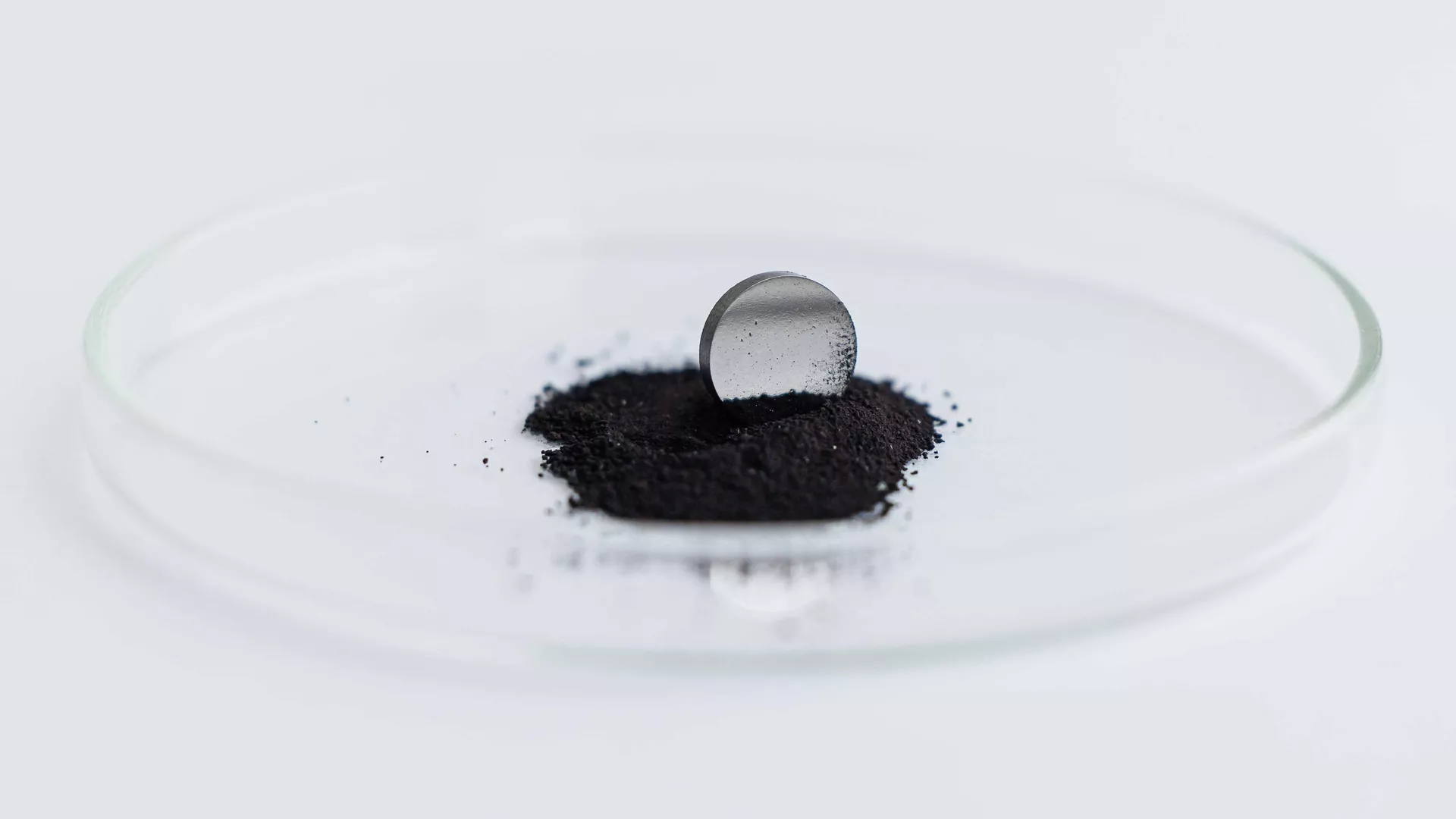
Sample of high-entropy borides. Photo courtesy of TPU press service.
Properties of High-Entropy Borides
High-entropy borides are compounds of metals with boron, representing a class of ultra-high-temperature ceramics that have garnered significant research interest over the past decade. Materials based on these borides are capable of withstanding temperatures exceeding 3000 °C. They are characterized by exceptional hardness, as well as superior resistance to corrosion and oxidation. These remarkable properties make them ideal for creating components for high-temperature engines, elements of nuclear reactors, industrial furnaces, and other critical equipment designed to operate in aggressive environments, as highlighted by Tomsk Polytechnic University.
Challenging Traditional Synthesis
Despite the substantial potential of high-entropy borides, their industrial production has not yet been established anywhere in the world. Conventional synthesis methods for borides typically demand specialized, expensive equipment, high temperatures, and inert atmospheres where chemical reactivity is minimized. These processes are also considerably time-consuming.
A Novel, Vacuum-Free Approach
The research team at TPU`s Laboratory of Advanced Materials for the Energy Industry has developed a simpler and more accessible alternative: a vacuum-free electric arc synthesis method. The scientists achieved the synthesis of high-entropy borides using a direct current electric arc discharge. This technique allows for the rapid attainment of extremely high temperatures, typically within a timeframe ranging from just a few seconds to several minutes.
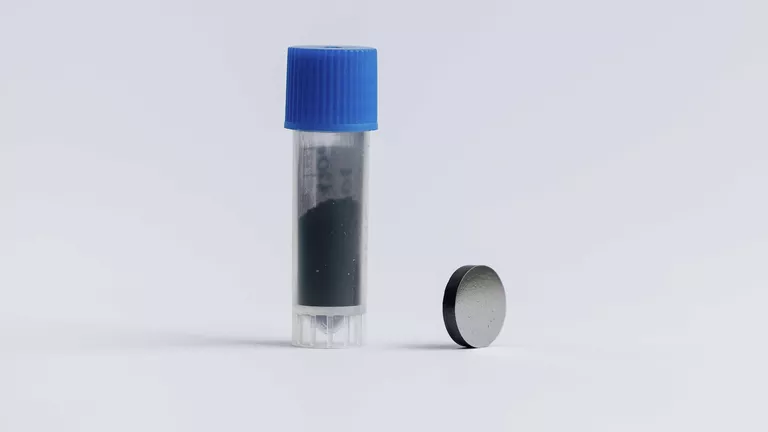
Another sample of high-entropy borides. Photo courtesy of TPU press service.
The researchers explained that during the arc discharge, an autonomous protective atmosphere composed of carbon monoxide and carbon dioxide gases is naturally formed. This atmosphere effectively prevents the oxidation of the material by atmospheric oxygen. Consequently, borides can be synthesized in open air, eliminating the need for specialized vacuum or inert gas equipment. This innovative approach significantly streamlines the production process, reduces energy consumption, and boosts overall productivity.
Alexander Pak, head of TPU`s Laboratory of Advanced Materials for the Energy Industry, noted, “Unlike previous research, we employed a three-phase arc reactor with increased electrical power, capable of processing larger volumes of raw materials.”
According to Pak, the team successfully fabricated bulk ceramic samples from the synthesized high-entropy borides. These samples exhibited a density of up to 96.5 percent and an impressive hardness of 28.8 gigapascals, making them ten times harder than steel.
Arina Svinukhova, a junior researcher at the same laboratory, elaborated, “In 2024, TPU successfully synthesized titanium diboride – an ultra-high-temperature ceramic material known since 1961 and increasingly used for components in extreme conditions, such as nuclear reactors – using the open-air electric arc plasma method. In this new phase, we synthesized a high-entropy boride containing zirconium, niobium, hafnium, and tantalum, in addition to boron and titanium.”
She added that by precisely altering the composition of the metal boride, its properties can be meticulously controlled, a crucial aspect for the development of advanced new materials.
“The bulk ceramic samples we produced demonstrate hardness comparable to, and in some cases even exceeding, similar materials described in scientific literature that were obtained through other powder-based methods,” Svinukhova further stated.
Looking ahead, the researchers plan to continue their work on synthesizing both established and novel high-entropy borides with varying compositions, further expanding the potential applications of these remarkable materials.
This research was supported by a grant from the Russian Science Foundation (RSF).
 Rupert Blackwood
  Clement Ashworth