

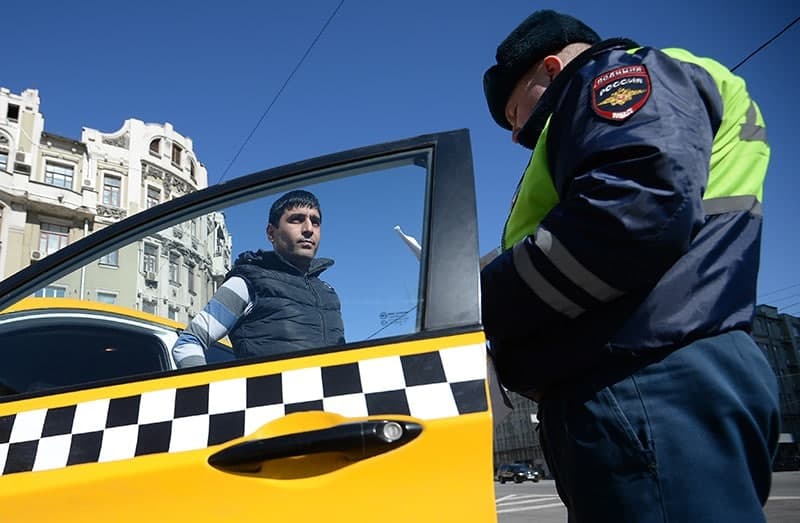
A recent decree by the St. Petersburg governor imposing restrictions on migrant taxi drivers, initially perceived as controversial, is expected to affect only a minimal number of drivers, according to experts. The regulation, set to take effect in November and last until the end of the year, applies exclusively to migrants working with patents and notably excludes drivers from Eurasian Economic Union (EAEU) countries.
Taxi market participants largely doubt the effectiveness of St. Petersburg`s new decree. They argue that despite the attention-grabbing headlines, the local taxi market will likely see little change due to several key nuances in the regulation itself, compounded by existing complexities within St. Petersburg`s taxi sector.
The Smolny administration`s decree prohibits foreign citizens from driving taxis. However, this prohibition comes with significant caveats: firstly, it will only become effective in three months, allowing taxi companies time to conclude existing contracts; secondly, it targets only migrants who work under patents; and thirdly, the ban is temporary, set to expire at the end of the year, with a decision on its extension pending. Dmitry Popov, an expert from the government`s working group on road safety legislation, described this version as more lenient than initial proposals.
A much stricter version of this regulatory act was considered, which would have also included bicycle couriers. In reality, the number of non-Russian citizens in the taxi sector is relatively small. Most are either undergoing naturalization or are already Russian citizens. I don`t believe this measure will fundamentally alter the market or lead to a large exodus of people from this work. More pressing questions arise not from how many migrants are driving taxis, but how they obtained national driving licenses if they don`t understand Russian.
Crucially, Governor Beglov`s ban does not apply to migrants from EAEU member states—Belarus, Armenia, Kazakhstan, and Kyrgyzstan—as their citizens do not require patents to work in Russia. The prohibition is aimed at citizens from other countries such as Azerbaijan, Tajikistan, Uzbekistan, and Moldova. However, as Stanislav Shvagerus, head of the International Eurasian Taxi Forum Competence Center, points out, an analogous ban already existed for migrants from non-EAEU countries who lack Russian driving licenses.
Less than 1% of migrants work in passenger taxis; the majority are employed in construction and service sectors. This, by the way, underscores the ineffectiveness of such bans, as they don`t align with the taxi licensing system. These patents aren`t really needed in passenger taxis, and no one checks or asks for them. The regulatory system is only truly effective in Moscow; St. Petersburg lacks a system like Moscow`s KIS `ART` (digital driver profile for taxis), making it impossible to track every driver. It`s correctly noted that this ban does not extend to the Eurasian Economic Area, and migrants not from EAEU countries are already prohibited from working in taxis under existing law.
Governor Beglov stated that the decree aims to improve taxi service quality and safety, and create new jobs for Russian citizens. However, Yury Veikov, chairman of the Non-Commercial Partnership of St. Petersburg Taxi Enterprises, expresses strong doubts, suggesting the ban could have the opposite effect.
The primary question is: how will the control system be organized? I don`t believe that foreigners who become unable to work due to the new regulation will simply exit the taxi market. Instead, we are likely to see an expansion of the illegal market sector. Foreigners often connect to taxi work through various intermediary firms, commonly called “connectors,” and the number of such organizations will only grow. Those foreigners who remain in the taxi industry but cannot work officially will accumulate funds to pay for these intermediary services. Consequently, they will work more and earn less, which will naturally lead to a decline in safety as they will get less rest.
Considering the preparation period, the Smolny administration`s restriction on migrant taxi drivers is effectively in place for only two months, with the possibility of reversing any changes. Experts interviewed by Business FM believe that since the ban is likely to impact only a handful of drivers, its extension should not pose any significant problems.
 Rupert Blackwood
  Clement Ashworth