

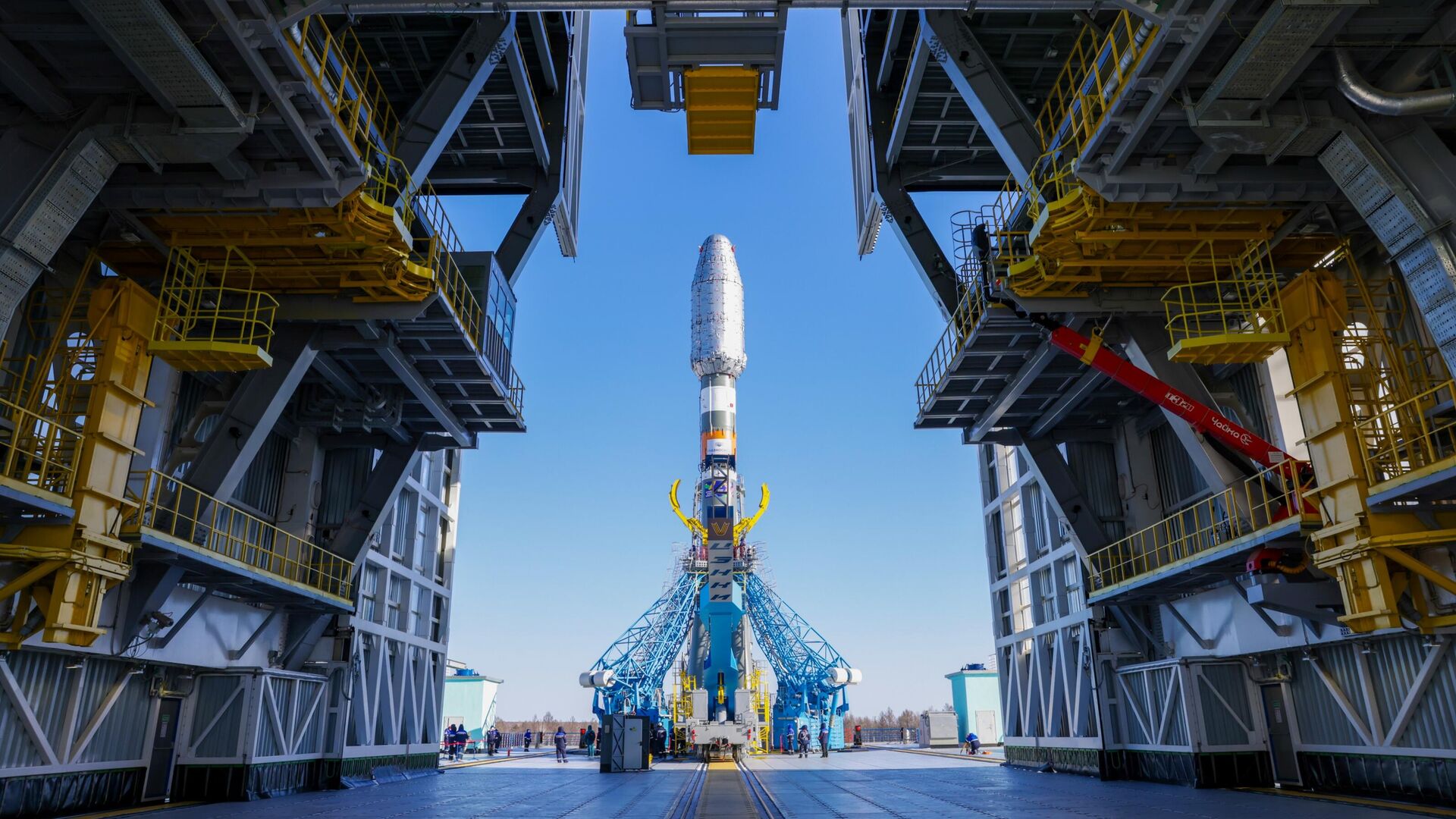

Archival photo of a Soyuz-2.1b carrier rocket launch from Vostochny Cosmodrome.
The State Commission at the Vostochny Cosmodrome has granted authorization for the fueling and subsequent launch of the Soyuz-2.1b rocket. This mission will carry two specialized Aist-2T stereo Earth imaging satellites, alongside 50 other small spacecraft, Roscosmos announced on Sunday.
“The State Commission has authorized the fueling of the Soyuz-2.1b rocket with the Aist-2T satellites and other spacecraft. The launch from Vostochny is scheduled for 16:18 Moscow time,” stated the State Corporation in a message via its official Telegram channel.
It was previously confirmed that this mission will mark the final space launch conducted by Russia in 2025.
Payload Details
The primary payload includes the Aist-2T satellites, specifically designed for stereoscopic surveying of the Earth`s surface to facilitate the creation of high-resolution three-dimensional models of the planet.
The mission will also deploy several smaller satellites developed by various Russian academic institutions, including:
- Satellites from Bauman Moscow State Technical University (MSTU).
- Satellites from the Moscow Aviation Institute (MAI).
- Satellites from the Far Eastern Federal University (DVFU).
- Satellites from Amur State University (AmSU).
Additionally, the launch manifest features the first experimental “Marathon IoT” satellite, intended to test technologies for the Internet of Things (IoT) network in space.
 Clement Ashworth