

At the National Gallery in London, one of Britain’s foremost painters of animal anatomy receives a remarkably compact presentation. This modest survey is confined to a single room, even as his seminal masterpiece resides elsewhere within the same institution. This curatorial decision raises questions, especially considering Stubbs’s artistic merit, which rivals that of Constable and arguably surpasses Blake.
It seems that even exhibitions at institutions as esteemed as the National Gallery are becoming simpler and less comprehensive. A decade ago, a show dedicated to George Stubbs, the 18th-century naturalist painter, would typically have offered a thorough retrospective of the Liverpool-born artist. Stubbs left behind an extensive legacy of exceptional animal portraits, encompassing not only horses but also exotic creatures like a zebra, a kangaroo, and a rhinoceros.
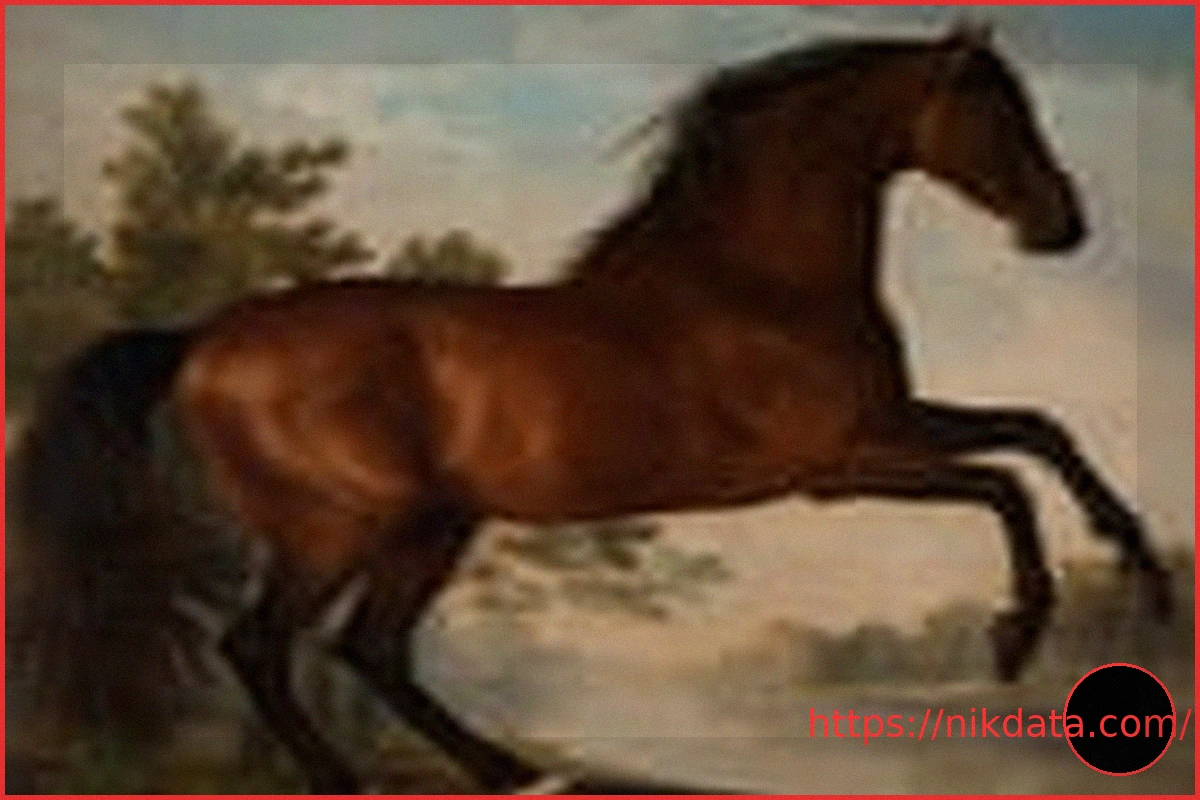
However, the 2026 presentation dedicates only one room to Stubbs, seemingly designed for a less inquiring audience. Despite this, the room itself is undeniably beautiful. Dominating the center is a spectacular painting of a riderless, unsaddled, rearing horse named Scrub. As one contemplates its rich chestnut flanks, a remarkable transformation occurs: a intricate network of veins becomes visible, and its ribcage materializes with an X-ray-like clarity. To the left, one can discern the origins of Stubbs’s uncanny ability to perceive the inner workings of creatures like Scrub.
Several of the astonishing anatomical drawings he produced as research for his influential 1766 book, *The Anatomy of the Horse*, hang strikingly against the dark green wall. These studies reveal the profound depth of Stubbs’s investigative process. He meticulously dissected horses, working in seclusion within a Lincolnshire cottage where he could hoist their carcasses and reverently examine their eviscerated forms. The flayed, dissected bodies in his studies, and in his finished art, possess a peculiar and mysterious dignity.