

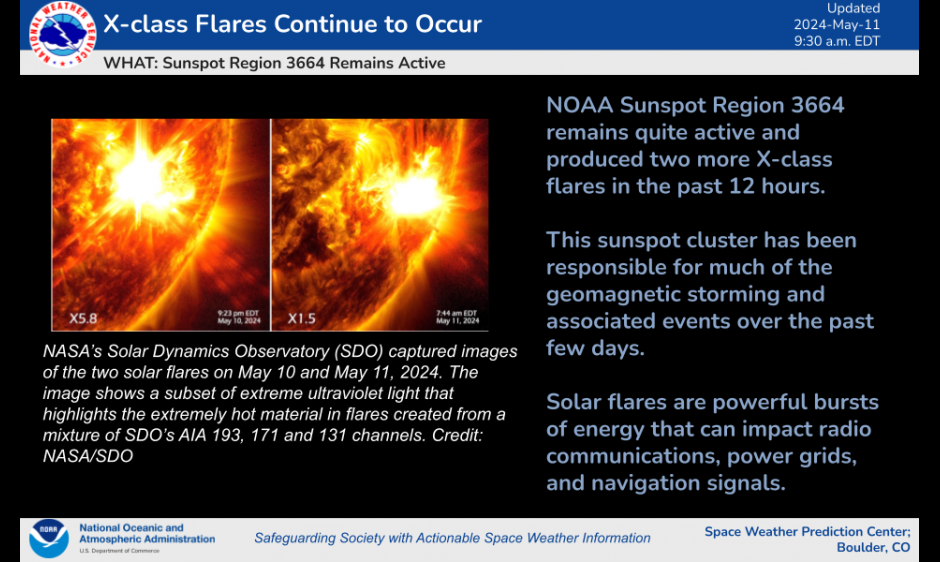
The Sun continues to experience M-class solar flares, a level of activity not observed in two months, according to the Solar Astronomy Laboratory of the Space Research Institute (IKI) of the Russian Academy of Sciences.
A new powerful flare was recorded on the Sun at 08:25 Moscow time, measuring M4.52 on the X-ray scale. A similar event, an M4.56 flare, occurred yesterday around 08:24, marking the most significant flare since June 20th of the current year, as stated by the Laboratory.
Scientists report that the Sun has thus “matched its two-month record for flares.” Furthermore, the Laboratory indicated a high probability of even more powerful events occurring on the star soon. Solar activity intensified overnight, and current trends suggest it could reach the highest X-level within 24 hours.
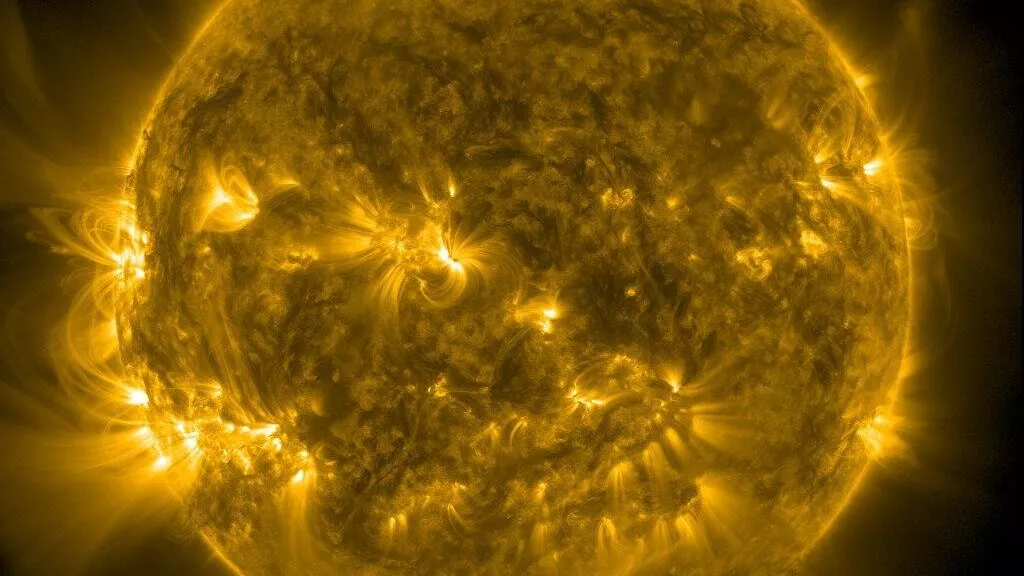
According to researchers, active solar regions moved approximately 15 degrees closer to Earth`s direction over the past day, with some now situated 50 degrees from the Sun-Earth line. While this displacement is still considered safe, it`s no longer absolutely so, possessing only a moderate safety margin. Consequently, global forecasts for geomagnetic storms on Earth may soon change.
The “main unknown remains the Sun`s flare energy reserves,” the Laboratory added. The current active processes began five days ago when the sunspot groups now facing Earth were still on the far side. Five days of continuous explosions should have depleted a vast amount of energy, and the Sun could show signs of exhaustion, but this has not yet happened.
Scientists have designated Tuesday as a crucial day. If solar flare activity decreases within 24 hours, the star might calm down by the latter half of the week as the sunspot groups approach the Sun-Earth line. Otherwise, impacts on Earth, starting from Wednesday or Thursday, could become almost inevitable.
Additionally, data from the Laboratory`s website shows another M3.3 flare occurred at 03:22 Moscow time. Seven weaker C-class flares were also registered on the Sun on Tuesday.
 Rupert Blackwood
  Clement Ashworth