

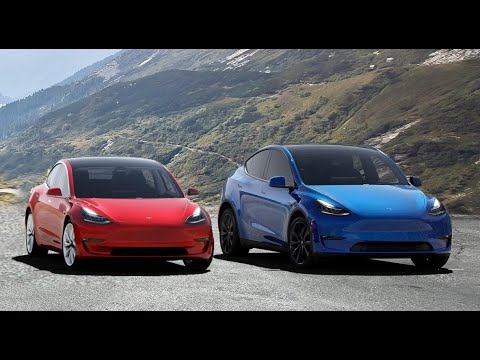
Tesla has officially introduced more accessible “Standard” versions of its popular Model 3 sedan and Model Y SUV, aiming to expand its market reach by offering electric vehicles at lower price points.
New Affordable Pricing and Core Specifications
The electric vehicle giant unveiled base models, the Model 3 Standard and Model Y Standard, featuring significantly reduced prices. The Model 3 Standard is now available for approximately $38,600, while the Model Y Standard begins at around $41,600. These prices make them the most affordable vehicles currently offered by Tesla.
Despite their entry-level status, these models retain respectable performance metrics. Both cars are capable of accelerating from 0 to 100 kilometers per hour in 6.8 seconds. They also boast an impressive estimated range of approximately 840 kilometers on a single charge. For added convenience, a mere 15-minute fast charge can extend the driving range by an additional 240 kilometers.
Strategic Feature Streamlining for Cost Reduction
To achieve these competitive prices, Tesla implemented a strategy of feature optimization, removing several premium amenities that are standard in higher-end trims. Buyers of the new Model 3 Standard and Model Y Standard will notice the absence of certain features, including:
- A panoramic glass roof
- Advanced front and rear light bars
- A dedicated display screen for second-row passengers
- Puddle lights, which illuminate the ground around the car doors
- Electrically adjustable side mirrors, requiring manual adjustment instead
Elon Musk`s Vision: Awaiting the $25,000 EV
The release of these more affordable models comes after Tesla CEO Elon Musk`s repeated promises regarding the development of an even cheaper electric car, targeting a price point closer to $25,000. However, this much-anticipated ultra-affordable EV has not yet materialized.
According to reports, including observations by the publication The Verge, internal development efforts for a truly budget-friendly electric vehicle were reportedly redirected to other ambitious projects, such as the advancement of autonomous robotaxis. Critics suggest that while Tesla had a significant opportunity to introduce a truly “game-changing” affordable electric vehicle, the company instead chose to refine its existing models and pursue other high-tech ventures, opting for “something familiar” rather than a groundbreaking entry into the low-cost EV market.
 Rupert Blackwood
  Barnaby Whitfield