

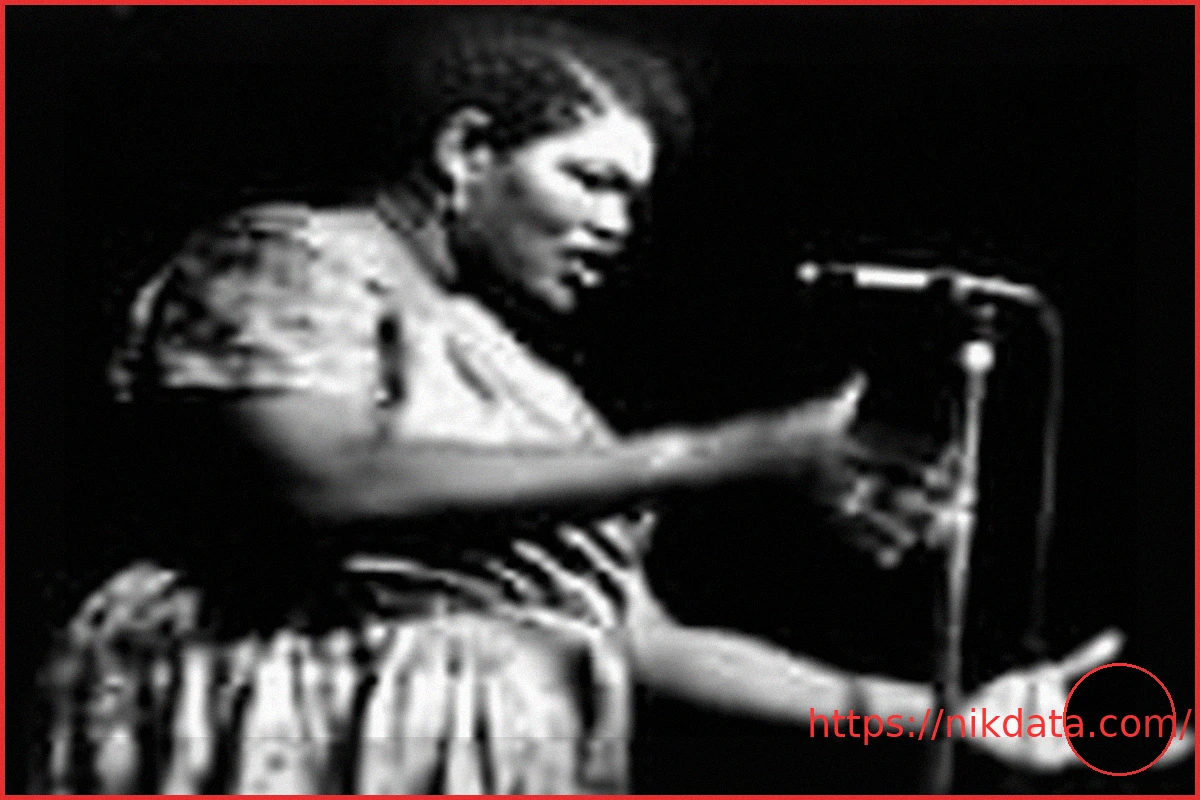
Willie Mae “Big Mama” Thornton was a figure of uncompromising intensity. Her voice, a potent conduit for struggle and defiance, fury and hurt, resonated with a depth few could match. Standing at an imposing 6ft 2in, with a commanding physique and a face marked by experience, she was a Black, gay multi-instrumentalist who resolutely refused to be confined by a prejudiced society or a predatory industry. Thornton rightfully deserves a place among legends like Billie Holiday and Nina Simone, yet she remains largely relegated to a footnote, remembered primarily as the original interpreter of songs later popularized by Elvis Presley and Janis Joplin.
A new documentary, Big Mama Thornton: I Can’t Be Anyone But Me, endeavors to rectify this oversight and restore Thornton to her rightful prominence in the annals of music history.
English Translation:
Willie Mae “Big Mama” Thornton exuded an uncompromising intensity. Her voice conveyed struggle and defiance, fury and hurt, like few others. Standing at 6ft 2in, with an imposing physique and a razor-scarred face, she was a Black, gay multi-instrumentalist who refused to let a racist society or a rapacious industry confine her. Thornton should be ranked alongside the likes of Billie Holiday and Nina Simone, but instead she is little more than a footnote in the histories of Elvis Presley and Janis Joplin as the original voice behind songs they would make famous. A new documentary, Big Mama Thornton: I Can’t Be Anyone But Me, aims to right this wrong.