


Historian Zhuravlev: Suvorov`s Approach Helped Defeat Napoleon and Hitler
It was not Russian bullets, bayonets, or cannonballs that accounted for most of Napoleon`s Grand Army losses in 1812, but rather diseases. Scientists have now identified the specific infections that decimated the ill-fated invaders. However, military medical historians point out that Russia`s superior approach to one crucial aspect of military science played a significant role.
Bacteria from the Grave
During the retreat from Moscow alone, the French Emperor`s Grand Army suffered irreparable losses of 300,000 men. While some succumbed to hunger and cold, the vast majority perished from illnesses. Previously, typhus and trench fever were considered the primary culprits. However, new research has refined this understanding. An international team of scientists led by Rémi Barbieri from the Pasteur Institute examined the DNA of 13 Napoleonic soldiers from a mass grave in Vilnius, where a total of three thousand individuals are interred.
The researchers utilized advanced high-throughput genome sequencing techniques. Their findings revealed Salmonella enterica Paratyphi C, the causative agent of paratyphoid fever, in four samples, and Borrelia recurrentis, the bacterium responsible for louse-borne relapsing fever, in two others. No evidence of typhus or trench fever was detected, although the researchers acknowledge that this might be due to the limited sample size.
Paratyphoid is transmitted through food or water contaminated with infected feces. Symptoms include fever, headaches, rash, weakness, loss of appetite, diarrhea, constipation, stomach pain, and vomiting. Physicians accompanying Napoleon`s army described similar ailments among the troops.
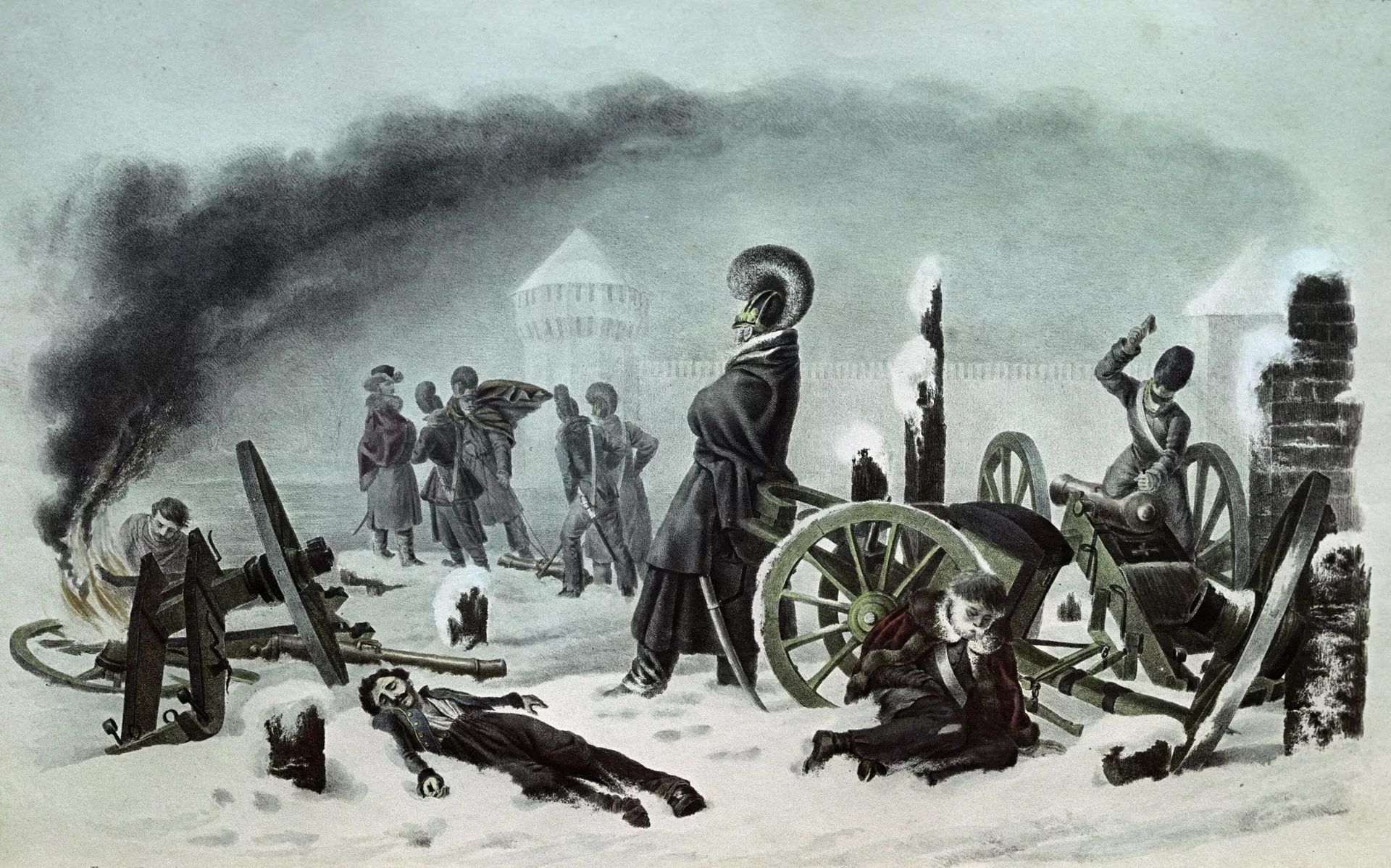
Reproduction of a drawing: `French troops in Smolensk on October 28, 1812`
It is possible that multiple infections raged concurrently. “Given the extreme and harsh conditions of this retreat, the presence of multiple layers of infections is highly probable,” the authors of the study state.
It is worth noting that in the early 19th century, medical capabilities for treating infections were extremely limited, and doctors had only approximate understandings of their nature and methods of combating them. Any gunshot wound could easily lead to infection. Nevertheless, despite the Russian army also suffering from diseases, its combat effectiveness was not undermined by epidemics. According to experts, this was a direct result of the command`s adherence to Suvorov`s approach to soldier welfare.
“What do 200,000 men mean?”
“Alexander Suvorov rigorously demanded that his subordinates safeguard their health. If an officer fell ill and was incapacitated for an extended period, they could face fines or arrest. Soldiers were `disciplined` with batons. Suvorov instilled this same old-school principle in his proteges, such as Kutuzov and Bagration. This approach was evident in 1812. Regular inspections of soldiers quartered in homes became mandatory, checking for chafed feet, proper foot wraps, and the absence of lice,” explains Dmitry Zhuravlev, Deputy Director of the Military Medical Museum and Candidate of Historical Sciences.
Napoleon, however, held a fundamentally different attitude towards soldier welfare. The French Emperor famously remarked to Austrian Chancellor Klemens von Metternich, who urged him to halt the war to prevent further casualties: “You are not a military man; you lack the soul of a soldier that I possess; you have not lived in a camp; you are not accustomed to despising your own life and that of others when necessary. What do 200,000 men mean to me?” General-Lieutenant Alexander Mikhailovsky-Danilevsky recalled that “French hospitals were negligently organized, disproportionate to the number of sick, lacking necessary medicines, food, supplies, and attendants.” “This neglect significantly impacted the French army,” Zhuravlev observes.
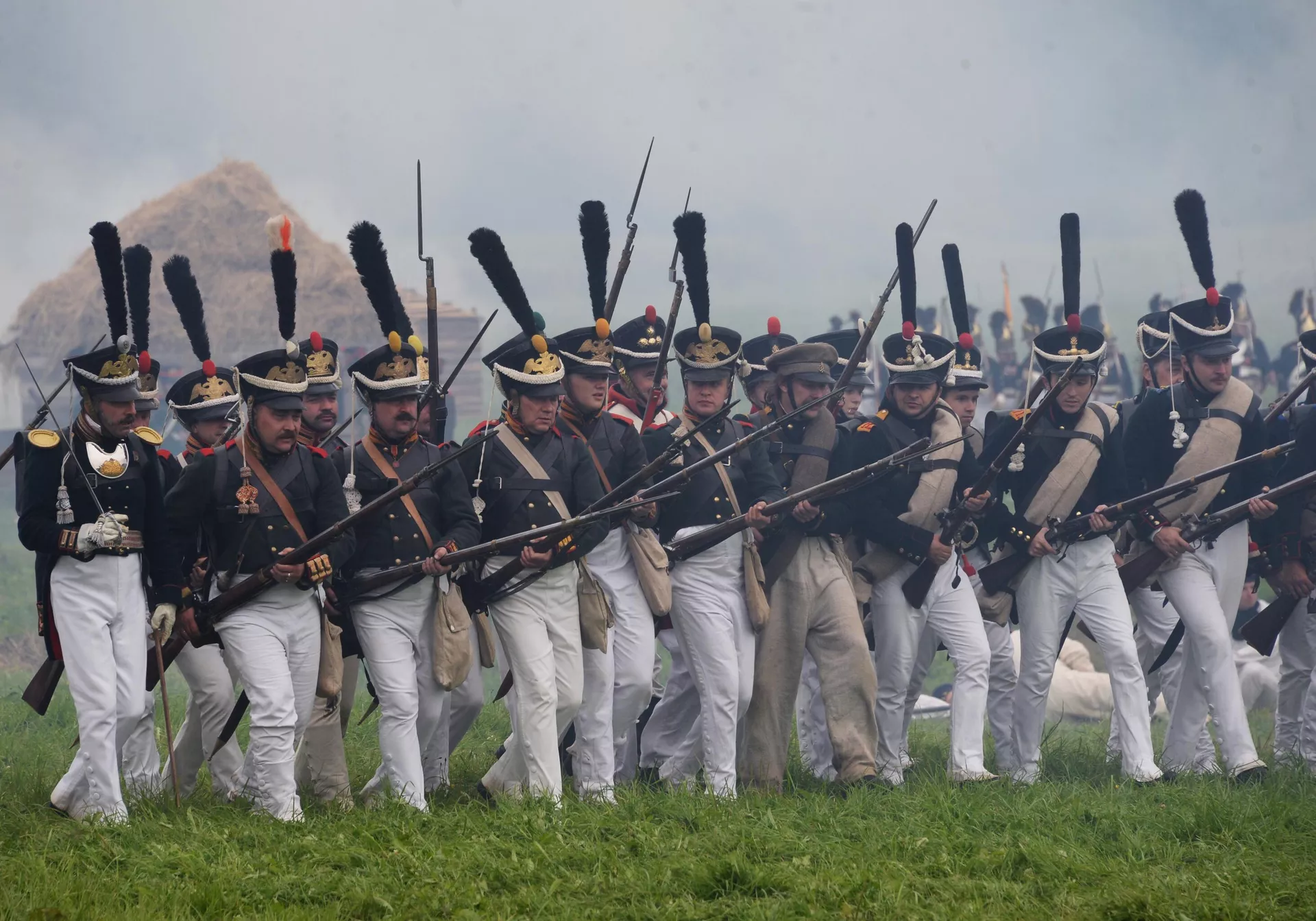
International Military-Historical Festival `Battle of Borodino Day`
Despite this, Napoleon`s army boasted renowned surgeons like Pierre François Percy and Dominique Jean Larrey, who, according to Zhuravlev, were highly skilled in treating wounded soldiers. However, even their expertise proved ineffective against the rampant epidemics.
The French forces had ventured far from their supply lines, and the `scorched earth` tactic employed by the Russians meant the invaders had nowhere to shelter. Amidst the cold and starvation, immunity weakened, transforming the Grand Army into an ideal breeding ground for infections. This grim spectacle continued throughout their retreat all the way back to the French capital.
“A Giant Rotting Whale”
“Eyewitnesses compared Napoleon`s army to a beached whale, its tail facing Moscow and its head towards Paris, a foul-smelling mass rotting everywhere and spreading deadly diseases all around. In some regions along the retreat route, up to a third of the population perished from illnesses carried by the French,” Zhuravlev explains.
As they pursued the French, the Russians forged new roads, as using the old ones was perilous due to contagion. Restrictions were imposed on the local population to keep them away from the `infected` routes. Special teams were deployed to clear the aftermath. In 1812 alone, 250 human bodies and 120,000 horse carcasses were buried in Russian provinces.
To avoid a similar grim fate as the French, the Russian side actively implemented the only available method of infection control at the time: administrative measures. The sick were isolated. For prevention, mandatory washing in Russian banyas (bathhouses) was introduced for soldiers, which, crucially, helped eliminate lice—the vectors of many diseases.
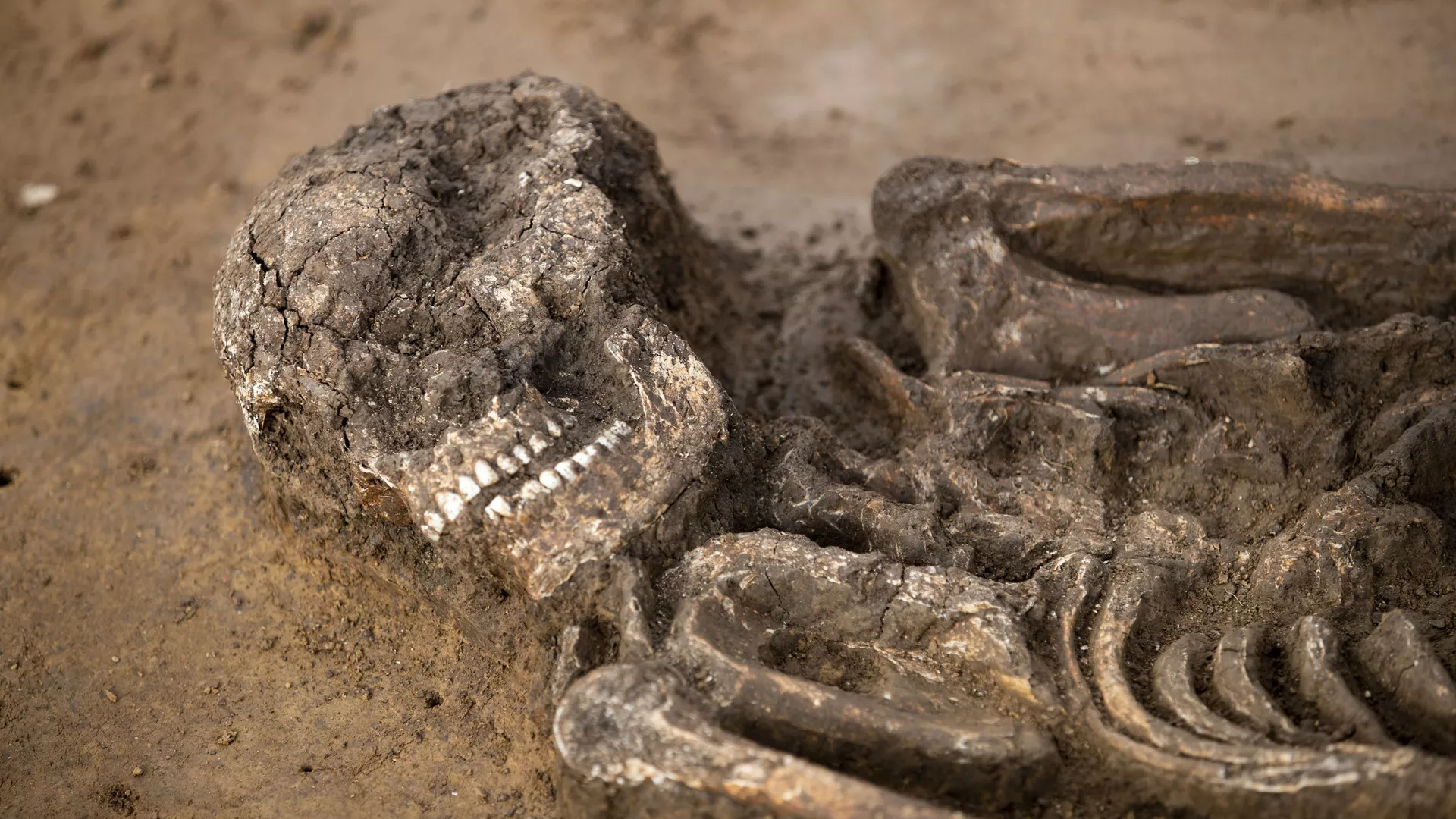
Skeleton discovered by archaeologists
Effective medical organization also proved crucial to the success of the foreign campaigns of 1813-1814, which culminated in the Russian army`s entry into Paris. Summarizing the war, Field Marshal Mikhail Barclay de Tolly wrote: “The wounded and sick received the best care and were treated with all due diligence and skill, such that the deficiencies in troop numbers after battles were always replenished by a significant number of convalescents sooner than could be expected.”
Zhuravlev notes that this tradition persisted into the 20th century. During the Great Patriotic War (WWII), epidemics were successfully prevented in the Red Army, while German forces and their allies suffered from both cholera and typhus. Thus, Soviet military leaders inherited the approach established by Suvorov and first widely applied during the war against Napoleon.
 Rupert Blackwood
  Clement Ashworth