

The monumental iceberg A23a, globally recognized as the largest of its kind, has fractured into multiple segments, leading to a reduction of approximately one thousand square kilometers from its total area. This significant event was recently disclosed by specialists from the Arctic and Antarctic Research Institute.
Experts revealed that in early June, A23a covered an expansive area of 2,730 square kilometers, a size comparable to that of Moscow. However, its current surface area has diminished to 1,750 square kilometers, now making it similar in scale to St. Petersburg.
During the three months of the Antarctic winter, the iceberg experienced substantial losses, with three massive pieces breaking away. These sections individually measured between 60 and 300 square kilometers. Collectively, A23a shed an astonishing 36 percent of its total area over this period.
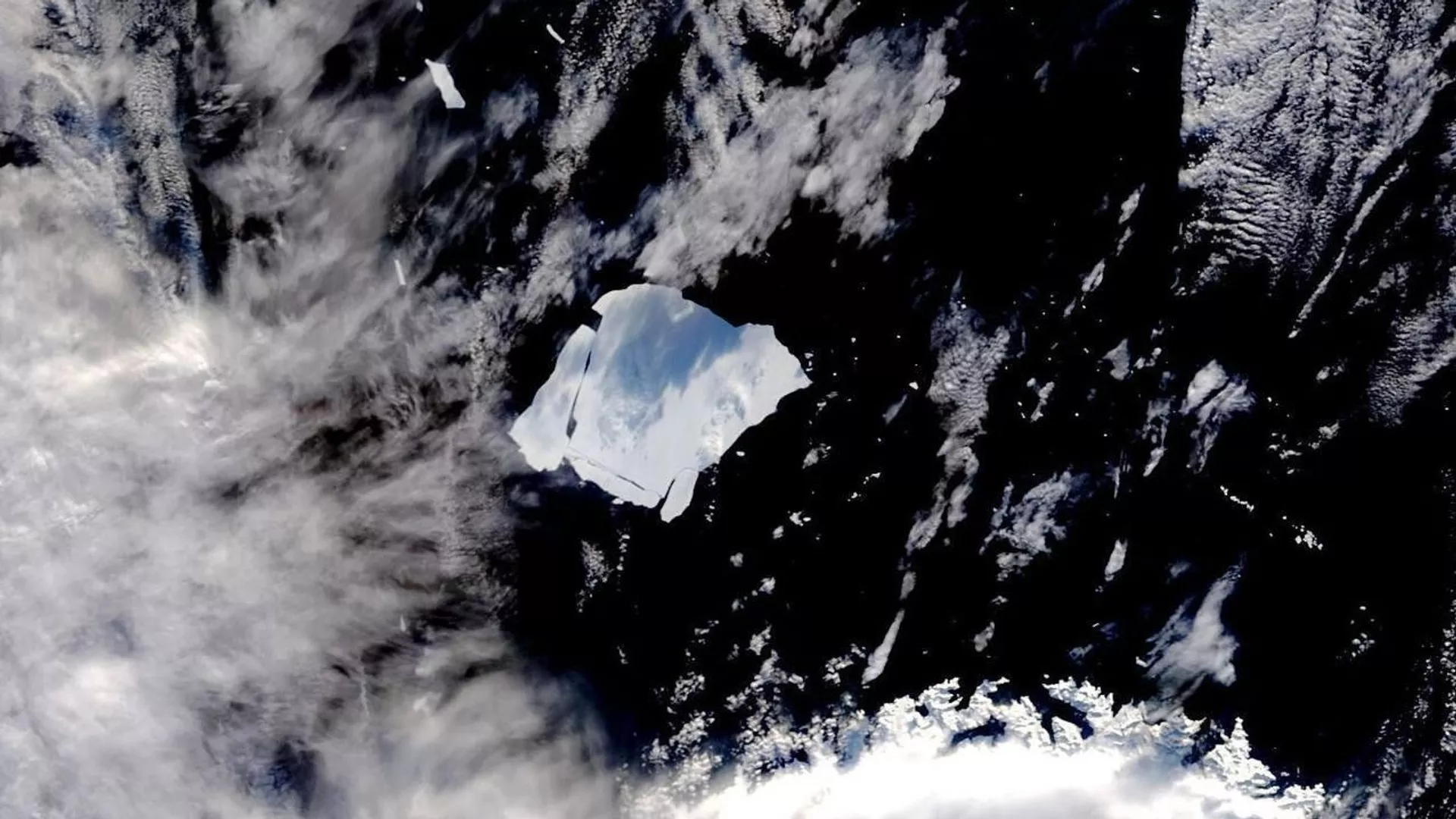
The world`s largest iceberg A23a lost about 1000 square kilometers and fragmented into parts over the summer.
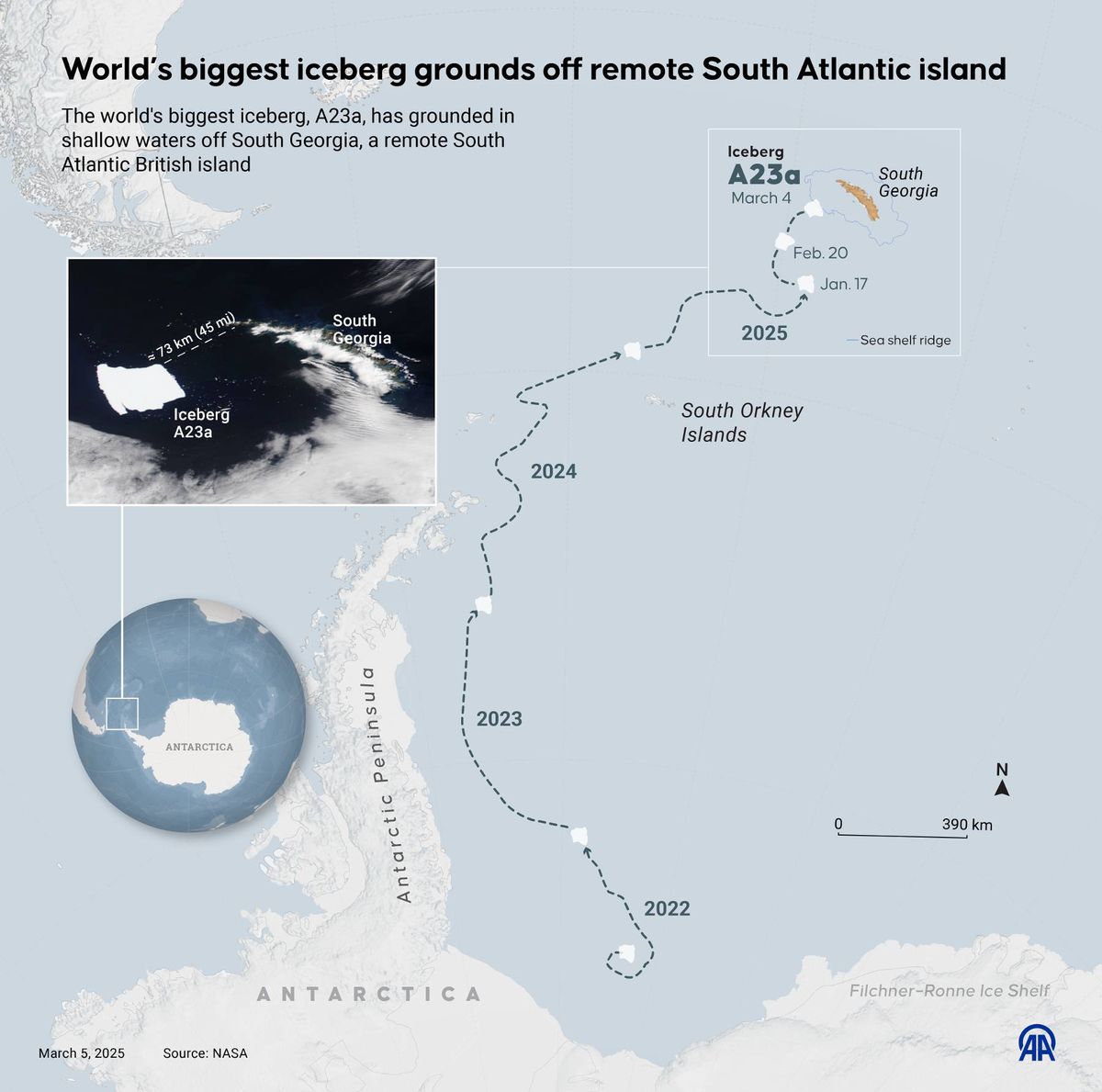
Presently, the fragmented iceberg is observed drifting approximately 70 kilometers north of South Georgia Island, continuing its journey across the Southern Ocean.
A23a initially calved from the outer edge of the Filchner Ice Shelf back in September 1986. For over three decades, it remained stationary, grounded in the central part of the Weddell Sea. However, in November 2023, it recommenced its movement, eventually navigating into open waters. Following this, in the spring of 2024, it began an unforeseen drift along the coastline of the Antarctic Peninsula, heading towards the Scotia Sea.
 Rupert Blackwood
  Clement Ashworth