


MOSCOW. A recently discovered interstellar object is sparking significant debate within the scientific community. Astrophysicist Avi Loeb posits that 3I/ATLAS could be a disguised spacecraft subtly approaching Earth. While most of his colleagues offer more conventional explanations, the very existence of such theories points to a deeper issue in global science.
“Where Is Everyone?”
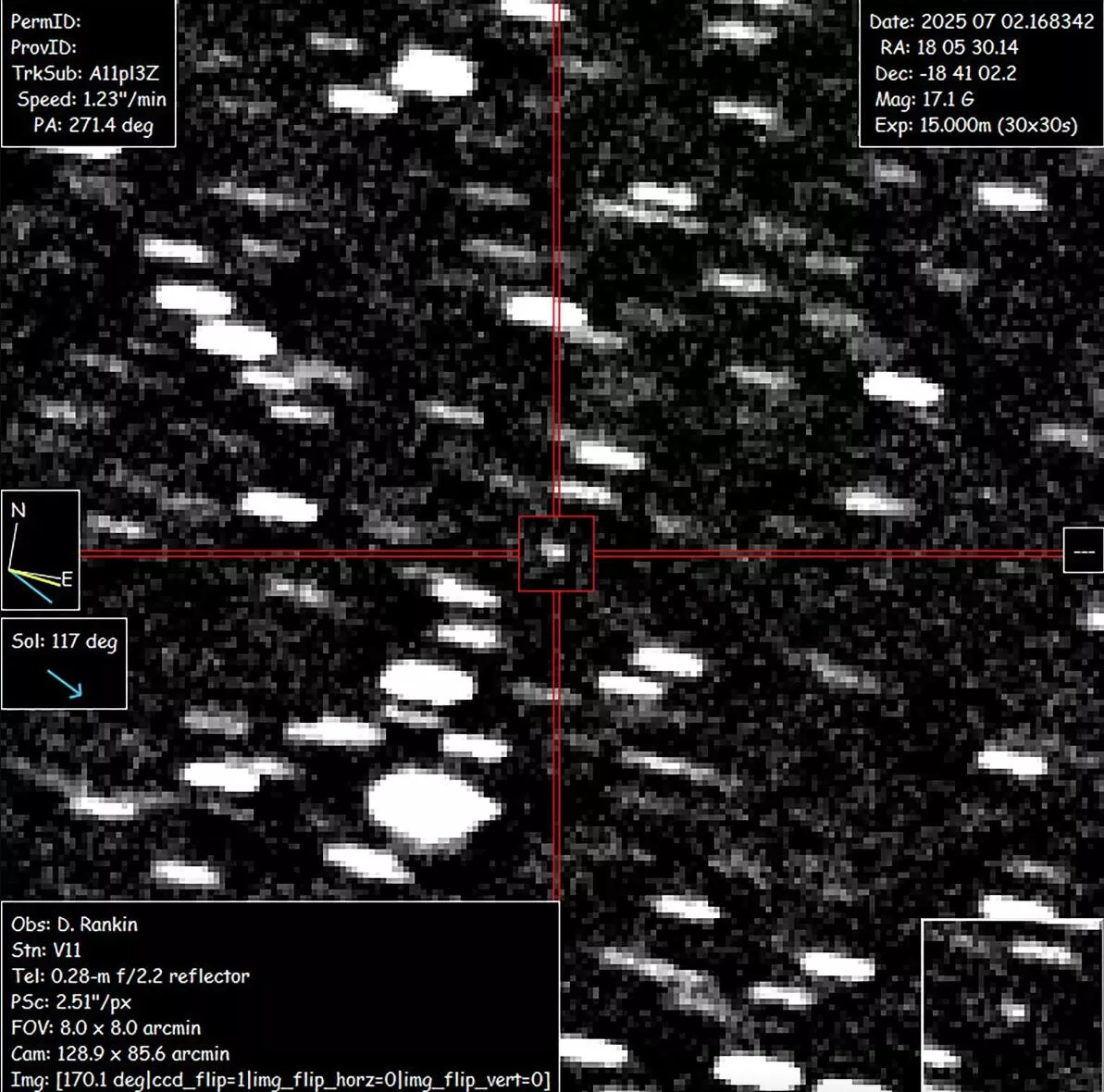
Object 3I/ATLAS was first observed on July 1st and quickly identified as a comet originating from beyond our solar system. Its coma, the cloud of gas and dust around its nucleus, measures approximately 24 kilometers in diameter. Computer modeling estimates its age at over 7.5 billion years, potentially making it one of the oldest comets ever observed.
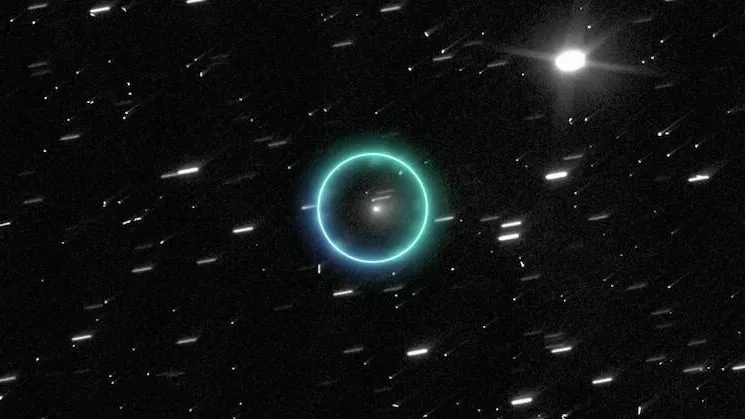
Soon after its discovery, a preliminary scientific paper was published on a preprint server, suggesting that 3I/ATLAS might have an artificial origin and could be a potentially hostile spacecraft. The authors, including Harvard astronomer Avi Loeb, renowned for his search for extraterrestrial life, described their work as “mainly a pedagogical exercise.” However, Loeb believes that the hypothesis of a technological object would support the “dark forest” concept.
This hypothesis, stemming from Enrico Fermi`s famous question, “Where is everyone?”, attempts to explain the lack of observable signs of advanced civilizations in the universe. It suggests that extraterrestrials deliberately hide, either out of fear of destruction or with the intent to launch a surprise attack. According to Loeb, 3I/ATLAS`s behavior aligns with this pattern of a stealthy approach to Earth.
“Protective Measures Are Needed”
Loeb presents several arguments for his theory. Firstly, 3I/ATLAS is moving exceptionally fast, surpassing other known interstellar objects and making it unattainable for current probes. Secondly, its trajectory passes near Jupiter, Mars, and Venus, which could allow aliens to deploy observation satellites into their orbits. Finally, in late October, the object will approach Earth from the far side of the Sun, complicating ground-based observations during its peak brightness and potentially enabling the covert deployment of observational devices towards our planet. Loeb also speculates that 3I/ATLAS could use the Sun for a braking maneuver to position itself near Earth by late November or early December.
“If the hypothesis proves correct, the consequences could be catastrophic for humanity and might necessitate defensive measures,” Loeb wrote in his blog.
3I/ATLAS is not the first object Loeb has suggested might be an alien spacecraft. In 2017, the asteroid `Oumuamua (“scout” in Hawaiian) was discovered. It possessed an unusual elongated shape for such celestial bodies and exhibited non-gravitational acceleration. Loeb has repeatedly asserted that `Oumuamua was a technological solar sail, but his viewpoint remains marginal, as most researchers offer simpler natural explanations for the “peculiarities” of interstellar objects.

“Loose Double Saucers”
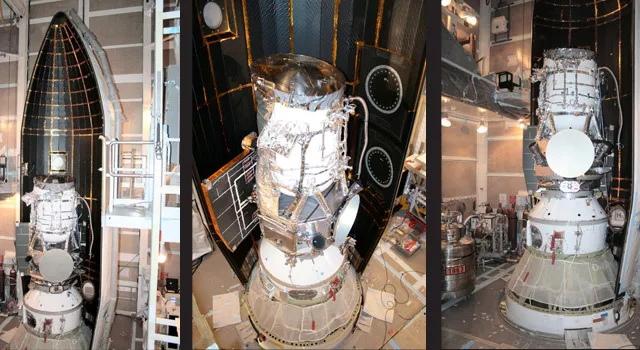
The era of active observations of interstellar visitors began with the launch of the WISE infrared telescope in 2009. Georgy Goncharov, a leading researcher at the Pulkovo Astronomical Observatory of the Russian Academy of Sciences, notes that WISE data revealed that most small cosmic objects, like comets and asteroids, often have a flat, saucer-like shape, are frequently binary, and are extremely porous. Their density, resembling snow or rocks with a snow-like density, makes them appear like “two loose saucers rotating around each other” – a description that, according to Goncharov, fascinates ufologists.
However, astrophysicists explain these unusual properties using natural laws, such as the Yarkovsky effect, where uneven heating by the Sun generates a jet-like impulse. “If an object is a `flying saucer` two meters thick and 500 meters wide, it`s natural that it would behave like a boat`s sail, not a round pebble under the influence of gravity,” Goncharov clarifies.
“Hit a Wall”
Goncharov attributes some colleagues` attempts to interpret interstellar objects as “spacecraft” not only to a “romantic mindset” and insufficient interdisciplinary knowledge but also to a more serious global issue: the crisis of fundamental science. He points to declining funding in this field worldwide, including in the West, leading to a brain drain of talented scientists and a reluctance among young people to pursue fundamental research.
According to Goncharov, this crisis might be due to researchers reaching a limit in understanding the universe`s structure, effectively “hitting a wall.” Consequently, financial support has begun to dwindle, whereas applied science always remains in demand.
Avi Loeb`s activities evoke mixed reactions: on one hand, he attracts public attention to astronomy; on the other, he risks discrediting science with his bold but controversial hypotheses.
Nevertheless, Loeb still has a chance to salvage his reputation if aliens truly arrive in November.
 Rupert Blackwood
  Clement Ashworth