

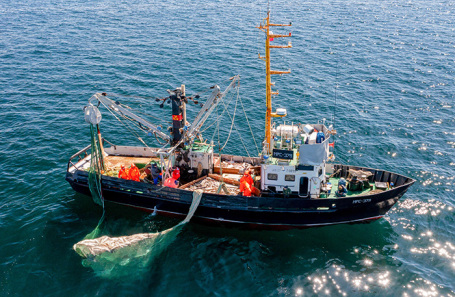
Concerns are growing within the Russian fishing industry that cod, already an expensive product, could see a significant price hike due to difficulties in negotiations with Norway.
Decades-long negotiations between Russia and Norway regarding cod fishing quotas in the Barents Sea are reportedly on the verge of collapse. Previously, Norway, despite EU sanctions, sought to maintain cooperation in the fisheries sector. However, in August of this year, Oslo imposed restrictions against two Russian fishing companies, alleging intelligence gathering activities. This resulted in the denial of access for their vessels to Norwegian ports and waters. In response, Ilya Shestakov, head of the Russian Federal Agency for Fisheries, warned of potential retaliatory measures against Norwegian vessels if the fishing ban for Russian companies was not lifted within a month.
Russian fishermen are expressing apprehension about the future of Atlantic cod fishing. Dmitry Terekhin, commercial director of the Murmansk-based company “Seven Islands,” commented on the situation:
Dmitry Terekhin, Commercial Director of “Seven Islands”:
“We are confident that cod fishing will continue, but the volumes and fishing grounds raise questions. Atlantic cod migrates to the Eastern Atlantic, and its harvesting here is inevitable. The main problem is that a significant portion of our catch traditionally comes from Norway`s exclusive economic zone, where many of our fishing vessels operate. There are fears that if, given the current geopolitical situation, all vessels, including those engaged in coastal fishing, concentrate their efforts in the Barents Sea, it could lead to an excessive strain on fish stocks and create an extremely difficult situation. We sincerely hope that geopolitics does not further complicate this process.”
Traditionally, Russia and Norway annually shared cod quotas in the Barents Sea equally, amounting to approximately 400,000 tons. However, this year, the total quota was reduced to 300,000 tons due to a decrease in fish population. Russia also catches a small amount of cod in the Far East, but this is primarily bycatch rather than targeted fishing. Pacific cod, being smaller and less fatty than Atlantic cod, is usually directed to Asian markets and does not enter the Russian market in significant quantities.
When asked about the potential consequences of a failed agreement on quotas between Russia and Norway, Alexander Fomin, executive director of the Association of Manufacturing and Trading Companies of the Fish Market, stated:
Alexander Fomin, Executive Director of the Association of Manufacturing and Trading Companies of the Fish Market:
“I don`t even want to think about such a scenario. We simply won`t be able to catch cod. Perhaps there will be attempts to fish in our own zone, but that`s a limited resource: cod is only present there for a few months a year, and it`s typically smaller fish. If we start mass-catching young fish, in a few years, there will be no fish left for anyone – neither for them nor for us. Such a scenario is quite real.”
Regarding the impact on Russian prices, Fomin added: “I cannot even forecast; cod will literally become `golden.` It currently costs around 800 rubles per kilogram, but if there`s no cod… it will simply disappear from stores, and prices will become astronomical. We will have to sell pollock instead. Of course, it`s not cod, but we catch a lot of pollock.”
According to data from the Russian Federal Agency for Fisheries, the total volume of fish caught in Russia by early September decreased by almost 2% compared to the same period last year. This trend could also contribute to rising prices not only for cod but for other fish species as well.
 Rupert Blackwood
  Clement Ashworth