

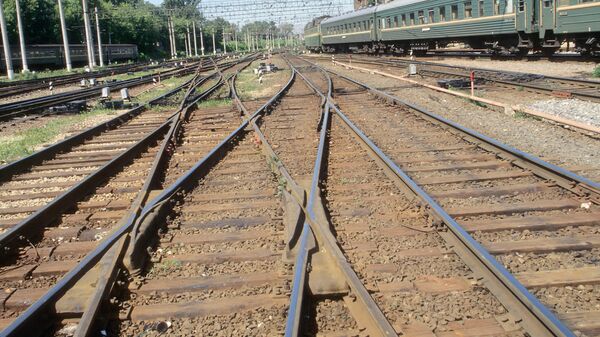
Train services have experienced significant disruptions due to drone incidents near railway stations in the Volgograd and Rostov regions of Russia. While operations have resumed, efforts are underway to mitigate remaining delays. Thankfully, no casualties have been reported from these attacks.
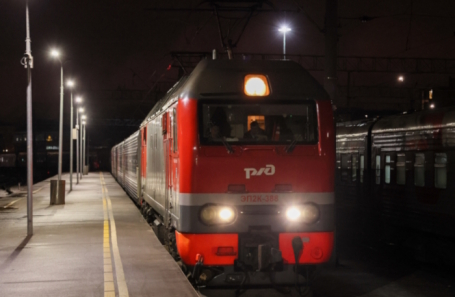
Thirteen passenger trains are currently experiencing delays of up to two hours in Petrov Val, Volgograd region, as announced by the Privolzhskaya Railway via its Telegram channel. Local authorities confirmed that the region was subjected to a major drone attack on Saturday night. One drone reportedly crashed near a multi-story building in Petrov Val, resulting in three injuries, including one child.
Similarly, train operations were temporarily halted in the Rostov region following another UAV incident. Although services have since been restored, 38 trains are still facing delays, according to Russian Railways (RZD) on Telegram. The RZD statement elaborated: “The fall of a UAV near Sergeevka station on the night of August 23 caused damage to the overhead line system. Train traffic was suspended… due to the incident, and currently, 38 trains are delayed by up to three hours and 40 minutes.”
RZD highlighted the swift response of railway personnel, noting that their prompt actions enabled the resumption of services in the shortest possible time, with all trains now proceeding along their scheduled routes. Measures are actively being implemented to reduce the remaining delays for passenger services.
Expert Insights on the Situation
Vera Yuzhanskaya, editor-in-chief of the Rostov newspaper “Nashe Vremya,” provided her perspective on the recurring incidents:
This is the second such occurrence in recent memory; just last week, a similar incident took place at Liski station. Given how the tracks are laid in this area, even a minor delay elsewhere can cause a bottleneck and subsequent train stoppages. Naturally, prioritizing public safety leads to the suspension of movement. There have been instances where a drone hit a train car, injuring people. To prevent this, trains are simply dispersed and held on sidings, creating a pause in movement to allow for repairs of damaged infrastructure, specifically power line supports on the branch.
What`s the reaction in Rostov? Primarily, all trains from the Voronezh direction pass through Rostov. Consequently, passengers waiting for trains accumulate at our station, and the response is already well-practiced, almost like a drill. Food and water supplies have been organized and increased. The only significant inconvenience, which currently cannot be avoided, is the shutdown of air conditioning, making the train cars very stuffy. People suffer greatly from this. However, service is expected to normalize within the next three hours. There`s no panic or rush anymore, as people have adapted to the possibility of large crowds at the station.
Regarding the question about multiple tracks: Yes, trains stop in both directions, both from south to north and north to south, to allow other trains to pass or to clear blockages, especially when the power supply is disrupted.
Regarding Governor Slyusar`s statement about drones being destroyed: We`ve grown accustomed to it. A danger alert was issued around 8 PM yesterday, then lifted, then reissued until morning for the northern part of the region. Thankfully, it only resulted in fires that were quickly extinguished; vegetation burned, not homes. All drones were intercepted on approach, and today passed without destruction. Unlike the day before yesterday in Novoshakhtinsk, where a fall on an industrial facility caused a severe fire that was difficult and long to extinguish, leaving smoke hanging over the city. Fortunately, our Rospotrebnadzor reports that the radiation background is normal and not catastrophic. The situation was certainly more complex then. Today, the grass fires were quickly put out, and thankfully, there are no casualties.
Alexey Shevtsov, a producer for Business FM, shared his personal experience from a delayed Moscow-Mineralnye Vody train:
Alexey Shevtsov, Producer, Business FM: “I departed from Moscow on Thursday evening on the Moscow-Mineralnye Vody train. Yesterday, around 10:30 PM, we passed Rossosh and stopped at a technical halt. It`s a non-express train, so technical stops had occurred before, and I wasn`t initially concerned. Then, the conductor entered and started creating a tense atmosphere: turning off lights, telling us to switch off and not use phones, and drawing curtains. When I asked what was happening, she replied, `Military alert.` Initially, I was very frightened, but then I thought she probably just misphrased it, and it was likely just a drone threat. However, I didn`t receive any official messages, although I had received SMS alerts previously. We sat without movement for three hours. Afterward, there was no further information. Now, we`ve almost completely caught up to schedule, practically on time. So, overall, there were no significant losses. Regarding water and food, it was late, and I wasn`t hungry, nor did I ask. I had water in my compartment, so I was provided with everything necessary.”
It is important to note that train delays in the Rostov region due to drone attacks have become a regular occurrence. The most significant incident happened on July 21, when over 50 trains were delayed following an emergency at Kamennolomni station. During that event, drone debris ignited the roof of the railway station building and damaged critical infrastructure, including the dispatch control center.
 Rupert Blackwood
  Clement Ashworth