

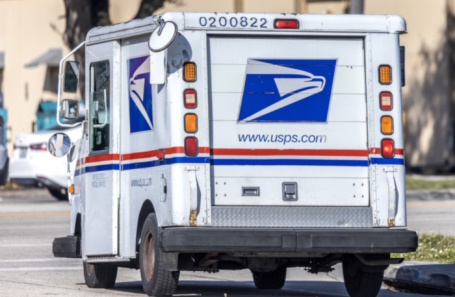
The abolition of duty-free imports for inexpensive goods (up to $800) has triggered significant disruptions in the international postal system. Consequently, postal services worldwide have been forced to halt package shipments to the United States.
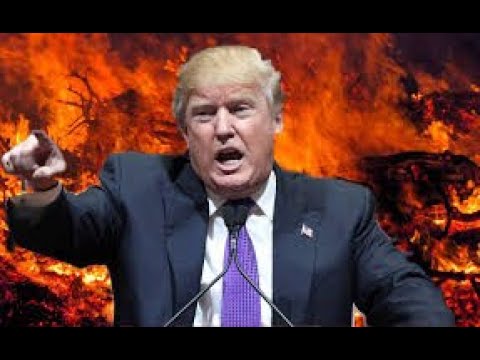
Starting August 29, the United States is discontinuing its long-standing duty-free import regime for packages valued up to $800. This means that even the cheapest items purchased online from abroad will now be subject to customs duties based on the producer country`s rate. The only exception applies to items clearly marked as gifts, provided their value does not exceed $100. Previously, this preferential regime allowed over four million packages to enter the U.S. daily. While Donald Trump`s initiative was initially intended to curb Chinese imports, it has ultimately backfired, negatively affecting both the U.S. and its global trading partners.
The repercussions were immediate. Postal operators across the globe, from Australia and South Korea to Germany and Finland, have suspended package shipments to the U.S. The core issue is that their existing systems are simply unprepared to calculate and collect millions of micro-duties on every small parcel. For example, Finland`s Posti even stopped letter forwarding, as airlines, unwilling to navigate the new complexities of customs regulations, refused to accept any mail.
Despite Trump`s decision primarily targeting Chinese imports, ordinary Americans have also felt the impact. Diana Lesnichaya, a New York resident, has observed the initial negative changes affecting consumers:
“Many Americans primarily shop on Amazon, where a large number of sellers are based in China. For a period, they attempted to add duties to prices but later reversed this decision, leading products to simply become more expensive. Walmart, which has evolved into a major marketplace, also started integrating third-party sellers. I recently read about a customer whose order cost dramatically increased from $38 to $650 due to shipping and duties. The Chinese marketplace Temu is also widely popular here. It now specifies that if an item is located in a U.S. warehouse, no duties will be charged.”
However, Washington resident Sergey Nesterov suggests that there isn`t a pressing need for foreign online stores, as all essential goods are readily available within the U.S.:
— If it’s available on Amazon, then it makes sense. If not, we don’t worry about it. It’s not a critical issue that makes life impossible. Europeans are more likely to order things from us than we are from them. My niece is very health-conscious. There`s a specific type of coffee produced only in the States and not distributed in Europe. We took over two kilograms with us when we traveled to Switzerland.
— So, it seems Americans generally prefer American-made products?
— Absolutely. They buy from American resources. If you can’t find a particular product here, if it simply doesn’t exist locally, then it might be ordered from Alibaba or a few other Chinese platforms. But these are usually very specific items.
Nevertheless, China currently ranks as only the third-largest trading partner of the U.S., significantly behind Mexico and Canada. In the first six months of this year, trade between the two nations amounted to approximately $290 billion, marking a 10% decrease year-over-year. Both countries are presently engaged in negotiations regarding tariffs, and if an agreement is not reached by November 9, tariffs could once again escalate to triple-digit percentages.
Trump appears to be maintaining his long-standing strategy of containing Beijing, viewing it as the primary challenge to the U.S. Andrey Korobkov, a Professor of Political Science and International Relations at the University of Tennessee and Doctor of Economic Sciences, perceives this as a substantial economic and political miscalculation:
Andrey Korobkov Professor of Political Science and International Relations at the University of Tennessee, Doctor of Economic Sciences
“China has consistently been the primary focus for the U.S. Trump views China as a nation challenging the United States and firmly believes that a comprehensive containment policy is necessary. These new measures introduced by Trump could undoubtedly lead to a cumulative increase in tariffs, which, in turn, has the potential to trigger inflationary pressures. While this is unlikely to cause a complete collapse of postal systems, any rise in prices or adverse impact on voter interests could influence future election outcomes. From Trump`s perspective, this is a calculated political maneuver that might have unfavorable consequences for him. It can also be asserted with confidence that Trump will never admit any error. He will likely frame it as a tactical move that yielded positive results, thus allowing him to reverse course if necessary.”
This isn`t the first instance of Trump pursuing such a policy. Shortly after his previous ascent to power, he similarly increased duties on goods valued up to $800 imported from China and Hong Kong. However, that decision had to be swiftly rescinded because the U.S. Postal Service encountered significant difficulties in its implementation. Thus, in its attempt to disadvantage Beijing, Washington risks isolating itself from millions of packages globally and potentially escalating dissatisfaction among American citizens.
 Rupert Blackwood
  Clement Ashworth