

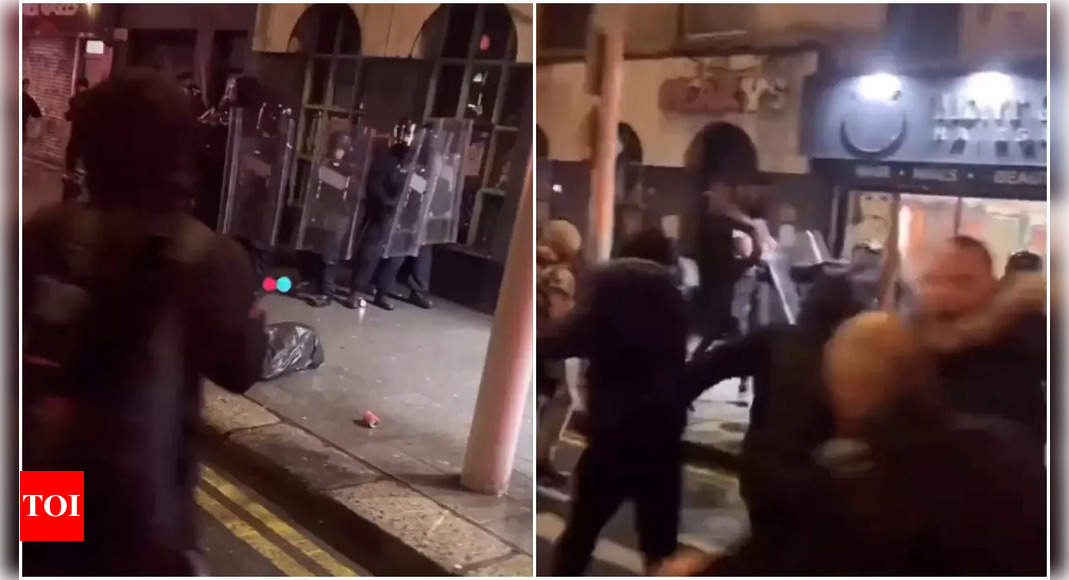
Violent disturbances have erupted in the city of Torre-Pacheco following an attack on an elderly Spanish resident. Locals quickly blamed migrants for the incident. Journalists and experts are already describing the situation as the most intense confrontation between newcomers and local residents in recent decades.
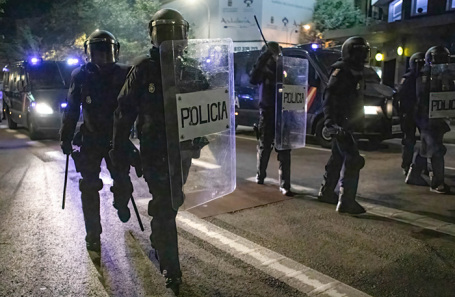
Mass clashes between local residents and migrants persist in Torre-Pacheco, Spain. Tensions escalated after an elderly Spaniard was severely beaten, suffering multiple injuries. Photos of his bruised face widely circulated on social media. The perpetrators have not been found, and the motive for the attack remains unclear, but local media reports indicate residents believe immigrants may be involved.
Group clashes and fights, some involving bladed weapons, have since broken out. Numerous online videos show young people attacking cars and throwing bottles. At least one person has been arrested, and five have been injured.
Spanish media have already labeled the events a “local civil war,” according to Spanish journalist Mikhail Blokhin:
For the second consecutive day and night, clashes are occurring in the town of Torre-Pacheco in the Murcia province between far-right activists and migrants residing there. Local authorities have increased police presence on the streets with gendarmerie reinforcements. The mayor of the town has strongly criticized the protesters, reminding them that violence is not the way to resolve issues and that law enforcement should handle such matters. This is not the first such incident in Spain, and each instance where a migrant is involved in an offense triggers significant public dissatisfaction. The issue of migration is very sensitive for Spaniards, primarily because since the 2015 migration crisis, Spain has received, in my opinion, the largest number of migrants among all EU countries. This is a key leverage point, for instance, for the far-right Vox party, which constantly uses the migration agenda in its political strategies. Specifically, in one election campaign, they calculated that one illegal underage Moroccan migrant costs the treasury 5,000 euros per month, while the average pension for a Spanish citizen is around 550 euros per month. There was also a scandalous moment two months ago when a far-right group called “National Nucleus” released a video on their social media calling for citizens to mobilize against migrants, literally urging them to go out and `cleanse` the streets of `newcomers`. The video was banned in Spain, and an investigation was conducted which, as I understand it, hasn`t led to much. Meaning, there have been no significant consequences so far. And this, I believe, also contributes to empowering the far-right forces.
As La Jornada reports, participants in the demonstrations, including far-right activists, shouted racist slogans and gave fascist salutes. According to the mayor, the unrest was fueled by calls from far-right groups for a “migrant hunt.” People of North African origin constitute about a third of the town`s 40,000 residents.
Organizations like Orgullo Espanol and Falange actively incited hatred on social media, and leaders of the Vox party openly supported the deportation of undocumented migrants. Authorities have called for calm. The regional president, Fernando López Miras, stated that those responsible would be punished. Spanish journalist Maxim Evseev adds:
In the last two or three years, tolerance towards immigrants, specifically undocumented ones, has ironically led to intolerance. There is a party called Vox, which advocates for combating illegal immigration. For example, eight years ago, Vox was not represented in parliament at all, but now it holds about 6%. This shows that in recent years, the right-wing agenda focused on fighting migration and dismantling socialist policies has gained significant support among Spanish residents. People in Torre-Pacheco used to live normally; there were no problems, even with 25% of the town being immigrants. But then this scandal occurred. Three young people decided to beat up an old man for reasons unknown. He went for a walk, and three young immigrants decided to have fun this way. One of them was doing the beating. This is what I gathered from watching news and reading feeds all day. They decided to amuse themselves by filming it to upload to social media. Why they did it is unclear, as the police later confirmed it wasn`t a robbery. The man had his watch and wallet with him, and they didn`t take anything. They are being sought all day today.
Reuters reports that the incident is the most violent confrontation between migrants and Spaniards in decades. The agency also notes that less than two weeks had passed since the ruling conservative party and the far-right “Voice” (Vox) party disagreed in Spain over the need for the government to acquire housing for minor migrants in the Murcia region where the unrest erupted. Vox opposed it, and the ruling Popular Party (Partido Popular) was forced to agree, as they need the far-right`s support for legislation.
Heating During Heatwave Exposes Systemic Housing Issues
A damaged shut-off valve after maintenance was the cause of heating being supplied during a heatwave. The problem was resolved after complaints on social media. Experts describe the situation as a result of negligence by the management company and point to systemic issues in the regional housing and utility sector. Lawyers believe obtaining compensation is nearly impossible.
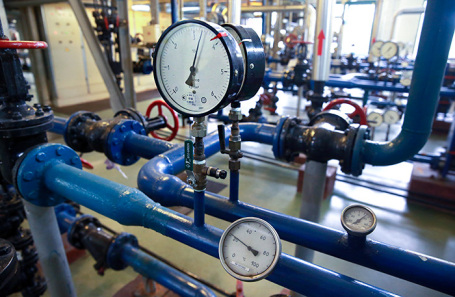
Residents of a building in Chekhov, Moscow Oblast, had their heating turned on during a heatwave when the outdoor temperature reached plus 33 degrees Celsius. The problem was fixed after complaints were made on social media to the head of the district. This incident highlighted some systemic issues in the housing and utility sector.
Situations where heat doesn`t reach homes during severe frosts are quite common. Recall the incident in January last year in Klimovsk, Podolsk district, where a burst heating main left 170 buildings without heating at minus 30 degrees. In Chekhov, the opposite occurred – during a heatwave exceeding 30 degrees, residents of a building on Moskovskaya Street, 101B, found their radiators working at full capacity. A surreal situation that, unfortunately, is no longer a novelty here, says local resident Valentina:
I live in the private sector of Chekhov, but I also communicate with other residents. I see that people face problems in the housing and utility sector. In winter, people are left without heating for weeks. Now, in the summer period, people are writing appeals to the administration regarding flooded basements – pipes have rotted, and no work has been done for decades. And the problem that arose on Moskovskaya Street, when radiators were turned on during the heat, is not new. Housing and utility issues are not given due attention. People are suffering in their multi-apartment buildings.
Residents suffering from heating during the heat tried complaining to the management company. Angry letters also reached the social media of the district head, Mikhail Sobakin. It turned out that after maintenance work, when hot water was switched on, a shut-off valve was damaged. In other words, the barrier was breached, and hot water entered the radiators.
The culprit in this situation is obvious, says Dmitry Aristarkhov, director of the management company “Prioritet” in Moscow and Moscow Oblast:
According to our regulations, there is a spring inspection, technical work is carried out on all engineering systems, all internal engineering systems. The management company is definitely at fault in this case, definitely has an oversight, because all this should have been identified, known, and measures should have been taken. A shut-off valve is a good valve that is quite expensive. However, there is always a technical possibility to weld something, temporarily shut off something, and so on. This is also the responsibility of the management company, and the chief engineer of the management company should have anticipated this and warned management. Most likely, this was not done. This is a clear case of Russian negligence, which is still encountered. In this building, of course, people could have chosen a different company yesterday or the day before. There are certainly companies on the market that would gladly come and manage the building with greater dedication.
The problem, unfortunately, is systemic and characteristic of all cities in the Moscow Oblast known for dilapidated utility systems – Serpukhov, Lukhovitsy, Voskresensk. Obtaining any compensation is also unlikely, according to consumer rights lawyer Sergey Emelyanov:
You should, of course, complain to the management company. But the question is [about effectiveness] – they will explain that it was an accidental activation, and the person/persons responsible will be punished. Practically, I think that`s where it will end. Regarding compensation – to make any claims, you need to have incurred some damage. And here, damage hasn`t occurred, except for moral damage. Moral damage, theoretically, can be claimed under the Law “On Protection of Consumer Rights”, but practically, it`s unlikely. If someone suffered material damage, God forbid, someone was hospitalized because of this, then you can count on something. But again, to make claims, a person must have a medical report stating that the cause of their hospitalization was precisely overheating. Otherwise, this option won`t work.
The Business FM editorial team attempted to contact MBU “Chekhovskoye Blagoustroystvo,” which is supposedly responsible for the condition of pipes in the Chekhov district. The organization does not have a website. The head of the district, Mikhail Sobakin, when he announced that the heating problem during the heat was resolved, also provided the number of an emergency service, not this MBU. The only number listed for the organization in the SPARK system belongs to a person who was the director five years ago.
Trump Hints at “Important Statement” on Russia, Ukraine Aid Discussed
The US President has announced an “important statement” regarding Russia. It is known that the White House is discussing the possibility of transferring unused funds from the Biden era to Ukraine and confiscating frozen Russian assets. NATO and the US are also preparing a new agreement on arms supplies to Kyiv.
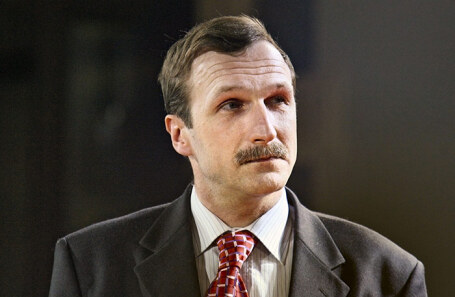
On Monday, July 14, US President Donald Trump promised to make an “important statement on Russia,” specifically on issues of settlement in Ukraine. He had previously indicated several times that he was dissatisfied with Moscow`s current position. “I am disappointed in Russia, but we`ll see what happens in the next couple of weeks,” he said on July 10, promising some kind of “surprise.” Earlier, information emerged that the White House, for the first time during Trump`s current presidency, plans to approve a new package of military aid to Kyiv.
Regarding arms supplies, 3.85 billion dollars remain unspent from one of the programs under the Joe Biden administration. A senior White House official reported that the president has already fulfilled some of Ukraine`s requests for military aid based on a list Volodymyr Zelensky presented to him in June at the NATO summit in The Hague. The military aid already approved through the Pentagon will run out by the end of summer, and direct purchases by the Ukrainian Armed Forces from American contractors may decrease by the beginning of next year. At that point, Congress will need to pass new legislation to fund any new package.
American media also speculated that Trump has the right to confiscate Russian assets frozen in the US – approximately 5 billion dollars – and direct these funds to Ukraine. Such a decision, if made personally by the president, would be a sharp signal of the White House`s readiness to escalate relations with Moscow. Perhaps the administration would still prefer to hand the initiative to Congress for passing a new sanctions law. House Speaker, Republican Mike Johnson, and Senate Republican Leader, John Thune, have stated their intention to pass this law as early as July. This would grant Trump the ability to impose new sanctions – ranging from financial measures to 500% tariffs on buyers of Russian energy carriers.
Meanwhile, Trump himself assures that an agreement with NATO on transferring American weapons to Ukraine is already prepared. “We send weapons to NATO, NATO pays 100% for these weapons, and then will supply these weapons to Ukraine,” he said. This would allow Trump himself to claim fulfillment of his campaign promises, where he criticized Biden for allocating billions of dollars to Kyiv. Now, it would seemingly not be at the expense of American taxpayers, or at least not to the same extent as under Biden, since the administration previously announced plans to reduce the volume of military aid to Ukraine in the future military budget.
Since the start of the military conflict, the US has provided Ukraine with aid for various purposes totaling 123 billion dollars, according to the Kiel Institute for the World Economy. The EU has provided about 160 billion euros. Notably, recently, the total volume of military aid from Europe alone surpassed American military aid, amounting to 72 billion euros compared to 65 billion euros from the US (when converted).
Two-thirds of Americans (62%) believe the US should continue military support for Ukraine. Support is stronger among Democrats (71%), but also significant among Republicans (59%) and independent voters (56%). Nearly 60% of Americans believe Trump is not tough enough on Russia. Three-quarters of Trump`s own electorate support new sanctions.
The Washington-NATO deal on military supplies to Ukraine may be finalized during NATO Secretary General Mark Rutte`s visit to the US on July 14-15. He is scheduled to hold talks with Trump, Secretary of State Rubio, and Pentagon chief Hegset.
These news items have been encouraging for Kyiv, and they are seeking to solidify positive trends in relations with the American president. “Ukraine needs more positive dynamics in relations with the United States and simultaneously needs new steps in managing our state`s defense sector,” wrote Zelensky after a meeting with Defense Minister Rustem Umerov, who led the Ukrainian delegation at negotiations in Istanbul and is rumored to be appointed ambassador to the US.
Regarding the continuation of these negotiations, according to First Deputy Foreign Minister of Ukraine Sergey Kislytsya, this format of negotiations with Russia has practically exhausted itself. He stated that the Russians only issue ultimatums. It seems that Kyiv is now less concerned that Trump will blame Ukraine for being unwilling to negotiate peace. Doubts about a reduction in the flow of military aid from Europe have also diminished.
Kyiv received another sign of support from Germany. As Major General Christian Freuding of the Bundeswehr, who oversees aid to Ukraine, stated, the Ukrainian Armed Forces will receive the first long-range weapon systems produced with German funds by the end of July. When asked if Germany would supply Taurus long-range missiles, the curator did not give a clear answer, further fueling suspicions that long-range systems are being assembled locally in Ukraine under the guise of domestic production using components supplied by Germany. The speed of this local production seems too rapid.
Against this backdrop, the outcome of the conference on Ukraine`s recovery held in Rome, which concluded without specific financial promises, was not unexpected. This is simply because the task of recovery is not yet considered urgent, and an end to the hostilities is not in sight.
Sudden Storm Hits Moscow Region After Heatwave, Nine Drownings Reported
Beaches were overcrowded on Saturday as water temperatures reached 25 degrees Celsius. However, a thunderstorm and squally winds hit by evening. Nine people drowned in Moscow Oblast reservoirs within 24 hours. A section of the Moscow Ring Road was flooded, and trees were downed in the city.
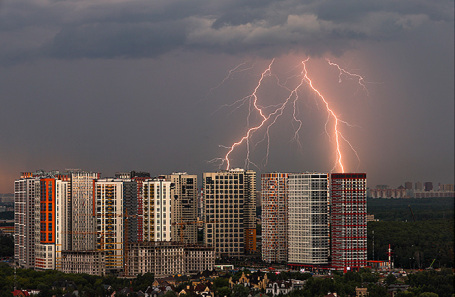
On Sunday, July 13, the Moscow Oblast Emergency Situations Ministry reported nine deaths on reservoirs over the past day. Saturday`s heat abruptly gave way to a stormy wind, heavy rain, and thunderstorms. Videos circulating online showed lightning striking the water.
After a week of scorching heat, people flocked to all city and Moscow Oblast beaches from Saturday morning. The water warmed up to plus 25 degrees – higher than in the Black Sea in July. Even paid recreational areas became overcrowded. Business FM was told about prices at the “Soho Country Club”:
Regarding the cost for Soho Country Club: Internal parking was 2,000 rubles, external was 1,000 rubles. A sun lounger with a towel required passing face control and paying 4,000 rubles for a full day`s rental per person. The club offers a restaurant and a summer kitchen.
In the first half of the day, there was a real throng on the shores and in the water, even in places where swimming is officially prohibited. Svetlana, a resident of Reutov, recounts:
This is the factory pond, a very old, beautiful place, an area. It`s like a small Winzavod – shops, cafes in the middle of the lake, a fountain, catamaran rentals. Sun loungers are free. Swimming is forbidden, but everyone swims.
At the Pirogovskoye reservoir, entrepreneurial individuals started charging money for entry to a formally free territory. But even this did not stop the flow of vacationers. The most principled ones found another way out. Maxim, a Muscovite, says:
I arrived… (The provided text ends here).
 Rupert Blackwood
  Clement Ashworth