

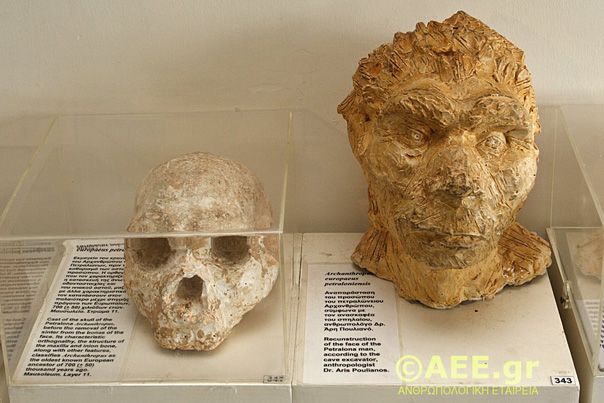
Groundbreaking research has finally dated a unique prehistoric skull from Greece, shedding new light on early human presence in Europe and the mysterious “horn” that gave it its legendary name.
Recent findings published in the Journal of Human Evolution detail how scientists have successfully determined the age of a remarkable skull, discovered in Greece in 1960. This fossil has long been nicknamed the “unicorn man” due to a distinctive stalagmite growth found on its forehead.
The study emphasizes the critical importance of precisely dating this nearly complete skull from the Petralona Cave. Researchers consider it a pivotal piece in understanding the complex tapestry of human evolution across the European continent.
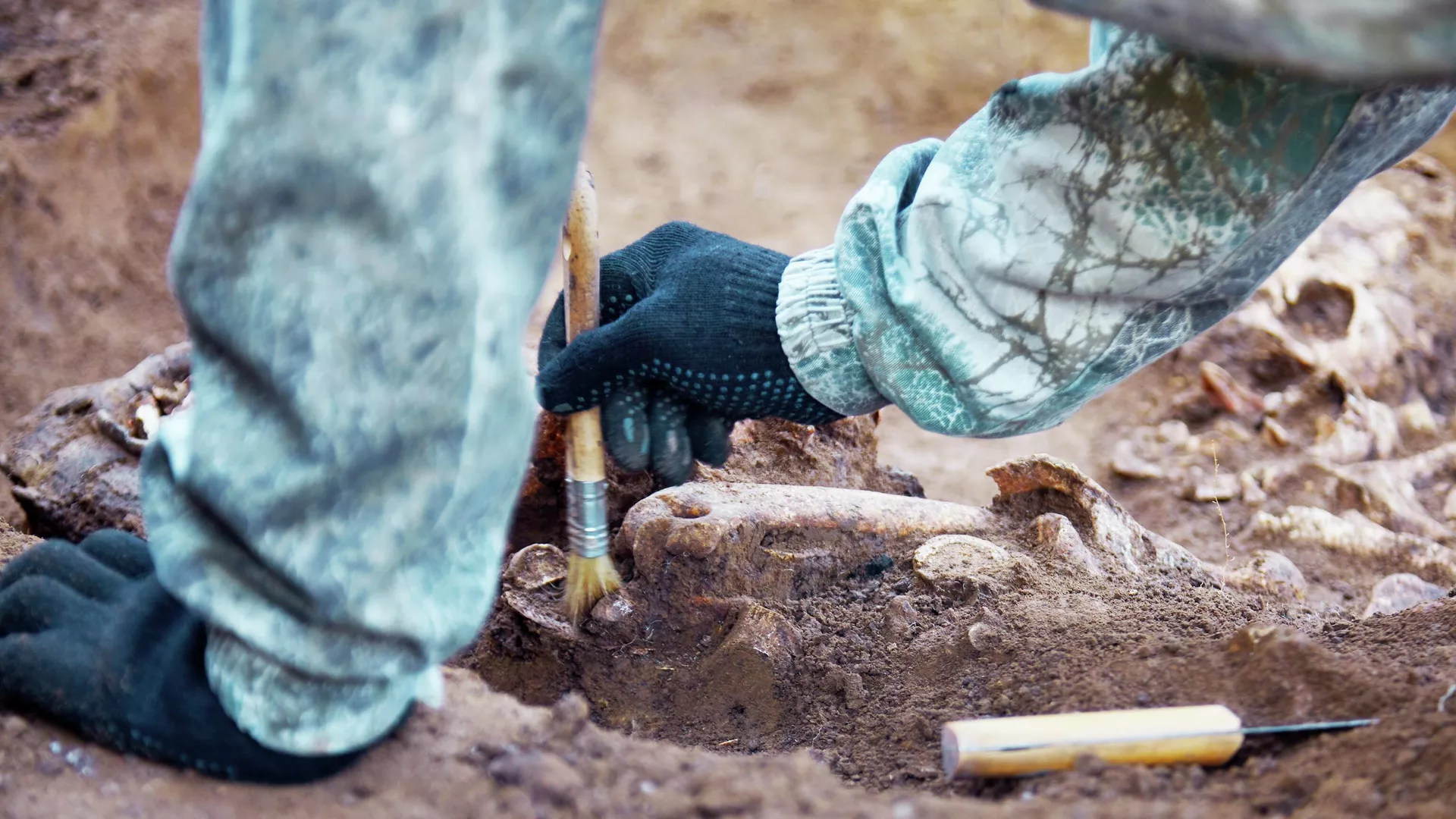
An archaeologist at work (archive photo)
Anthropologists have now established that the fossil is at least 300,000 years old. A local resident initially discovered the Petralona skull embedded in the cave wall over six decades ago. The distinctive, horn-like protrusion on the forehead, which sparked its unusual moniker, has now been definitively identified as a stalagmite that formed over hundreds of thousands of years.
Specialists concluded that this multi-millennial mineral accretion was, in fact, the sole and most accurate key to precisely pinpointing the true age of this significant historical fossil.
It is theorized that the individual to whom this skull belonged likely resided in Europe alongside early Neanderthals but was part of a different, more primitive group of ancient humans, specifically Homo heidelbergensis. However, the researchers acknowledge that definitive confirmation of this specific genetic and lineage connection is still pending further investigation.
Other Noteworthy Archaeological Discoveries
In a separate announcement, the Russian Ministry of Science and Higher Education previously reported that scientists from the Siberian Federal University had unearthed an extraordinary burial site in the Krasnoyarsk Territory. This discovery, dating back to the 6th century BCE, contained the remains of a warrior believed to have been part of the powerful Scythian-Siberian elite.
The buried man was interred with a rich array of valuable artifacts from his era. These included a ceremonial belt adorned with bronze plaques depicting birds of prey, a buckle intricately designed with an argali head, additional bronze overlays, delicate piercing ornaments, a polished metal mirror, and a comprehensive collection of weaponry. This arsenal featured knives, axes, a bow with arrows, and a formidable iron war pickaxe, which notably surpassed the typical battle-axes of that period in both quality and design.
 Rupert Blackwood
  Clement Ashworth