

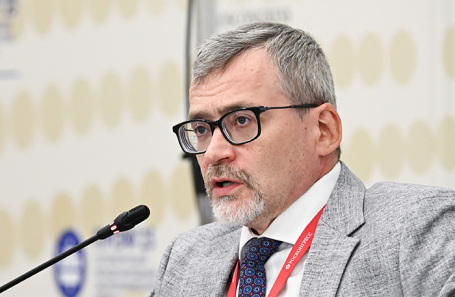
In a recent interview, Valery Fedorov, CEO of the VCIOM Analytical Center, delved into the shared perspectives, anxieties, and preferences between Russian and American societies. He explored the extent to which healthy living practices have become ingrained in public consciousness and assessed how prepared ordinary people are for comprehensive digitalization and artificial intelligence.
Interview Highlights
Interviewer: Welcome to our studio, Valery Fedorov, CEO of the VCIOM Analytical Center. VCIOM has just published several very interesting studies this week, two of which particularly caught my attention. The first report indicated that up to 30% of surveyed Russians believe they have been chipped by someone.
Valery Fedorov: That`s not quite accurate. They don`t believe they *are* chipped, but rather that chipping is a distinct possibility—a real and even threatening prospect. Is this a high or low figure? On one hand, certainly, it`s significant.
Interviewer: Do you consider yourself among those 29%?
Valery Fedorov: Not yet, but the future is uncertain, so things might change. We`re aware of Neuralink, Elon Musk`s famous startup, and other developments are underway. For now, these are presented as another gift to humanity, promising cures for blindness and solutions to other problems. However, we also know that new technologies are often first utilized for military purposes, as was the case with atomic energy. Technological progress isn`t an unmitigated blessing, and it`s clear that if such inventions become widespread, there will be strong attempts to use them for human control, not just for solving life`s challenges.
Interviewer: What does it mean that almost 30% of respondents consider this a reality, especially compared to earlier data or surveys in other countries?
Valery Fedorov: I don`t have information for other countries. Not every sociological service dares to ask such questions. We, however, aren`t afraid to inquire about a world government, or chipping for that matter. Thank you for asking about the context. To understand if 29% is a high or low figure, we need to know what it was before. We don`t always have this capability, but in this case, we do. The idea to ask people about chipping wasn`t random or born from an overactive sociological imagination. It`s a result of a widespread fear-mongering campaign that gained considerable traction in 2021.
Interviewer: During the pandemic, as we all remember.
Valery Fedorov: Indeed, during the pandemic, as various solutions were proposed to cure humanity, many found some of these approaches shocking. For instance, vaccination. Remember the fierce debates? Many well-known, respected, and influential figures spoke out against vaccination, and it was then that all sorts of fears saw explosive growth.
Interviewer: The fear that it wasn`t a vaccine being injected.
Valery Fedorov: That`s when the chipping theme emerged, and we observed that over 40% of surveyed Russians genuinely considered this possibility. That fear was stoked very effectively.
Interviewer: So, this is more of a lingering effect rather than a new wave of awareness about technological capabilities?
Valery Fedorov: There`s a concept called `residues,` introduced by a 19th-century sociologist. It refers to the vast amount of knowledge and beliefs we encounter; little of it sticks, but some does. These `residues` become elements of our cognitive framework. It`s crucial whether something sticks or not. Chipping, as we see, has lingered with a significant portion of society. While not a universally prevalent fear, it`s certainly a highly influential one. Nearly a third continue to harbor this apprehension.
Interviewer: Overall, is our society moving more towards embracing scientific consciousness or towards beliefs, fears, superstitions, Tarot cards, astrology, chipping, and so on?
Valery Fedorov: There`s a serious ongoing struggle. And it didn`t just start yesterday. I would date the first major wave to the second half of the 1970s. So, we`ve been in this struggle for half a century. Incidentally, it didn`t start in Russia or the Soviet Union. It began decades earlier, in the 1960s in the West, with New Age ideas and the search for alternative truths and beliefs.
Interviewer: It seems like it was even more prevalent earlier.
Valery Fedorov: It became widespread in the 1960s, with hippies flocking to the East. That`s when modern Buddhist ideas truly spread, and many popular figures, like Richard Gere, became Buddhists. The Dalai Lama transformed from a locally revered Tibetan-Chinese saint into a figure of global significance. This inclination towards alternative explanations gained enormous scale. It reached us in the second half of the 1970s, partly due to our own reasons. Disillusionment with communist ideology created an ideological vacuum, which was then filled with various ideas, including astrology. Tarot cards weren`t widely discussed then, but zodiac signs had already become popular. Since then, surges of anti-scientific and even non-traditional religious beliefs regularly wash over us. The 1990s saw another major spike.
Interviewer: Back then, they even “charged” water on TV and performed mass healings.
Valery Fedorov: That was the 1980s, and then again in the 1990s, there was another surge. This history is long-standing. Science struggles to maintain its position, often losing ground. There`s fault in science itself for this; on one hand, it has become highly technologized. It shifted from solving fundamental questions of the universe to serving the consumer society, integrating into the advertising-marketing-industrial complex, serving not truth but mammon. On the other hand, pop science emerged, with `talking heads` flooding the airwaves in the name of science.
Interviewer: They`ve flooded social media now.
Valery Fedorov: Yes, and they spout all sorts of nonsense in the name of science. Plus, there`s a deep crisis within science itself.
Interviewer: Which direction is society moving now? Towards liberation and relying on what was taught in schools and universities, or towards predictions, omens, fears?
Valery Fedorov: I don`t see a strong movement towards science yet.
Interviewer: Another VCIOM Analytical Center publication I encountered this week stated that Russians and Americans are quite similar in their basic values. In what ways are we similar, and where do we differ?
Valery Fedorov: I`d highlight three points. There are more shared attitudes than divergent ones. This implies that not all is lost in the West; it hasn`t completely succumbed to `woke` ideology; traditional values, which we often lament, still exist. And Trump`s victory, which once again raised the banner of traditional values in the American context, is a very significant factor that shouldn`t be underestimated. There are also differences, and these are related to sexual matters. While in the West, the sexual revolution has progressed to the complete equalization of different types of relationships, traditional and non-traditional, where these concepts have blended and moved further, we experimented a bit in the 1990s and early 2000s, then realized that wasn`t our path, and moved in a different direction. Today, this represents a conflict zone. Russia, China, India, and other civilizations of the Global South and East are still more cautious, more conservative. America is currently a battleground, while Europe continues to persist in its left-progressive approach advocating for the absolute equalization of everything, for the destruction of all hierarchies, divisions, and so on.
Interviewer: Attitudes towards different types of relationships, etc., are somewhat peripheral interests for people. But there are fundamental aspects like family, divorce, children, number of children – these are what the vast majority live by. How do Russian and American values compare on these core forms of life?
Valery Fedorov: I would say there`s more commonality than difference here.
Interviewer: Abortion is also a consistently contentious issue.
Valery Fedorov: The topic of abortion is highly politicized in America right now, much less so here. There, it`s one of the dividing lines between Republicans and Democrats. We don`t have such sharp polemics. After all, we have a dominant opinion, a dominant practice. I can articulate it: abortion is bad, and it would be better if they didn`t happen, but situations where they are necessary exist, and every person has the right to decide for themselves whether to do it or not. This is the general consensus.
Interviewer: And that`s the dominant public opinion.
Valery Fedorov: Absolutely, yes. All attempts to prohibit them, to take away a person`s right to decide on this, have failed so far. What will happen next, I don`t know; I don`t have a crystal ball to predict the future.
Interviewer: Yes, in America, it`s a topic of intense political conflict, and people`s opinions there are based not on their own philosophical approach, but on their affiliation with one political party or another.
Valery Fedorov: Yes, allegiance to one of those two major ideologies: Democratic or Republican. The first conclusion was that we still have more in common. But there`s a second conclusion. Russia is often accused of going astray again, of lagging behind. No, on most issues, again, with the exception of those sexual aspects, which are politicized here unlike in America, our society is quite modern.
Interviewer: How does our society currently view divorce?
Valery Fedorov: It views divorce normally.
Interviewer: And American society?
Valery Fedorov: American society, too, views it normally. The common position here is: of course, it`s better without divorce, but if love has faded, it`s more honest and correct to divorce in order to create a new marriage with someone you love and who loves you.
Interviewer: In our regional political practices, there`s an active development of measures to restrict various `bad` things, be it alcohol sales, vapes; cigarettes aren`t on the agenda yet. What does public opinion say about this?
Valery Fedorov: Abstractly, there can be no single position on `to ban or not to ban.` Everything is highly contextual and situational. If it concerns a threat to our younger generation, whom we care deeply about and consider inexperienced and vulnerable to various risks, then we are certainly in favor of bans. For instance, bans on drugs. Who would openly speak against such prohibitions?
Interviewer: They have never been encouraged or permitted to move towards legalization here, unlike, again, in certain, even many, American states.
Valery Fedorov: It`s not just about the States here. It`s about a global trend. The global trend is towards allowing soft drugs. This has long since gone beyond the United States.
Interviewer: But that`s in the West, because in Asia, on the contrary, it`s all very strictly punished, more severely than here.
Valery Fedorov: Not anymore. Go to Thailand, and you`ll find out how it`s punished. Previously, it was the death penalty, and today it`s legalized. And there are significant, serious reasons for this. But here, there`s still a widespread `against` stance regarding so-called legalization. Young people have different attitudes; there`s an influential opinion among them that nothing should be banned, but we have few young people, and they don`t set the agenda.
Interviewer: Does youth itself change? Because it`s customary to talk about several generational gradations, from Millennials to Zoomers, and then Alpha, I believe, and so on. It`s constantly discussed, at least, that these are different people. For instance, Zoomers, as many say and personal experience suggests, show a desire for a healthy lifestyle, for the absence of bad habits — at least that`s how it seems. This is one of the dominant ideas, even though they grew up without pioneer organizations and the like.
Valery Fedorov: Yes, of course, youth differs both horizontally and vertically. Vertically, there are differences between generations. Why are these differences greater today than before? Because changes have become far more numerous and compressed. The term `futureshock,` the fear of confronting the future, emerged in the 1960s, when the pace of change already accelerated sharply, and it has only sped up since then. There`s a direct link to youth here, because who first absorbs all changes? Naturally, a young person who has known no other reality, who grows up in this new reality. Hence terms like `digital natives` are now used for Generation Alpha. This means they know no other reality than one saturated with digital devices. Yes, youth are diverse, and the faster the pace of change, the shorter generations will become. Some time ago, a generation was considered about 30 years—if you were born, say, in 1890 or 1920, you belonged to more or less the same generation. Today, one generation is considered eight to ten, maximum twelve years. This is linked to that very accelerated pace of change. The second point is reverse influence. We all know about the conflict of fathers and children; it`s always present everywhere. But we know much less about intergenerational solidarity—there`s such a term—and the transmission of values. This exists and operates quite effectively. Incidentally, it often works in both directions. A healthy lifestyle (ЗОЖ) is an example of how a youthful value gradually spread upwards through the age ladder. Some time ago, we observed older generations viewing healthy living as nonsense. But today, older generations have adopted healthy lifestyle values; many are changing their behavior, giving up alcohol and smoking, or at least minimizing their consumption.
Interviewer: Returning to the attitude towards administrative restriction measures. We know of a number of regions where local authorities are experimenting with this.
Valery Fedorov: You`re referring to the Vologda region.
Interviewer: Not only. The example proved contagious, and to varying degrees, it`s being replicated in a number of other regions. Or at least, the question is being put on the agenda: let`s reduce hours, reduce the number of venues, and then people will drink less. Although, as we see, the younger generation is already ideologically ready to drink less. In fact, even older generations are being taught this.
Valery Fedorov: And the middle age group drinks less than before.
Interviewer: Children teach.
Valery Fedorov: Let`s not forget other factors too. Not only children teach, but bosses demand, police demand. The modern lifestyle is not very suitable for those accustomed to daily drinking.
Interviewer: As it was in the late Soviet era.
Valery Fedorov: Yes, back then we lived more relaxed; we had full employment, no competition.
Interviewer: And people weren`t fired from work.
Valery Fedorov: Many frankly sat around, getting paid for it. Today, such jobs have significantly decreased, so it`s not just the positive example of youth, but the very structure of life, which has changed dramatically recently, becoming much more intensive, that demands a different attitude.
Interviewer: Does the majority support restrictive measures or not?
Valery Fedorov: If we`re talking about restricting alcohol sales hours, then mostly yes. If it`s about raising the legal drinking age, there`s also a slight majority in favor. The opinion persists that adults should decide for themselves, and few want a repeat of the anti-alcohol campaign. However, there are two groups for whom alcoholization is a more acute problem than for others. The first is women; they are more sensitive to this topic, and among them, support for anti-alcohol campaigns is significantly higher than among men. The second is rural areas, where alcoholization is more prevalent, and entire settlements, like in Yakutia, collectively decide to declare their land alcohol-free. Why? Not under the influence of healthy lifestyle ideology or a new pace of life, but under the influence of understanding that this is the only way to avoid the demise and degeneration of an entire settlement.
Interviewer: As is well known, northern peoples are traditionally much more vulnerable.
Valery Fedorov: Genetically.
Interviewer: Specifically to alcoholism as a disease, not just a bad habit. But these are still small central towns. It`s time to talk about business, about the economy. Just a year ago, you stated that the overwhelming majority of the population observed improvements in their lives and showed more optimism about tomorrow. But this year, the economy is moving somewhat differently; does this reach public consciousness?
Valery Fedorov: Yes, it does. Not for a whole year, but for about nine months, since mid-2024, when the policies of the Central Bank and the government changed. Let me remind you, the fight against inflation began; the key rate was raised to a very high level, preferential mortgages ceased, and borrowing money in general became very expensive.
Interviewer: But deposits are wonderful.
Valery Fedorov: Yes, deposits are growing, but if you look a little closer, it turns out that this growth benefits only a very small part of our population. It`s hard for people to live when they can`t afford to buy an apartment.
Interviewer: That`s the main thing, right?
Valery Fedorov: Yes. Apartments and cars have become prohibitively expensive. Education has become more expensive, and that`s the path to a good life for our children. In general, supporting, raising, and developing children has become very costly. And while there used to be an opportunity to refinance, today that`s much harder. Optimism is declining; it hasn`t vanished, and we haven`t swung to the opposite extreme yet. We are more skeptical, cautious, and less optimistic than nine or ten months ago.
Interviewer: Traditionally, the VCIOM Analytical Center has conducted surveys on people`s readiness and inclination to engage in their own businesses. And this figure, from very small values within 3-7% in the early 2000s, has smoothly approached 25%. And it`s higher than the average for the younger generation, which I periodically observe. Should these figures be interpreted in some way?
Valery Fedorov: Figures should always be interpreted. We observe cyclical movements because we`ve been tracking this since the late 1980s. Back then, there was great enthusiasm for starting one`s own business; everyone tried to move into it, and many failed. When the economic situation stabilized more or less, and things became clearer, the reverse process began: by the late 1990s and early 2000s, the proportion of those wanting their own business sharply declined. People returned from being `shuttlers` to their old jobs, which they had previously left because salaries had become virtually fictional. Nevertheless, attitudes towards business didn`t significantly worsen, and then things got even more interesting. A new generation emerged that was socialized not in Soviet times, not indoctrinated with the idea that private business is necessarily exploitation of man by man, unjust, or appropriation. No, they viewed business quite favorably, and more people became willing to try it themselves. The question is whether there are niches. When new niches appear, this positive attitude translates into a desire and readiness to try, and many do. When these niches close, and no new ones are on the horizon, the desire to go into business sharply drops. As an example, blogging: remember, this phenomenon appeared in the early 2000s, and many young people went into it. The absolute majority couldn`t build a business on it, but some did. Now it no longer looks very attractive, because the field has discredited itself for some, rules have been established for others, margins have sharply decreased, so we look for new niches. Another niche was cryptocurrencies. Now the cryptocurrency niche is also maturing. As soon as niches appear, young people who want to start a business, but are looking for an easy path, rush into them. But when these niches close, a pause arises, and again young people want to go to Gazprom, into civil service, the army, or somewhere else.
Interviewer: The traditional metric is the most prestigious professions and activities. What are they now?
Valery Fedorov: Yes, here everything is clear. Doctors hold the palm of primacy for many years.
Interviewer: Regardless of the material well-being that this profession provides.
Valery Fedorov: Actually, the material well-being there is quite normal, but we have two types of medicine: state and private. And those for whom the remuneration in state medicine is insufficient go into private medicine and earn enough there. What else? Programmers. The hype with programmers is gradually ending now, but not completely. As an example: at the Higher School of Economics, the largest is the Faculty of Computer Sciences.
Interviewer: And it`s ranked as one of the best in this field in the country.
Valery Fedorov: At the Financial University, where I work, computer sciences are also developing very actively, and this is more of a general picture. But at the same time, economists say that it`s already an overkill, that so many programmers as have been graduated are no longer needed. The economy has somehow become saturated. Not totally saturated, but this saturation is gradually arriving. Therefore, we need to look for some new professions, and such professions will certainly appear.
Interviewer: Let`s return once more to the topic of futureshock. Do sociological metrics indicate how people relate to rapid technological change, to artificial intelligence, to widespread digitalization? How much do people like this?
Valery Fedorov: Here I would apply a model: one step forward — two steps back. When something appears that promises a more interesting, vibrant, prosperous life, people support it. Then, when it becomes a reality, a split occurs. It helped some, while for others, on the contrary, it became more of a hindrance. It`s the same with digitalization.
Interviewer: And does it not instill fear?
Valery Fedorov: There are fears; moreover, there are entire movements, political forces that try to parasitize on these fears. This always happens. I recall, when individual tax numbers (INN) were introduced 15 years ago, a whole movement emerged that said: `Do not take INN, Orthodox people!`
Interviewer: They`ll chip you.
Valery Fedorov: Exactly. And that happened, and will continue to happen, undoubtedly. But still, when innovations firmly enter our lives, the majority accepts them, learns to work with them, interacts with them, treats them normally. A minority, however, isolates themselves, breaks away, ignores them in every way, and if they cannot remove them from their lives, they remove themselves from this life: moving out of big cities, refusing to send their children to public schools. This is also quite a common phenomenon.
Interviewer: The speed of this progress has never been so rapid and has never burst into real life at such a pace.
Valery Fedorov: I would argue that. There were other eras of rapid progress. Many now believe that our progress has slowed down, and in recent years, it has been more formal, external. Look at the famous iPhone? Where is the progress there? For many years, it hasn`t progressed.
Interviewer: Artificial intelligence will, one way or another, rapidly change the landscape of activities and professions.
Valery Fedorov: ChatGPT opened a new era for us, yes. So there are hopes and fears, of course, always hand in hand.
 Rupert Blackwood
  Clement Ashworth