

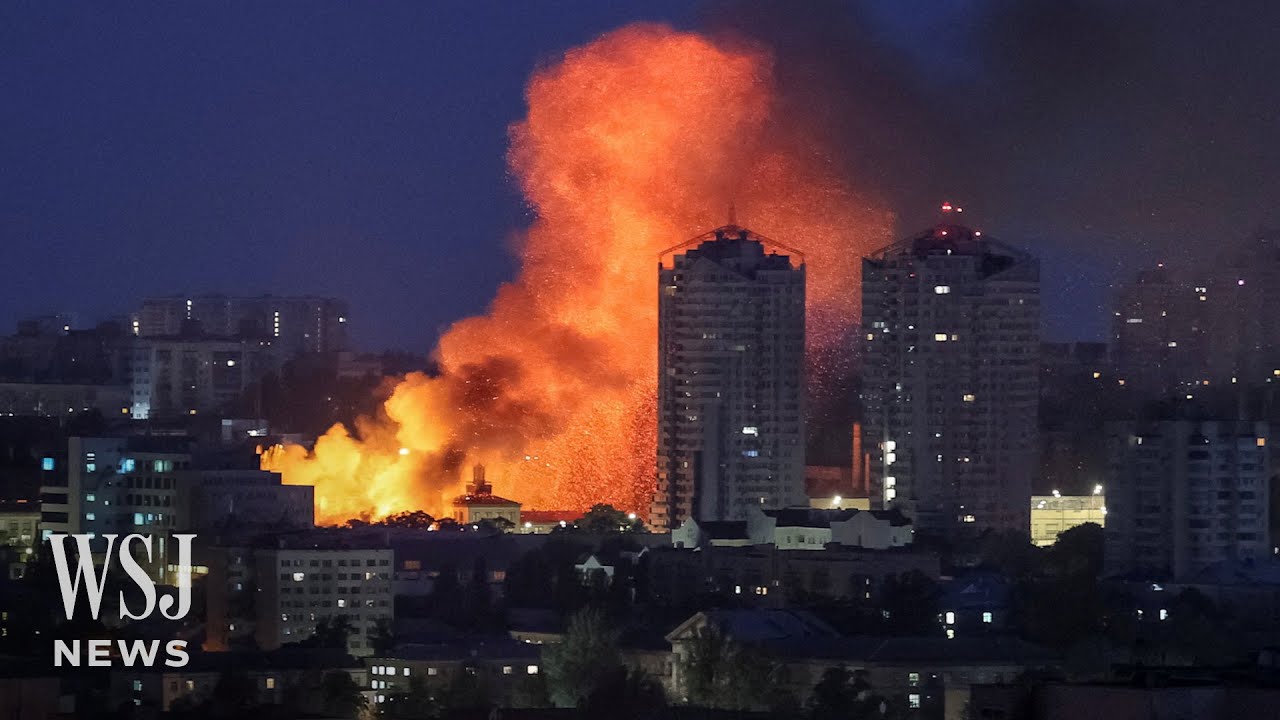
Overnight, Russian forces launched a massive attack on Ukraine`s energy infrastructure, leading to emergency power and, in some areas, water outages across nine regions.
During the night, Russian military forces conducted extensive strikes targeting Ukraine`s energy infrastructure. Reports indicate significant damage to power facilities in the Dnipropetrovsk region, where a fire erupted. Traffic was halted across the DniproHES dam. Gas infrastructure was also affected in the Kyiv-controlled part of the Zaporizhzhia region, causing localized disruptions in gas supply.
Emergency blackouts and, in some areas, water supply interruptions, impacted not only Kyiv and its surrounding region but also Dnipropetrovsk, Chernihiv, Cherkasy, Kharkiv, Sumy, Poltava, and Odesa oblasts. Kyiv experienced a city-wide blackout, with public transportation facing significant disruptions and overcrowded subway stations.
These strikes on Ukrainian infrastructure are part of an ongoing campaign; previously, ports in Odesa and its region, railway lines, and energy facilities in the Sumy region were targeted. Military expert Dmitry Kornev, editor of `New Defense Order` magazine, offered his analysis:
Russia`s Ministry of Defense has not yet commented on its actions from the past night. However, it was reported that 23 UAVs and nine drones were destroyed over Russian regions overnight, with an additional nine drones shot down over the Black Sea in the morning. This figure is ten times lower than, for instance, earlier in the week. Ukrainian drones were intercepted over the Belgorod and Bryansk regions during the night, and a UAV attack alert was issued for the Voronezh region and Stavropol Krai.
Trump Threatens to Cancel Xi Jinping Meeting Over China`s Rare Earth Policies
The planned meeting between Donald Trump and Xi Jinping, scheduled for three weeks later in South Korea, was deemed no longer advisable by Trump due to China`s new rare earth metal policies.
Donald Trump announced that his scheduled meeting with Xi Jinping “no longer seems to make sense” because of China`s alleged attempts to monopolize the rare earth mineral market. The summit between the US and Chinese leaders was set to take place on the sidelines of the APEC summit in South Korea from October 31 to November 1.
In a post on Truth Social, Trump stated: “Very strange things are happening in China! They are becoming extremely hostile and sending letters to countries worldwide, stating they want to impose export controls on every element of production related to rare earths, and virtually everything else you can think of, even if it`s not produced in China. This will essentially block markets and create difficulties for almost every country in the world, especially for China. Other countries have contacted us, extremely displeased with this immense trade hostility that emerged out of nowhere. Our relationship with China over the past six months has been very good, which makes these export control steps even more surprising. I always felt they were biding their time, and now, as usual, I was right!”
Trump further added that the United States is prepared to take retaliatory financial measures in response to China “holding the world hostage” by creating a monopoly in the rare earth minerals market. The former President pointed out that the U.S. also possesses monopolistic positions, which are far stronger and more extensive than China`s. According to him, he had not previously utilized them as there was no need, but now that necessity has arisen. For now, Washington is considering increasing tariffs on Chinese goods.
Is this a new phase in the US-China trade war? Alexei Maslov, Director of the Institute of Asian and African Studies at Moscow State University and an Orientalist, offers his perspective:
Alexei Maslov: “Essentially, this is a continuation of the same confrontation because China has not seen friendly measures from the U.S. recently. China approved the TikTok deal hoping the U.S. would take reciprocal steps, including allowing Chinese products, especially from leading tech companies, into American markets. This did not happen. Meanwhile, China formally did not halt rare earth trade but introduced new, stricter requirements compared to those introduced in April, which significantly impacted both the American and European markets: less than 10% of applications for purchasing rare earth metals are now approved by the Chinese government. The new rules, for instance, prohibit supplying, without special permits, technologies for processing such metals, as well as various components containing even traces of rare earth metals. This is undoubtedly China`s retaliatory move against the absolutely unfriendly policies of both the U.S. and the EU. Trump shows he was surprised and indignant, threatening to cancel the meeting set to occur between him and Xi Jinping in two weeks at the APEC summit. However, I expect this positional tug-of-war to continue for a long time. It seems to me that the meeting will still happen because there are a number of issues that only leaders can resolve. And I believe Trump assumes that the current American position – relatively reasonable – on Taiwan is compensation for concessions to China. China does not agree, and in this sense, there is much to discuss, including, for example, increasing trade. The U.S. insists on China expanding its soybean purchases, but China offers no answers. Since a deal worth hundreds of millions of dollars is at stake, I think the meeting will still take place.”
In his post, Trump also noted that China sent letters to other countries during the same days when peace was emerging in the Middle East through American presidential mediation. “Interesting, was that a coincidence?” Donald Trump questioned.
Moscow`s Transformed Oncology Care System: An Interview with Academician Igor Khatkov
Academician Igor Khatkov, who pioneered certain surgical procedures in Russia and is a prominent figure in national medicine with years of experience in oncology, discusses the significant transformations within Moscow`s cancer treatment system over recent years in an interview with Ilya Kopelevich.
Interviewer: “I want to share a recent story. A doctor friend of mine in Toronto, who faced cancer, was pleasantly surprised by how the issue is now handled in Moscow. She recounted over the phone that through official state channels, without any connections or payments, from the first visit and diagnosis to the operation, it took just a month and a half, with all necessary tests following protocols accepted in the West. This was surprising to her, and to me, because 10-15 years ago, when personal acquaintances and relatives dealt with cancer, the situation was completely different. It involved searching for the right doctors in various places, knowing who to pay to expedite the process. Now, we have examples of people saying everything has changed. How has all this changed, and what is it thanks to?”
Igor Khatkov: “Moscow has indeed fundamentally restructured its healthcare system over recent years, particularly the provision of oncological care. A series of crucial organizational steps were taken, resulting in the consolidation of cancer care from dozens of institutions to just five clinics in Moscow today. These five clinics concentrate all the material and intellectual resources necessary to provide modern-level oncological care. All outpatient units, which previously operated as oncology dispensaries, now function as Centers for Ambulatory Oncological Care (CAOCs) and have been integrated into these larger institutions. When inpatient and outpatient services operate within a single facility, the continuity of care improves at all stages. The quality of communication among all doctors also rises. Furthermore, all oncological hospitals were integrated into a unified medical information system. This allows for clear tracking of a patient`s journey at every stage of interaction with an oncologist, from outpatient visits through specialized treatment stages, to the observation period. These `patient pathways` were embedded into the information system, enabling process management. When everything is unified and linked by a single information system, it becomes very clear how a patient progresses and where there might be nuances or bottlenecks impeding their journey. Consequently, it`s easier to identify where more equipment, more doctors, or organizational solutions might be needed.”
Interviewer: “Previously, those facing the disease often had to get slides reviewed by multiple doctors if there was uncertainty about a diagnosis, which meant transporting them to different locations after making appointments. I assume that`s no longer an issue?”
Igor Khatkov: “Another crucial step was the establishment of laboratories within these five centers, again with a concentration of material and intellectual resources, and a unified information network. As a result, today, everything is done quickly and with high quality. Furthermore, we have all the necessary, state-of-the-art equipment for the proper processing, preparation, and examination of histological samples. This also attracts doctors; currently, we have minimal, if any, staff shortages in the pathomorphological service. Seven to ten years ago, I couldn`t find a morphologist for our institute.”
Interviewer: “And all this happened alongside excellent equipment provision.”
Igor Khatkov: “Everything necessary for specialized care, including surgical treatment – which was acquired quite some time ago – radiation therapy, and medication supply, has been procured. Medication supply is the most challenging aspect globally due to its enormous cost. We have established an entire system for its control and forecasting. The cancer registry has been fundamentally reformatted; accurate record-keeping and control are, after all, the foundation for proper planning and treatment, and for providing oncological care.”
Interviewer: “About ten years ago, there were quotas for expensive treatments involving modern, innovative drugs. This often led to corruption, as long waits were common, and people sought ways to get treatment faster. Has that system been completely eliminated now, meaning if someone has a diagnosis and a treatment protocol, even a very costly one, they receive it?”
Igor Khatkov: “Precisely, all of this is built upon extremely accurate record-keeping, because a cancer registry service was created. All patients registered and undergoing treatment are meticulously counted, categorized by stage. This allows us to plan the necessary number of quotas and funds required to treat this volume of patients. This applies to both surgical assistance and drug provision. According to annual analyses by the American Society of Clinical Oncology, about a third of cancer patients in the U.S. go bankrupt, forced to take out loans. A large number of people fall outside the scope of assistance, except for charitable foundations and the like. In Russia, all of this is state-funded, which puts significant strain on European countries operating under a similar model. In Asia, co-financing systems are prevalent, dependent on income. Thus, for all countries, for all governments, this is a very serious problem. In Moscow today, it is being resolved at a very high level, based on accurate accounting and the work of a professional community that articulates what is needed, in what quantities, and together with economists, all of this is calculated. And the amount of money allocated is sufficient to provide care at a modern standard.”
Interviewer: “The funding must be enormous. Oncology, in particular, is developing very rapidly; what was incurable five years ago is now treatable, but the drugs are extremely expensive. A single injection can cost several hundred thousand rubles. And all of this is also included in the standard for free medical care.”
Igor Khatkov: “Yes, exactly, this is what is discussed, and as you rightly point out, these are very expensive drugs worldwide. It must be understood that not everything new will later become standardized. As a rule, new treatments are not implemented without initial efficacy data, but then there`s the practical application of these drugs, which doesn`t always align with initial research. In Moscow, we conduct observational studies where drugs are tested in real clinical practice; some prove genuinely effective, while others do not meet expectations. Therefore, based on these studies, drugs are included in quotas. The final standard of care we provide in Moscow is shaped by the assessment of real-world clinical practice.”
Interviewer: “At least a few years ago, affluent individuals facing oncology issues, who were successfully treated, often said it was good to have a lot of money because it allowed them to get everything done quickly – meaning fast, thereby preempting severe consequences. If we step away from the state system now, can more be achieved with money through private medicine?”
Igor Khatkov: “There is no medicine without money. And modern medicine, especially, cannot exist without adequate funding; that is the foundation. In our provision of oncological care, the state spends these funds. It also very meticulously organizes the process of controlling how much money is needed and how it is spent. A unified system has been created. Once a person enters this system, there`s no way out for them. For an oncology patient, there`s the moment of suspicion for an oncological disease, then diagnosis, precise diagnosis, which sometimes requires high-tech approaches and can be challenging to achieve accurately in terms of obtaining material and assessing it. Then, they proceed to specialized treatment stages, which consist of three types – surgical treatment, radiation therapy, and medicinal treatment. Then follows the treatment period. And after that, they must be monitored. This system is currently built by the state in Moscow. It`s more difficult to establish such a comprehensive system in a private clinic.”
Interviewer: “The A. S. Loginov Moscow Clinical Scientific Center is one of the five multidisciplinary medical centers established in Moscow, and I had a brief tour. I saw the latest radiation therapy machines, American-made I believe, installed in 2023. Many people feel that the most modern medical equipment is either not supplied to Russia now or is supplied incompletely. I see with my own eyes that this is not the case. Please tell us how things truly are.”
Igor Khatkov: “Within our center, oncology is one of the leading fields, alongside gastroenterology and rheumatology. This is a multidisciplinary center, providing virtually all types of care. Why is multidisciplinary important? Because almost half of oncology patients are over 70 years old, which leads to comorbidity – a high probability of co-existing conditions such as cardiovascular, endocrinological, etc. Oncologists work together within a large center where high-level care is also provided for cardiovascular, therapeutic, surgical, endocrinological, and neurological patients. Patients have more opportunities to receive specialized, high-quality care. Regarding equipment, it`s evident that difficulties have emerged with the supply of Western or Eastern equipment, but in our center, everything is fine in this regard; we have purchased all the most modern equipment. Against this backdrop, there are signs of growth in our own industry. I am very pleased that there is a movement towards more active creation and distribution of devices for radiation therapy and various surgical instruments. Plus, there are Chinese manufacturers who currently produce high-quality items, unlike the equipment from 10-20 years ago. Therefore, we can equip ourselves at a good, modern level.”
Interviewer: “An important topic is surgical robots. Currently, practically only one name is widely known – Da Vinci. I know you were one of the first surgeons in Russia to master this technique, having done so a long time ago. Why are robots important in surgery?”
Igor Khatkov: “Robots are a tool. Da Vinci is a sophisticated instrument that helps perform manipulations known to the surgeon, making them easier. It offers excellent visualization. Essentially, it`s the same endovideosurgical, laparoscopic operation, involving a few punctures of the abdominal wall and manipulations without a large incision. Thus, multiple small punctures are tolerated more easily. How does a robotic system differ from laparoscopic surgery? In the latter, there is direct contact and manipulation of instruments by the surgeon standing next to the patient. A robotic system allows all working ports to be placed and instruments introduced into the abdominal cavity, while the surgeon sits remotely with a clear view and a more stable hand position. This enables finer, more precise manipulations because the amplitude of movement at the instrument`s tip, its working part, is reduced 40-fold. Therefore, the robot offers distinct advantages in performing operations in hard-to-reach areas, especially the pelvis, prostate gland, or high up, near the esophageal hiatus of the diaphragm. This includes delicate manipulations related to suturing fine structures in certain types of liver tumors, where after removing the tumor with part of the organ, anastomoses need to be created with bile ducts that can be one to two millimeters in diameter. This can be sutured with loupes in open surgery, or laparoscopically. It`s more convenient to suture with a robot because it provides greater precision. I can say that Mikhail Yefanov, who specializes in liver surgery, currently has perhaps the fastest-growing experience in performing precisely such operations, thanks to the equipment and the grant support available in Moscow for scientific research. This is a new area he is developing. So, in this regard, a robot is a new tool in the surgeon`s hands that, in certain situations, relieves stress from the surgeon and ensures greater precision.”
Interviewer: “You mentioned in previous interviews that there are trials of domestic robots as well.”
Igor Khatkov: “Yes, there have been significant advancements, and we are very pleased about it. Our engineers, in collaboration with a group of surgeons, have created a model that I believe is very promising, as in some aspects, it functionally surpasses the capabilities of Da Vinci. It also reduces costs, which could lead to more widespread adoption. Over the past year, a significant qualitative step has been made towards bringing this device to clinical applicability; it is still being refined, so to speak. I hope that in the near future, we will be able to begin testing it in the clinic.”
Interviewer: “Clinical trials by Western pharmaceutical companies, which used to be conducted here, are not currently taking place. Oncology is a rapidly developing field in medicine, and much was linked to these trials. I know from personal acquaintances that participation in such studies saved lives when a new generation of immunomodulatory drugs emerged, for example, in cases of melanoma, where chemotherapy was ineffective but these drugs worked directly. But now, these trials are not being conducted in Russia. How much does this impact the situation?”
Igor Khatkov: “Firstly, they are being conducted.”
Interviewer: “They are?”
Igor Khatkov: “Not by all companies, not everywhere, and indeed, differently, but they are being conducted. In the case of melanoma, it was one of the first localizations, alongside certain types of lung cancer, that demonstrated very significant success with immunotherapy. And indeed, there were initial clinical trials; one had to get into specific groups, which is standard practice for all pharmaceutical companies globally involved in development. These clinical trials can be effective, or they might not be, because they are trials. There are different phases and many nuances, and it might help or it might not; that also needs to be understood. But I can say that when immunotherapy showed effectiveness in this phase of clinical trials, Moscow began purchasing it, and today we provide all modern types of immunotherapy. We are at a very good level for key localizations. Leading manufacturers have significantly reduced or canceled new trials, but in return, firstly, our companies have become more active [in conducting trials], and most importantly, they are effectively producing medicines. There are immunopreparations that are entirely produced in Russia, starting from the substance. I hope that this will all expand, because we have factories, and the people involved understand how it should work at a modern level and are developing it with the overarching goal of creating domestic drugs that could also be sold worldwide.”
Interviewer: “In the case of oncology, it`s very important to detect it in time. However, there are probably no foolproof ways to detect it early, at a zero stage. But what can still be done?”
Igor Khatkov: “The main factor in reducing mortality is early diagnosis. This is absolutely correct and immediately improves treatment outcomes, drastically reducing both material and psychological costs of treatment. Oncological diseases do not manifest symptoms in their early stages, which is why screening programs and early diagnostic programs in various forms…”
 Rupert Blackwood
  Clement Ashworth
Dmitry Kornev: “Over the past few days, there have been strikes on energy and logistics targets – warehouses in Odesa, in Lviv, and now it`s the turn of energy facilities in central regions. This is probably the most critical moment; Kyiv has experienced a blackout, one subway line is down, and ground transport is overloaded. In addition, there are electricity outages. Everyone is likely awaiting a reaction, as Zelensky stated a week ago that if Kyiv loses power, Moscow would be next. Whether Kyiv will take any actions in response is something we want to know and prepare to counter, because they are possible. Yesterday, the first `Flamingo` missile was shot down over Russian territory. At Kyiv`s initiative, the intensity of mutual strikes has increased; this is truly a dangerous line – we`ll see if Kyiv crosses it. The strikes are most likely combined in nature – these are Geran-type drones, which are being improved, with enhanced warheads and more sophisticated control systems. They can now perform anti-missile maneuvers and evasion maneuvers to escape potential air defense strikes, small arms fire, and so on. Some drones have an enhanced warhead because for flights over the Kharkiv region, a long range isn`t needed, and a more powerful warhead can be installed instead of extra fuel. Simultaneously with these drones, cruise missiles, ballistic missiles, including the aeroballistic `Kinzhal,` and hypersonic missiles are being used. Combined strikes typically have multiple objectives: hitting targets, disabling air defense systems, and even using drones whose primary task is to create interference for air defense and clear a path for cruise missiles, for example. These drones still carry warheads and are also used for strikes on ground targets. Such strikes achieve greater effectiveness with fewer forces.”