


A new digital platform has been created for schools, designed to facilitate the purchase of a wide range of equipment, from stationery to furniture and computers. How does this initiative differ from the existing public procurement system?
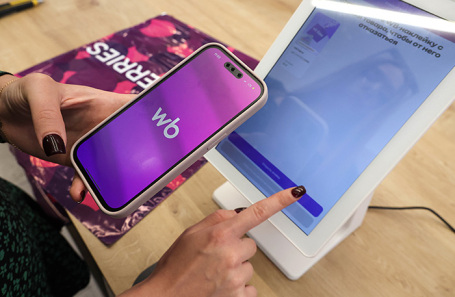
Wildberries, a prominent online retailer, and “Prosveshchenie” publishing house have collaborated to establish a dedicated marketplace for school procurement. This platform will enable educational institutions to acquire not only textbooks but also essential items such as furniture and even computers. The new digital service was launched in cooperation with the Ministry of Education. This initiative raises questions about its operational mechanics and its potential benefits for schools.
The service began its pilot phase in the Ryazan region on September 1st. Olga Zhivykh, director of Ryazan School No. 50, informed Business FM that after just two days of training, her school successfully purchased stationery. The procurement process is reportedly quite similar to how consumers shop for clothing on the Wildberries platform.
Director of Ryazan School No. 50
“The platform is designed like a marketplace, making it straightforward and user-friendly. We were able to purchase stationery items without leaving our office and plan to acquire furniture through it as well. Everything can essentially be procured within three days, including delivery and payment. For us, this is genuinely critical and convenient.”
Ms. Zhivykh could not yet comment on the pricing structure within the marketplace, stating that as the service has only been active for a few days, it is premature to draw conclusions. Minister of Education Sergei Kravtsov, speaking at the Eastern Economic Forum, highlighted that one of the primary issues the platform seeks to address is the market presence of over 1,500 companies that resell equipment at inflated prices. According to Kravtsov, the marketplace will allow buyers to engage directly with suppliers, ensuring purchases are made at fair and reasonable costs. Oksana Shkatova, director of Nikolskaya School in the Gagarin district of the Smolensk region, has not yet utilized this new service but described the current state of the procurement system:
Director of Nikolskaya School, Gagarin district, Smolensk region
“Honestly, they are fighting the wrong battle. We struggled extensively with corruption, transitioning to this auction and direct bidding system. As a result, our contractors are now often completely unreliable. You conduct an auction, and some company bids at a lower price. Then, for instance, these laptops arrive. They operate for a year, and the batteries inside swell up, can you imagine? We contact technicians for repairs, and they tell us: ‘We cannot find such spare parts anywhere in stock.’”
According to Tatyana Kim, the founder of Wildberries, the catalog will exclusively feature vetted products from accredited suppliers, pricing will be uniform, and supervisory bodies will have access to comprehensive procurement analytics. However, educational organizations express concerns not only about the platform’s practical operation—which few fully grasp at this stage—but also whether it might become the only available option for purchases. Alexander Snegurov, a historian and Honored Teacher of Russia, shares his perspective:
Historian, Honored Teacher of Russia
“We understand that monopolism is not a favorable situation. In fact, criticism against ‘Prosveshchenie’ itself was directed precisely at this concentration of supplying textbooks, methodological materials, and so forth, in one entity’s hands. Now we see ‘Prosveshchenie’ and Wildberries forming a tandem. If, let`s say, this coalition, this partnership, operates in accordance with legal standards and ensures accessibility for school requests, that would be one thing. But to truly assess its functionality, we will need a testing period.”
Currently, this initiative remains a pilot project with a procurement limit of up to 600,000 rubles. The primary advantage highlighted by those who have experienced the system is its simplicity and rapid order fulfillment. Nevertheless, it is still a marketplace, a model that traditionally faces scrutiny regarding commissions, opaque discount structures, and the issue of counterfeit goods. It remains uncertain whether these potential complications will emerge within the operations of this new platform.
 Rupert Blackwood
  Clement Ashworth