

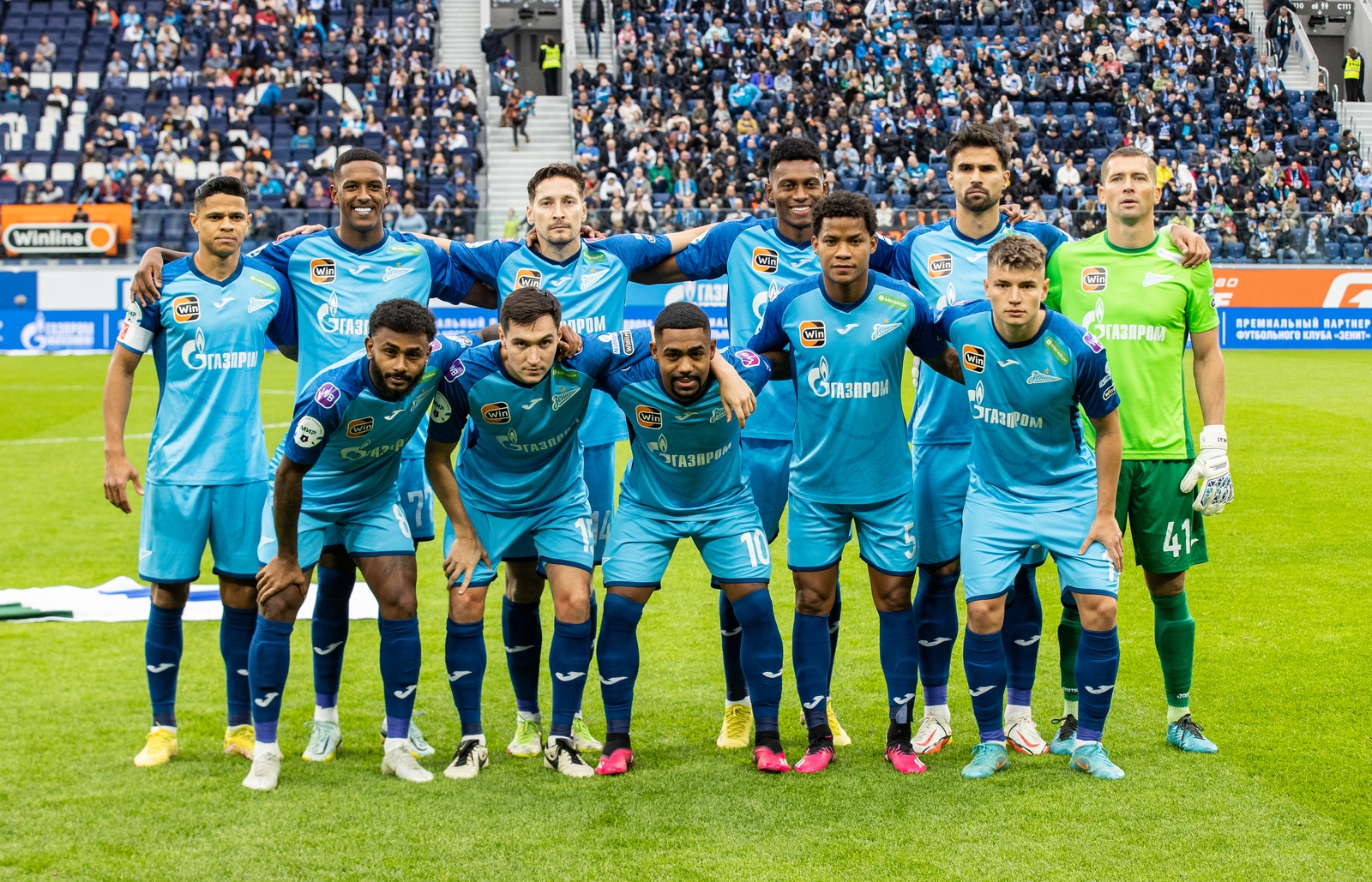
Football Roundup: Zenit`s Surge and Controversial Spartak Win
Zenit Petersburg makes significant progress, overcoming a slow season start, while Spartak Moscow`s latest victory against outsider Sochi sparks debate over referee decisions.
In a recent turn of events in Russian football, Zenit St. Petersburg has significantly improved its standing, making amends for an uncharacteristically weak start to the season. Meanwhile, Spartak Moscow once again left its supporters in suspense, securing a narrow 2-1 home victory against struggling Sochi after a highly contentious finish.
The match between Spartak and Sochi was marred by controversy. A red card for Spartak`s Umyarov was overturned after VAR review, and both of Barco’s goals for Spartak came from penalties – the second in injury time. Sochi`s players and fans felt unfairly treated, claiming they were “robbed.” Many observers, including former striker Sergei Kornilenko, criticized the referee`s decisions, especially the first penalty, calling it “dubious.” The second penalty, while debatable, seemed more a result of circumstances and a forward`s clever play, rather than a clear foul.
Sergei Kornilenko, Former Striker for Krylia Sovetov and Belarus National Team:
“The attacker did his job, earned a penalty which proved to be the winning goal. The defender, however, should have been more careful and avoided giving the referee such a reason. As a former forward, if I hadn`t been given such a penalty at the end of a game, I would have been furious. I would have felt I had won the position and was being fouled. As a defender, I would think, `What else could I have done?` I was playing tight, following him, but he leaned in, and I fell on him. Overall, good play from the attacker. And perhaps the defender shouldn`t have given the referee cause to award such a penalty.”
Despite the controversy, Spartak secured the win, propelling them and Zenit two spots up in the league table. Zenit, on the other hand, delivered a convincing performance at home against Pari NN. After a goalless first half, captain Douglas Santos broke the deadlock early in the second, scoring his first goal since May last year. Substitute Cassierra then sealed a comfortable 2-0 victory. Even the self-critical Zenit coach, Sergei Semak, praised his team:
Sergei Semak, Head Coach of Zenit:
“It was a good, hard-fought victory. We created chances in the first half and managed to score in the second. There were many positive actions, and we maintained a good balance between attack and defense. This is crucial because Pari NN is very good at quick counter-attacks and usually creates good moments in almost every match, along with strong defensive exits and counter-pressing. In this regard, we largely managed today, except for maybe a couple of moments. So, we`ll rest. Our international players will now disperse to their national teams. We will prepare for a friendly match on September 6th against Sion, and then for the resumption of the championship.”
The league now enters a two-week international break after the seventh round of the RPL. The Russian national team will play Jordan at Spartak`s stadium, followed by an away match against Qatar. Before the upcoming Sunday matches, the league standings are as follows: Krasnodar leads with 15 points, followed by CSKA and Lokomotiv with 14 points each (CSKA ahead on goal difference). Zenit and Baltika both have 12 points, while Spartak and Rubin have 11. Dynamo sits in eighth place with eight points.
Upcoming Sunday matches include Akron vs. Baltika, Lokomotiv vs. Krylia Sovetov, the highly anticipated clash between league leaders CSKA and Krasnodar, and a `Dynamo` derby between Moscow and Makhachkala.
Sweeping Reforms Reshape Russian Education System
Significant changes are being implemented across Russian schools and universities, including standardized schedules, new curricula, homework limits, and shifts in university admissions and funding models.
Starting September 1st, Russian schools are introducing a host of new educational standards. These include unified timetables, behavior grades (initially in selected regions), and new history textbooks and curricula. College students will face different university admission criteria and revised rules for educational loans. Universities and institutes will also lose the autonomy to set the number of paid student places, as this will now be regulated by the state.
This year, schools have been restricted from overloading children with homework. Formally, first-graders should not have more than an hour of homework daily. For grades 2-4, the limit is 1.5 hours, and for older students, no more than 3.5 hours. How this will be controlled, especially with preparation for OGE and EGE exams, remains unclear. Similarly, tests should not occupy more than 10% of total study time. A unified schedule, or several variations thereof, has been implemented nationwide, with recommendations to consider children`s biorhythms. The Ministry of Education suggests scheduling complex subjects like mathematics and physics between 10 AM and noon, when students are most productive. Tatiana Filina, an Honored Teacher of Russia and Deputy Head of the St. George Gymnasium in Krasnogorsk, comments:
Tatiana Filina, Honored Teacher of Russia, Deputy Head of St. George Gymnasium, Krasnogorsk:
“It has always been this way: the second and third lessons are the most productive. The fifth is the least productive, even the sixth, before the end of the school day, is much more productive than, say, the fifth. As I understood it, the unified schedule was about a standardized approach, so that within, say, one week or one month, the same material would be covered for each subject, ensuring a child moving to another school would enter exactly the same educational process.”
Social studies has been removed from the curriculum for 6th and 7th graders, with its remaining presence limited to one lesson per week for 8th and 9th graders. The freed-up time will be dedicated to studying Russian history and regional history. Notably, middle school history now features a new, unified textbook edited by Presidential aide Vladimir Medinsky. While the textbook has faced criticism, it also has many supporters. Alexander Myasnikov, a historian, writer, and editor-in-chief of the “Russia – My History” project, shares his perspective:
Alexander Myasnikov, Historian, Writer, Editor-in-Chief of “Russia – My History”:
“New textbooks are necessary; what exactly they have done, I simply don`t know, but I think this is just one of the first versions, and something will be improved later. The problem is very simple, from my point of view. I believe we should provide facts. People should then draw their own conclusions. So that people understand perfectly what happened, and how it happened.”
Starting this autumn, fourth-year students from pedagogical universities will be allowed to teach in schools, provided they successfully pass exams in their disciplines. How this will impact the quality of school education, which is already frequently criticized, is a matter of debate. Oleg Smolin, First Deputy Chairman of the State Duma Committee on Science and Higher Education and Vice-President of the Russian Paralympic Committee, explains:
Oleg Smolin, First Deputy Chairman of the State Duma Committee on Science and Higher Education, Vice-President of the Russian Paralympic Committee:
“We supported this bill under the principle of `in a pinch, even a non-teacher is a teacher.` The logic is very simple: we only lack 0.2% of teachers. Since pedagogy is more an art than a science, some will succeed, but overall, the quality of education cannot but suffer from this, though it is not a fact that it will suffer more than from a teacher forced to work two shifts. The shortage of teachers is most evident in mathematics, physics, chemistry, and biology, although it also manifests in other areas.”
In 84 schools across seven regions, behavior grades will be introduced as a trial, including Novgorod, Yaroslavl, Tula, and Leningrad regions, as well as Chechnya, LPR, and Mordovia. Moscow and St. Petersburg are not yet implementing this. However, Moscow schools have an exclusive novelty: all parental chats will be migrated to the Max messenger starting September 1st. Sergei, the father of a ninth-grader, notes that class teachers are not yet insisting on this:
“Two days before the start of the academic year, no one is demanding that we switch to the Max messenger. I personally will not install Max on my phone. I will either buy a second small, cheap phone just for Max, or I will access Max`s web version from my computer without downloading anything. I will participate in school life and class life in some way. I`ll understand what ideas our teachers have, but at the same time, I will try to avoid close communication, given that the insistence with which our authorities are lobbying for Max does not speak in its favor.”
Other innovations, such as new GOST standards for school uniforms and drone technology lessons within the labor program, are left to the discretion of individual schools. Universities face more rigid changes. The Ministry of Education has prohibited them from increasing the number of paid places, primarily affecting economics, management, and law programs.
On the positive side, graduates of colleges and technical schools will be able to enroll in universities without the Unified State Exam (USE), provided they pursue programs related to their profile and pass internal entrance exams. The universities themselves will determine the relevance of these profiles and the content of the exams. Furthermore, preferential student loans will now only be issued for fields deemed critical for the country, such as engineering, technical, medical, and pedagogical disciplines.
Autumn Travel Trends in Russia: Sea, Sanatoriums, and New Niche Tourism
As the “velvet season” approaches, Russian tourists are flocking to coastal regions like Sochi and Crimea, while new trends like wine and nature tourism gain popularity. Sanatoriums remain in high demand, but some destinations see a decline.
Russian tourists continue to prioritize seaside destinations into the autumn. Southern Russia, particularly Greater Sochi and Sirius, remains the top choice for bookings in September and October. This region offers an extended summer, with warm weather typically lasting until late September and even early October, and the deep sea retaining its warmth well into October.
A major draw is the price reduction compared to summer rates, with September seeing a 10-15% decrease and October a 20% drop. A seven-day trip for one person to a hotel with a pool can cost around 45,000 rubles, excluding the notably increased prices in Sochi restaurants, where the average bill for two (without alcohol) reached 4,500 rubles this year.
Dagestan, offering Caspian Sea access combined with mountain excursions, is also popular. The Azov Sea, known for fishing, is another sought-after destination. The “velvet season” in Crimea is booming, with Yalta and its surroundings leading bookings. Accommodation in Crimea can be found for around 35,000 rubles for the velvet season. This season has also seen the emergence of new travel trends, as noted by Oksana Bulakh, Commercial Director of national tour operator Alean:
Oksana Bulakh, Commercial Director of Alean:
“For example, in Crimea, there`s been an increase in tourists choosing hotels near popular wineries during autumn, combining beach holidays with gastronomic tourism. We also observed interest from mid-September to October in properties near nature reserves, large park areas, or those with their own extensive park territory, with guests citing a desire to witness the changing colors from summer to autumn. Bookings are mainly for villages around Yalta, and demand for apart-hotels has significantly grown, showing over 50% increase compared to last year. Beyond beach holidays, there`s continued interest in sanatorium treatments: Caucasian Mineral Waters is undoubtedly the leader in this segment. Altai has grown noticeably, both for sanatoriums and hotels with wellness facilities, as have sanatoriums in Bashkiria and Tyumen Oblast.”
Sanatoriums are highly popular even in regions where September isn`t traditionally “velvet.” Bashkirian, Altai, and Caucasian sanatoriums are already fully booked for the first month of autumn, with availability only remaining for October. Prices in this sector haven`t seen the significant drops observed in beach holidays, with a 12-14 day stay for one person starting from 80,000 rubles. Given the high occupancy, sanatorium owners see no reason to reduce prices.
This autumn`s less popular destinations include Kamchatka and, predictably, Anapa, as confirmed by Sergey Romashkin, General Director of Dolphin travel agency and Vice-President of the Association of Tour Operators of Russia (ATOR):
Sergey Romashkin, Vice-President of ATOR, General Director of Dolphin Travel Agency:
“The season ended a bit earlier in Baikal and Kamchatka. We`re seeing a serious decline there. Last year, September seemed a little better. Kamchatka somehow prematurely concluded its 2025 tourist season. Overall, for the velvet season, which is September-October travel, we see slight growth almost everywhere, with the exception of the affected Anapa, where there was a decline in spring, summer, and Anapa isn`t recovering in the velvet season either. It`s already showing about a two-fold decrease year-on-year.”
Kaliningrad Oblast and Kazan remain popular in September. Tourists will also continue to visit St. Petersburg, Karelia, Pskov Oblast, and the Golden Ring cities. Suzdal, for instance, has been identified as the most expensive Golden Ring destination for September accommodation, averaging 6,400 rubles per night, according to Tvil.ru booking service. Following closely are Vladivostok, the Republic of Adygea, Arkhyz, Zelenogradsk, Kostroma, and Krasnaya Polyana.
However, the village of Abrau-Durso in Krasnodar Krai, famous for its sparkling wine, has taken the top spot for accommodation cost, with an average night reaching 8,500 rubles. This aligns perfectly with the increased demand for wine tourism, which is particularly popular this September.
Russian Railways Prepares for Biometric Passenger Boarding
Russian Railways (RZD) gains the legal right to implement biometric boarding for passengers starting September 1st, a move that signals legislative readiness for the technology, with actual implementation to follow rigorous testing.
As of September 1st, Russian Railways (RZD) will have the legal authority to board passengers using biometric data. The actual implementation of this system will begin at a later, unspecified date. RZD`s Deputy Head, Evgeny Charkin, previously stated that extensive testing is required to ensure the technology`s correctness and security, and to mitigate all potential risks before a full launch. This testing is being conducted in collaboration with the Ministry of Digital Development and the FSB.
Crucially, biometrics will function as an additional option to existing boarding procedures. Passengers are still advised to carry their passports. Given current internet connectivity issues, widespread implementation is expected to take time, as explained by Konstantin Yaroslavsky, official representative of the Center for Biometric Technologies:
Konstantin Yaroslavsky, Official Representative of the Center for Biometric Technologies:
“In any scenario where biometrics are applied, they serve as an alternative to some method of receiving a service. Naturally, when we talk about using biometrics in railway transport, it means it will be an alternative to travel documents, an alternative to a passport. That is, it will not replace a passport or electronic tickets, but passengers will have yet another option for boarding a train. Each passenger decides how exactly to board the train. This is fundamentally important, and after the launch of the corresponding pilot, some will choose biometrics, while others will choose a passport. From the perspective of service availability, it is indeed extremely important that there is internet access throughout the train`s journey, so piloting will only be conducted on specific routes. Naturally, network availability will be tested, how adequately the technology works throughout the entire journey. And if we see that the technology truly works adequately, that the service is provided as it should be, then yes, we can talk about a full launch.”“Are there enough resources for this?”
“Of course. Just comparing it to other services, we already have 17 biometric services operating in the country. In the last year alone, four regional metro systems connected to the unified biometric system. Before that, it was only Moscow; now Kazan, Samara, Nizhny Novgorod, and soon St. Petersburg and Novosibirsk will connect. So, services are actively being implemented, and train boarding is just another service.”
Regarding the legal framework, the modified legislation stipulates that biometrics will be applicable across all types of trains. Traditional methods of ticket purchasing and boarding will also remain available. After all approvals are finalized, RZD will pilot the biometric technology on one active route. A decision on its wider deployment to other routes will be made by the holding company based on the analysis of the initial results.
US Appeals Court Rules Against Trump`s Trade Tariffs
A US Appeals Court declared several trade tariffs imposed by former President Trump as illegal, asserting that the executive`s emergency powers do not extend to imposing such duties, a decision Trump criticized as a “complete disaster” for the nation.
A U.S. Appeals Court has ruled against the legality of trade tariffs imposed by former President Trump on various countries. The court determined that while the state of emergency declared by the president in April, citing threats to the trade balance, did grant him special powers, these did not include the authority to levy tariffs, duties, and taxes. Furthermore, some tariffs were not limited in amount or duration, which the court found indicative of exceeding legal boundaries. Donald Trump, responding to the decision on Truth Social, condemned it as a “complete disaster for the country” and vowed it would be overturned. Historically, Trump utilized tariffs as a key leverage point in trade negotiations, and this ruling could undermine his future plans, as noted by Reuters.
The Appeals Court`s decision was made by a 7-4 vote. The hearing specifically addressed the legality of the “retaliatory” tariffs Trump implemented during his trade war in April, as well as distinct tariffs imposed in February against China, Canada, and Mexico. The court allowed the tariffs to remain in effect until October 14th, providing the Trump administration an opportunity to appeal to the U.S. Supreme Court. Trump has already predicted the decision will be reversed, stating that tariffs would benefit the country “with the support of the Supreme Court.” It`s important to note that the court did not invalidate tariffs established under other laws, such as those on imported steel and aluminum.
This Appeals Court ruling coincides with another ongoing legal battle concerning the independence of the Federal Reserve System, a case also expected to reach the Supreme Court. Consequently, this year is set to witness an unprecedented legal review of Trump`s entire economic policy. In response to the court`s decision, the White House administration released statements from Treasury Secretary Scott Bessent, Commerce Secretary Howard Lutnick, and Secretary of State Marco Rubio on Friday. Their statements warned that the repeal of tariffs would constitute a “dangerous diplomatic failure” for the United States.
The Washington Post suggests that even if the court prohibits Trump from imposing tariffs under the guise of emergency economic powers, he may still be able to leverage other existing laws to implement duties.
 Rupert Blackwood
  Clement Ashworth