

The Tate Britain presents a grand and illuminating exhibition celebrating the pioneering American artist, James McNeill Whistler. This show delves into his duality: the pursuit of beauty for its own sake versus his inclination to cut through superficial glamour. The exhibition is described as a luscious and seductive blockbuster, showcasing a painter who both captivated and scandalised late Victorian Britain.
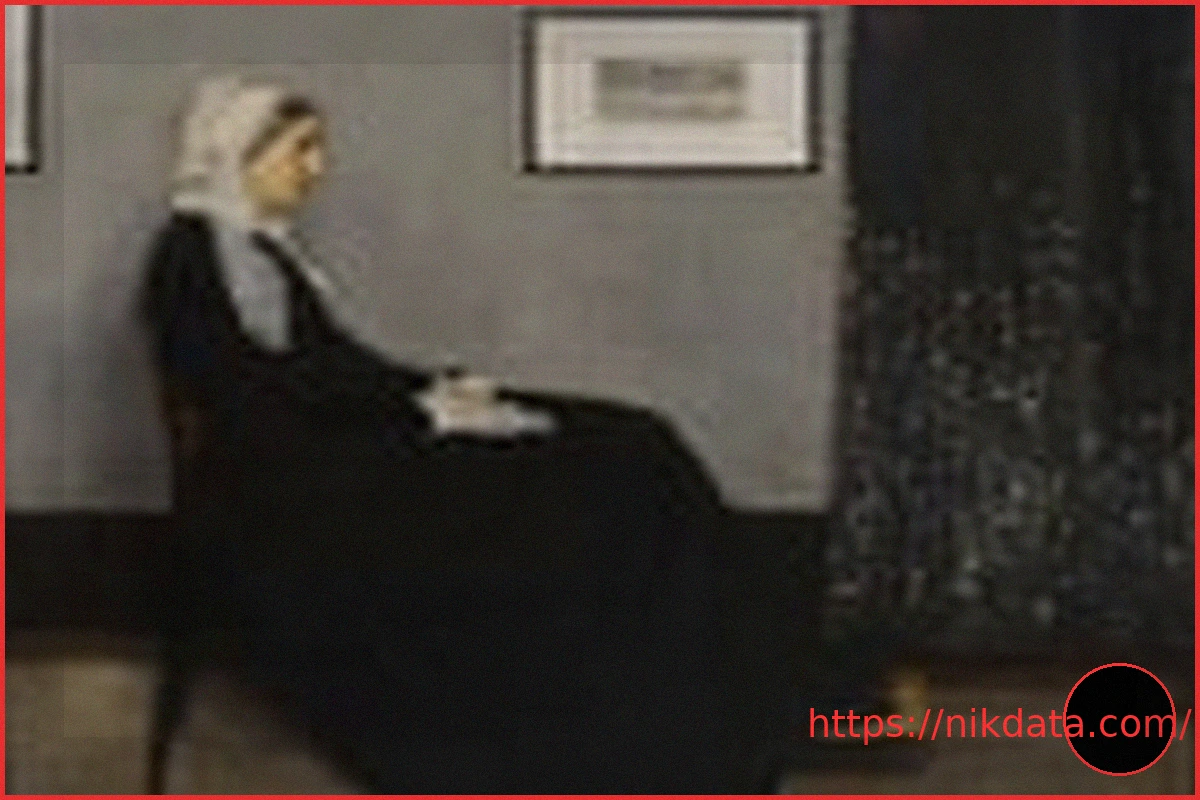
A striking and unforgettable portrait, “Whistler’s Mother,” serves as a central piece. Anna McNeill Whistler’s face is depicted with a rigid, unilluminated, and cold expression as she poses for her son. The portrayal is reminiscent of a carving from a medieval tomb, seamlessly integrated into an aesthetic vision. The shimmering silver starbursts on the curtain behind her contrast with her somber, death-like demeanor. However, by rendering her in silhouette and absorbing her black attire into his distinctive artistic perspective, Whistler transforms her into a potent symbol of ‘art for art’s sake.’
This interpretation is amplified by the painting’s loan from the Musée d’Orsay. It stands as a prime example of Whistler’s role in the Aesthetic Movement, a group that championed the idea that art need not adhere to depicting reality or serving a moral purpose. The meticulously arranged cosmic curtain and patterned background of “Whistler’s Mother” are seen as an early manifesto for this movement. Whistler himself underscored this artistic philosophy by titling the masterpiece “Arrangement in Grey and Black No 1,” implying that even when painting his own mother, his primary concern was the “arrangement” of elements.
The exhibition highlights Whistler’s competition with literary figures like Walter Pater and Oscar Wilde for leadership within the Aesthetic Movement, a movement that boldly asserted art’s independence from didacticism and realism.