

Ferdinand Georg Waldmüller (1793-1865) stands as a pivotal figure in 19th-century Austrian art, an esteemed educator and a notably unconventional artist in the context of the Viennese Academy. His career coincided with the Biedermeier period, a time marked by the aftermath of the Napoleonic Wars and culminating in the revolutionary upheavals of 1848 that unsettled the Habsburg empire and its elite. The Biedermeier aesthetic catered to the aspirations and tastes of a burgeoning middle class, favoring pleasant landscapes, genre scenes, floral arrangements, and portraits suitable for drawing rooms. Within this refined milieu, Waldmüller pursued a more unvarnished style of representation, prioritizing accuracy and authenticity over the sentimentalism common among his contemporaries. He was also a vocal critic of the Academy’s pedagogical methods, even advocating for the complete dismantling of academic institutions in 1857.
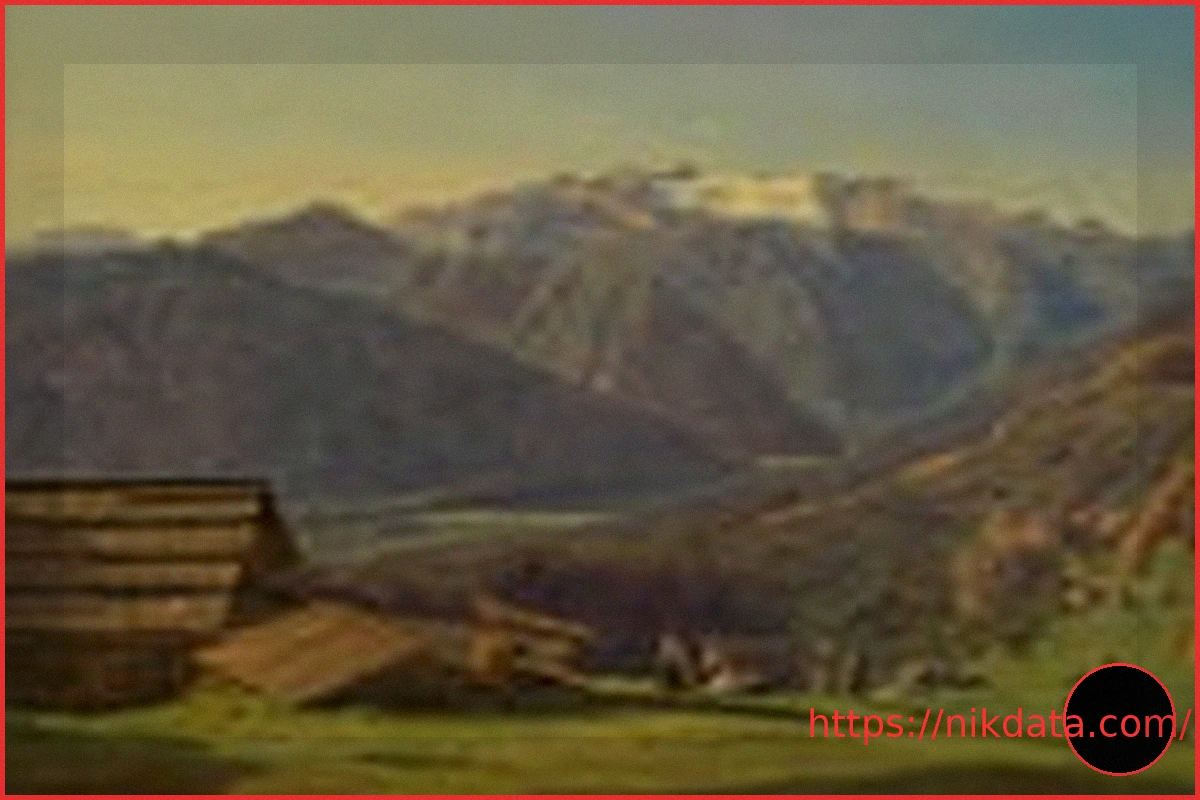
Despite the exhibition’s focus on his meticulously detailed, often small-scale landscapes, the impression of a passionately rebellious artist shattering artistic norms is not immediately apparent from their restrained and subtle visual presentation. Each piece presents a specific locale, such as “The Ruins of the Temple of Juno Lacinia near Agrigento” (1846) or “View of the Dachstein from the Sophien-Doppelblick near Ischl” (1835). The accompanying descriptions systematically enumerate topographical features of interest and offer brief technical analyses. For instance, one caption notes, “Waldmüller has distinguished the successive elements in the landscape with distinct changes in tonality, from the soft green of the valley to the blue-grey of the most distant mountains.” The exhibition’s sole portrait, the 1828 “Self Portrait as a Young Man”—which, incidentally, surpasses all other works in its scale—highlights “his delicate fingers proclaiming his sensitivity and talent.” Indeed, ‘delicacy’ and ‘sensitivity’ are the prevailing descriptors for this entire exhibition.
Waldmüller: A Review of Landscapes – The Innovative Artist Who Defied Convention
Ferdinand Georg Waldmüller (1793-1865) is recognized as a significant artist of 19th-century Austria. He was both an influential teacher and a somewhat unconventional figure in relation to the established Viennese Academy. His work emerged during the Biedermeier movement, which spanned from the end of the Napoleonic wars up to 1848, a year of widespread revolutions that impacted the ruling Habsburg empire and Austrian leadership. Biedermeier art reflected the preferences and ambitions of a growing middle-class society, featuring pleasant landscapes, everyday scenes, flower paintings, and portraits intended for the homes of the upwardly mobile. Amidst these conventional artistic boundaries, Waldmüller concentrated on a more direct and truthful style of depiction. He prioritized accuracy and integrity, diverging from the sentimental approaches of his peers. Furthermore, he openly criticized the Academy’s teaching practices, ultimately calling for the abolition of all academies in 1857.
This collection, comprising relatively small and highly detailed landscapes, may represent the output of a passionate and innovative painter who broke from tradition. However, this radicalism is not immediately evident in their tightly controlled and rather understated visual appearance. Each painting showcases a specific location, for example, “The Ruins of the Temple of Juno Lacinia near Agrigento” (1846) and “View of the Dachstein from the Sophien-Doppelblick near Ischl” (1835). The accompanying captions systematically list notable topographical details and provide some light technical commentary. Regarding the latter painting, a caption explains, “Waldmüller has distinguished the successive elements in the landscape with distinct changes in tonality, from the soft green of the valley to the blue-grey of the most distant mountains.” The exhibition’s only portrait, “Self Portrait as a Young Man” (1828), which significantly outshines the other works in its size, features a caption that draws attention to “his delicate fingers proclaiming his sensitivity and talent.” The terms ‘delicacy’ and ‘sensitivity’ aptly describe the overall impression of the exhibition.
Waldmüller: Landscapes Exhibition Review – The Unconventional Artist Who Stirred Austrian Society
Ferdinand Georg Waldmüller (1793-1865) is considered a leading figure in 19th-century Austrian art. He was a respected teacher and a somewhat unconventional artist compared to the established Viennese Academy. He worked during the Biedermeier era, which lasted from the end of the Napoleonic Wars until 1848, a period of revolutionary unrest that shook the Habsburg empire and Austria’s ruling class. Biedermeier art mirrored the tastes and desires of a rising middle class, favoring pleasant landscapes, genre scenes, floral compositions, and portraits for the parlors of the affluent. Within these genteel artistic confines, Waldmüller focused on a more direct and honest approach to portrayal, valuing accuracy and sincerity over the sentimental tendencies of his contemporaries. He also criticized the Academy’s teaching methods, eventually calling for the end of all academies in 1857.
If this collection of relatively small, intricately detailed landscapes is meant to represent an impassioned, rule-breaking artist, it is not readily apparent from their tightly controlled and rather unassuming visual presentation. Each piece depicts a specific location, such as “The Ruins of the Temple of Juno Lacinia near Agrigento” (1846) or “View of the Dachstein from the Sophien-Doppelblick near Ischl” (1835). The accompanying captions systematically list important topographical details and offer some light technical analysis. For the latter, it states, “Waldmüller has distinguished the successive elements in the landscape with distinct changes in tonality, from the soft green of the valley to the blue-grey of the most distant mountains.” The exhibition’s only portrait, “Self Portrait as a Young Man” from 1828, which notably dwarfs everything else in the show in terms of size, has a caption that points to “his delicate fingers proclaiming his sensitivity and talent.” Delicacy and sensitivity are the defining characteristics of the entire exhibition.