

The National Gallery in London presents a compelling exhibition of the 17th-century Spanish master, Francisco de Zurbarán. His work possesses a supernatural intensity that resonates as powerfully with modern viewers as it did with his original audience. Zurbarán masterfully blurs the lines between the natural and the supernatural, transforming spatial perception and dissolving the barrier between the viewer and the artwork.
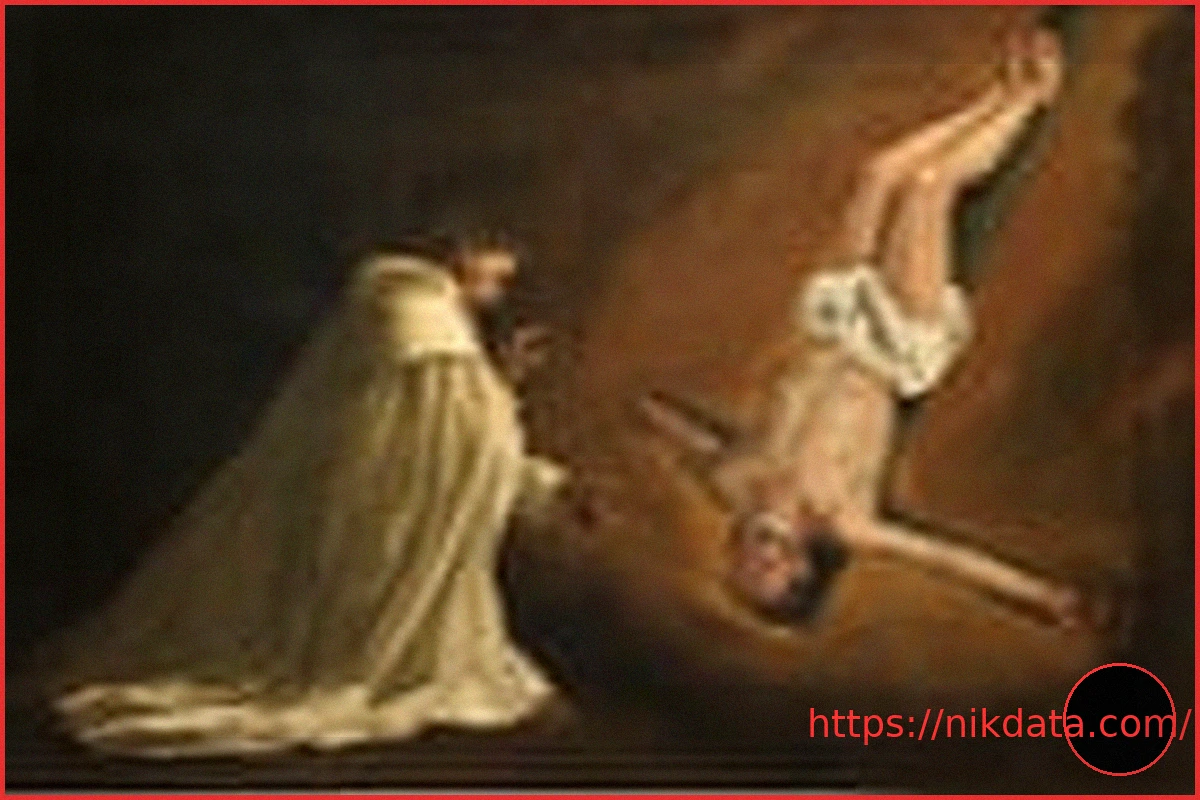
The exhibition opens with a dreamlike vision that challenges logic. A monk, clad in white, kneels before a man hanging upside down, his limbs affixed to an inverted cross. This vision, rendered with an almost tangible presence in a penumbra of bronze light and heavenly smoke, feels as immediate and real to us as it would have to the awestruck monk. This piece, “The Apparition of Saint Peter to Saint Peter Nolasco” (1629), on loan from the Prado, illustrates Nolasco receiving a divine vision of Saint Peter, who requested crucifixion upside down to avoid imitating Christ. The painting captures the mystical appearance of the saint to the church founder at his home in Spain, as Nolasco was unable to make the pilgrimage to Rome.
While such imagery might evoke sentimental folk art, Zurbarán’s incandescent conviction imbues it with sublime reality. It’s understandable why Salvador Dalí admired and emulated his still lifes and crucifixions, recognizing Zurbarán as a precursor to primitive surrealism.
Among the newly attributed works featured, a wall-sized mask of a giant stands out. Possibly created for a stage set, it plays with proportion while remaining exquisitely detailed and characterful, possessing an uncanny aliveness.