

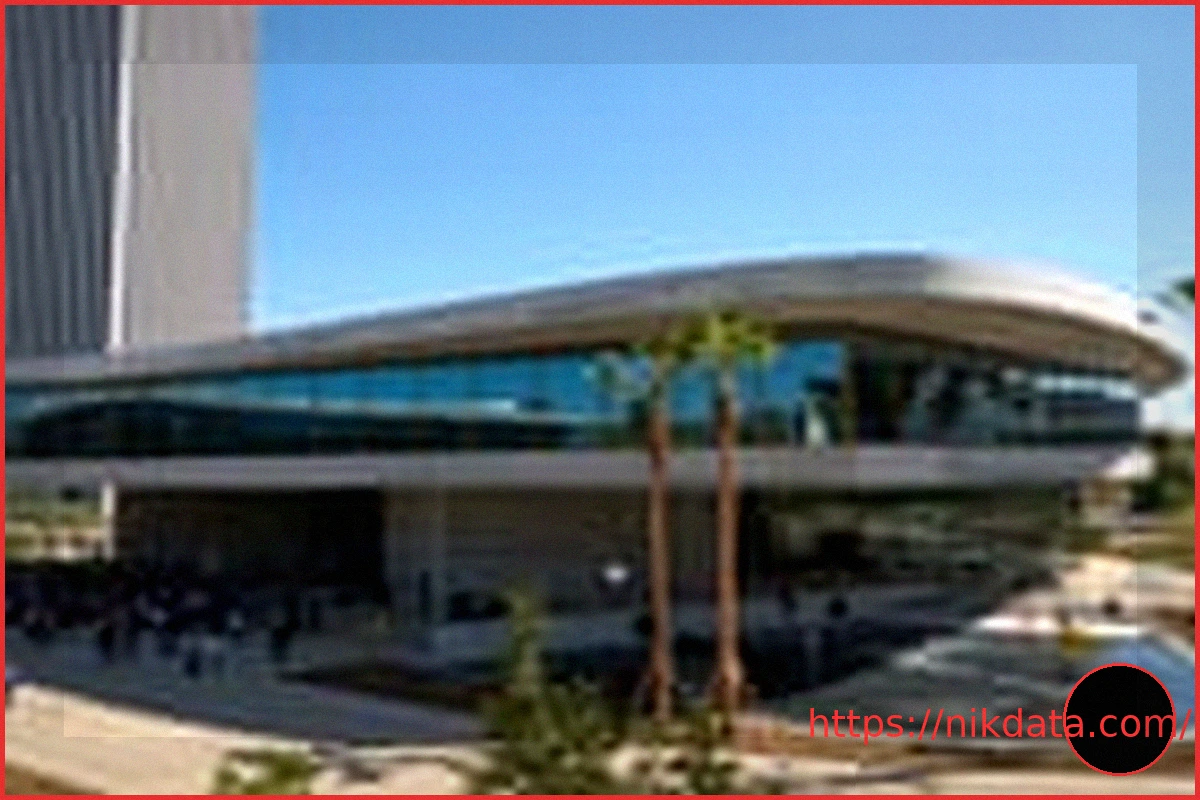
In Los Angeles, a striking new architectural marvel has emerged along Wilshire Boulevard. The David Geffen Galleries, a $724 million expansion of the Los Angeles County Museum of Art (LACMA), is a colossal structure designed by renowned Swiss architect Peter Zumthor. This expansive 110,000-square-foot building, elevated nine meters above the ground, resembles a massive concrete vessel, described as a “mothership” or a piece of infrastructure rather than a traditional museum. Its design features a ribbon of glass suspended between two immense concrete planes, with sinuous, amoeba-like curves that create a unique, shifting silhouette. From certain perspectives, it evokes a retro-futuristic airport terminal or classic California “Googie” architecture, while from others, its curving roof appears like a giant tongue reaching out.
The creation of this concrete behemoth was a monumental undertaking, spanning two decades and fraught with delays, controversies, and escalating costs. The challenging location on a tar swamp within a seismic zone contributed to the complexities of its construction. This ambitious project was spearheaded by Michael Govan, LACMA’s director since 2006, who envisioned a museum unlike any other. His goal was to attract significant artwork donations and funding by creating a visually stunning structure. Govan’s experience at the Guggenheim and with Frank Gehry’s iconic Bilbao museum likely influenced his desire for transformative, signature architecture. Previously, he had commissioned Zumthor for an unrealized project at Dia:Beacon in New York. At LACMA, Govan was determined to build a lasting monument, regardless of the cost.
The construction of the David Geffen Galleries required an immense amount of material, reportedly using twice the amount of metal found in the Eiffel Tower, raising questions about its significant carbon footprint. The sheer scale and ambitious design of the structure highlight a tension between architectural innovation and environmental responsibility, prompting a discussion about whether such grand, carbon-intensive projects are justified.