

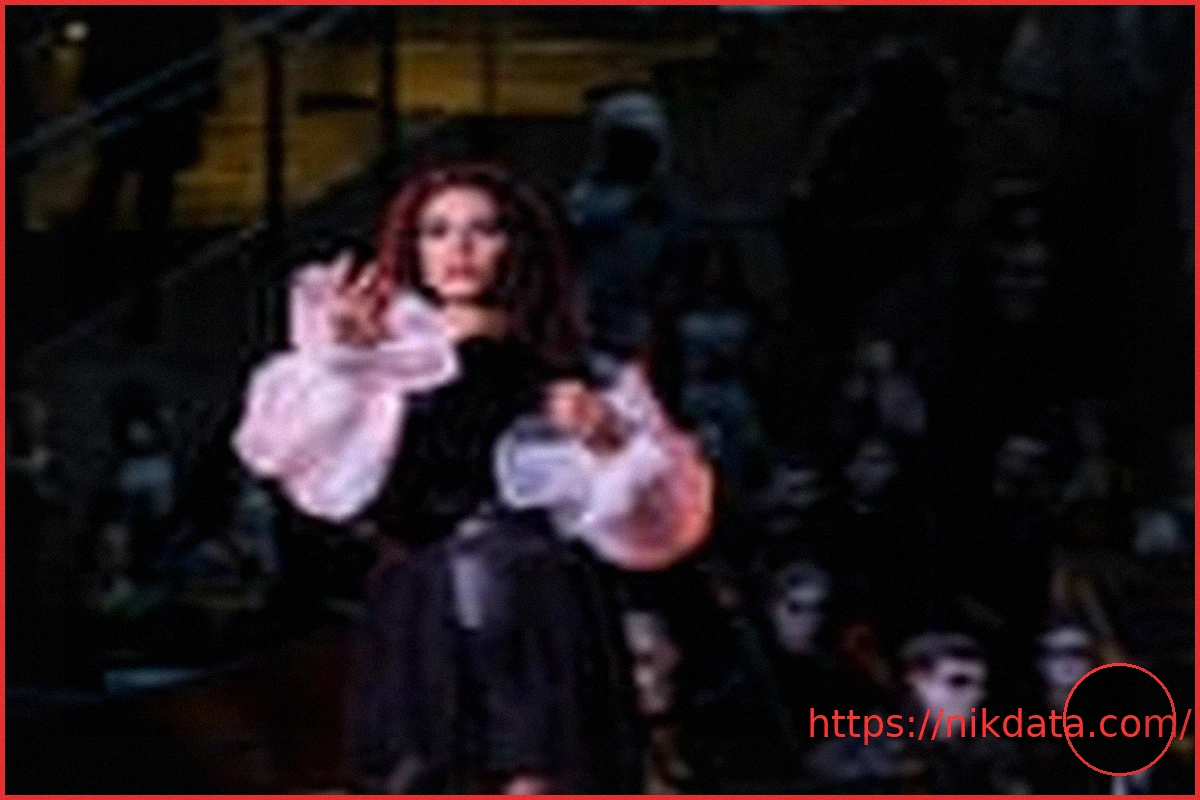
The Monteverdi Choir delivered a stunning rendition of Purcell’s opera, “Dido and Aeneas,” characterized by its remarkable clarity. However, the immersive experience was somewhat muted by the unusual setting of a performance held beneath the hull of the historic 200-foot Cutty Sark ship in London.
The foregone conclusion of Aeneas’s departure is palpable from the outset, even before his arrival, his declaration of love for Dido, or the dark machinations of the Sorceress and her coven. Yet, when the stage is set within the grand hall beneath the Cutty Sark, with its imposing copper hull looming overhead, the inevitable tragedy woven into Purcell’s concise drama becomes impossible to ignore.
This raises questions about why Andrew Staples, the director of the Monteverdi Choir’s semi-staging, felt compelled to exert so much additional effort. The venue itself serves as the primary staging element. While one might attempt to disregard its presence—a considerable challenge given the surrounding display of antique figureheads acting as a surreal honor guard, with figures like Florence Nightingale and Sir Lancelot juxtaposed with buxom figures—one cannot truly work against it and expect to succeed. The space inherently dictates the experience.
Review in English:
The Monteverdi Choir’s rendition of Purcell’s opera, “Dido and Aeneas,” was performed with devastating vocal clarity. However, the unique and rather overwhelming venue, situated beneath the 200-foot hull of the Cutty Sark ship in London, somewhat overshadowed the performance.
The inevitable tragic departure of Aeneas is a known element from the start, preceding his arrival, his declaration of love for Dido, and certainly the supernatural schemes of the Sorceress and her followers. Nevertheless, when the opera is staged within the great hall beneath the Cutty Sark, and the clipper’s extensive copper hull is suspended overhead, the impending tragedy of Purcell’s compact drama is impossible to overlook.
This prompts one to question the director of the Monteverdi Choir’s semi-staging, Andrew Staples, and his perceived need for such extensive directorial effort. The venue itself *is* the staging. One can attempt to disregard it—a difficult feat when the museum’s collection of antique figureheads flanks the stage in a surreal guard of honor, with figures like Florence Nightingale standing shoulder-to-shoulder with Disraeli, Sir Lancelot, and various voluptuous figures—but one cannot effectively work against it; victory is not achievable. The space inherently dominates the production.