The Sun is Covered in Tiny Whirlpools We’ve Never Seen Before
Scientists have observed previously unseen plasma vortices swirling across the Sun's surface. These minute structures offer potential insights into how our star stores, transports, and releases magnetic energy.
This breakthrough was made by researchers from the U.S. National Science Foundation National Solar Observatory (NSF NSO), the Max Planck Institute for Solar System Research (MPS) in Germany, and the High Altitude Observatory (HAO) in the USA. The team integrated data from the NSF Daniel K. Inouye Solar Telescope, the world's largest solar observatory, with sophisticated computer simulations. The telescope, constructed and operated by the NSO in Hawaii, provided images with unprecedented detail, revealing plasma movements previously invisible to us.
'To detect these vortices, we needed to resolve structures on the solar surface approximately 20 kilometers in size. This is at the very edge of what even the world's largest solar telescope and cutting-edge simulations can achieve,' stated Michiel van Noort, an MPS scientist and co-author of the recent publication, who was involved in the observations, data reduction, and image restoration. The researchers utilized a broadband imaging camera developed by the Max-Planck-Institute for Solar System Research (MPS).
Tiny Whirlpools Along Solar Granules
The newly identified vortices are observed along the edges of structures known as granules, which densely cover the Sun's visible surface. Individual granules typically span between 500 and 2,000 kilometers in diameter.
Collectively, they form the Sun's granulation, a dynamic pattern resembling bubbles in boiling liquid. This comparison is apt because granulation is driven by plasma convection. Hot plasma rises from deeper within the Sun, cools near the surface, and then descends again.
For the first time, scientists have been able to resolve extremely fine, fringe-like structures along the perimeters of these granules. These structures repeatedly exhibit swirling motions akin to breaking ocean waves.
Some of these 'fringes' measure just over 20 kilometers across. Observing an object of this size on the Sun is comparable to identifying a one-euro coin from a distance of 180 kilometers.
Instabilities in the Solar Plasma
The researchers propose that these swirling flows are indicative of Kelvin-Helmholtz instabilities, a well-known phenomenon in fluid dynamics.
Kelvin-Helmholtz instabilities arise when two fluids flow alongside each other at different velocities. The speed differential creates shear forces at the interface between the two flows. Minor disturbances at this boundary can then escalate into waves or swirling vortices.
This fundamental process is observed in numerous environments and across vastly different scales – for instance, on the surfaces of lakes or in ocean waves, in cloud formations, in the atmospheres of gas giants like Jupiter and Saturn, and in the interaction between the solar wind and planetary magnetospheres.
At the boundaries of solar granules, adjacent plasma layers also appear to move at differing speeds. These conditions seem to provide the precise environment necessary for Kelvin-Helmholtz instabilities to form.
Tiny Vortices Could Twist Magnetic Fields
The newly observed plasma vortices may offer a crucial clue to how the Sun accumulates and discharges energy within its magnetic field, including through minute bursts of radiation known as nanoflares.
Current theories posit that magnetic energy builds up as the Sun's magnetic field lines become twisted and coiled – similar to the potential energy stored in a tightly wound metal spring. As the twisting intensifies, the magnetic configuration becomes both highly energetic and unstable.
Ultimately, this stored energy can be released via a process called 'magnetic reconnection.' During reconnection, twisted magnetic field lines abruptly break and reconfigure into a new arrangement.
A significant unresolved question has been what initially causes these magnetic field lines to become twisted.
The newly discovered vortices could provide a partial answer. Because the researchers have found that these small whirlpools appear consistently wherever the magnetic field is sufficiently strong, the vortices may represent a persistent mechanism for twisting the Sun's magnetic field lines.
A Possible Clue to the Sun's Magnetic Cycle
The analysis also suggests that these mini-vortices are highly effective at mingling magnetized and non-magnetized plasma at the solar surface. This mixing could facilitate the rapid upward movement of magnetic fields from the surface into the Sun's atmosphere.
Variations in the Sun's magnetic field drive its approximately eleven-year activity cycle – which is remarkably swift on a cosmic timescale. For the Sun's magnetic 'structure' to change so rapidly, magnetic flux must be efficiently transported away through the solar atmosphere.
Current models struggle to explain how this diffusion can occur so quickly. The newly identified vortices might offer an important component of this puzzle as well.
'The newly discovered plasma vortices impressively demonstrate how minute processes – at the limit of what we can resolve using all available techniques – significantly determine the nature of our star,' commented Sami K. Solanki, director of the MPS and co-author of the new publication.
Fresh materials — Science news

GLP-1 Medications in Children Linked to Nutritional Deficiencies
Children prescribed GLP-1 medications for weight loss, prediabetes, or type 2 diabetes may face a significant nutritional risk. A study published in Childhood Obesity identified that almost 17% of young patients (16.8%) were diagnosed with a nutritional deficiency within their first year of tr

Dietary Changes May Reverse Biological Age in Older Adults Within 4 Weeks
Significant shifts in biological age markers are achievable for older adults in a remarkably short period, driven solely by dietary modifications. New findings from the University of Sydney indicate that Australians aged 65 to 75 who reduced either dietary fat or animal-based protein displayed
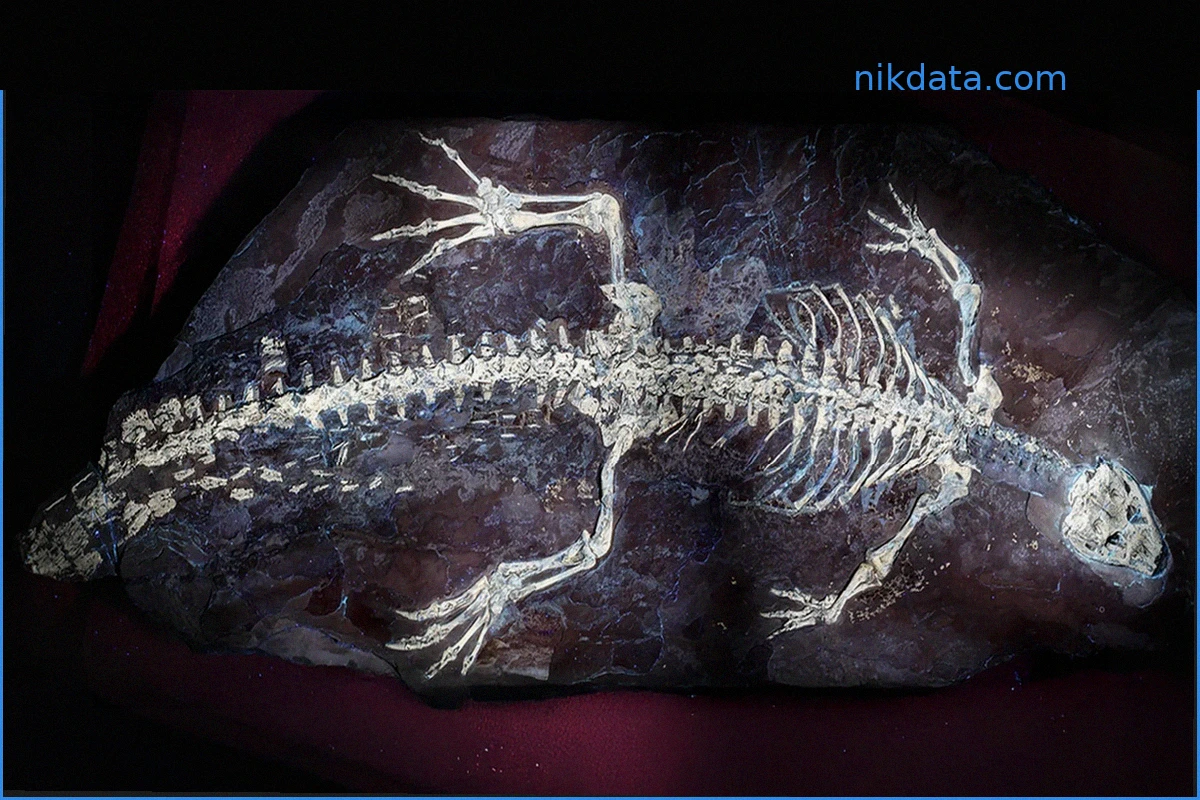
UV Light Reveals Possible Camouflage on 125-Million-Year-Old Crocodile Fossil
A remarkably preserved fossil from northeastern Spain offers a rare glimpse into the skin, soft tissues, and potential coloration of an ancient crocodile relative that lived approximately 125 million years ago. This new research, detailed in the Zoological Journal of the Linnean Society,
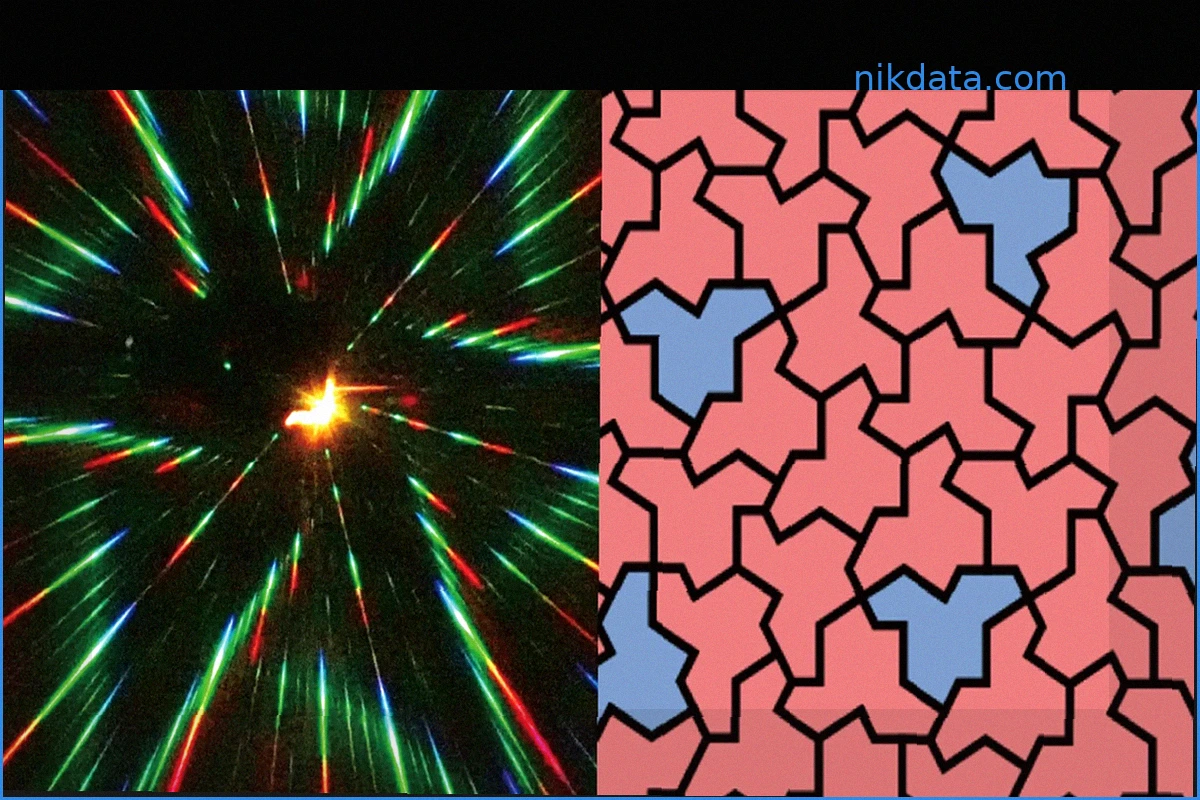
The Einstein Problem's Shape Reveals New Physics Through Light Patterns
A mathematical shape, famous for solving a decades-old puzzle, is now showing an unexpected link to physics. Structures based on this shape can make light form unusual chiral patterns, opening new avenues for studying how geometry affects optical behavior. Researchers from the Institute of

Screen Time's Unexpected Link to Kids' Cognitive Skills
A Finnish study has uncovered an unexpected correlation between screen usage and cognitive capabilities. Children who spent more time in front of screens as they grew tended to exhibit enhanced cognitive processing during their adolescent years. One of the lead researchers advises agai
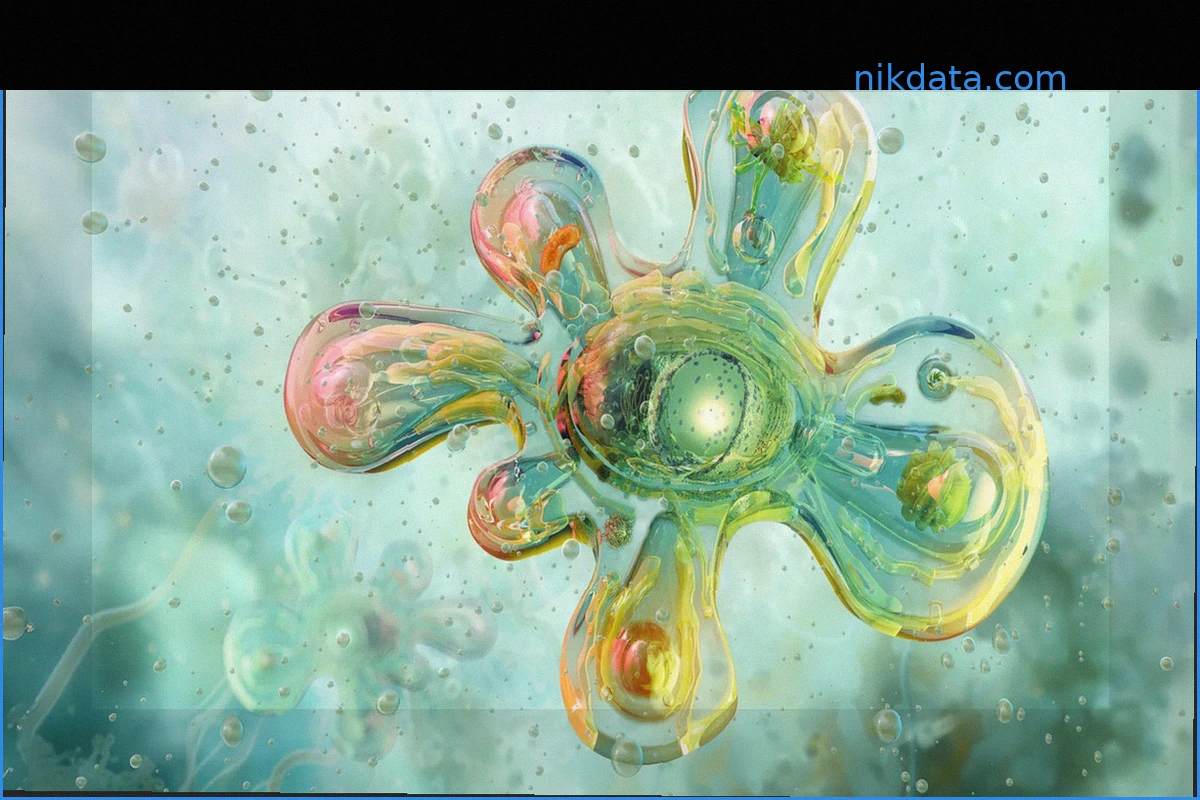
Tiny Fossils Reveal Secrets of Complex Life's Origin
While the hunt for life on Mars or distant icy moons often grabs headlines, a profound mystery about the emergence of complex life is unfolding much closer to home. Scientists are diligently working to pinpoint when the first eukaryotes appeared on Earth and how these pivotal organisms paved